
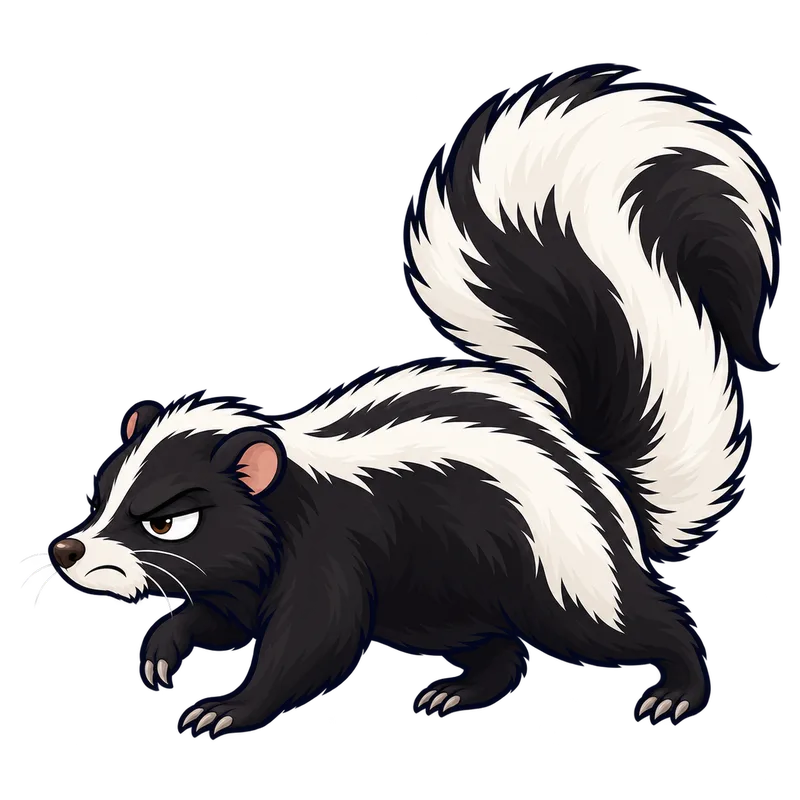
Striped skunk
Mephitis mephitis
- Size
- Medium-sized mammal
- Color
- Black body with a prominent white dorsal stripe
- Habitat
- Rural, suburban, and urban areas under structures
- Diet
- Omnivorous, including insects, grubs, and small mammals
- Life cycle
- Solitary adults with seasonal spring breeding and rearing
The striped skunk is a medium-sized mammal recognized instantly by its coarse black fur and the striking white stripe that starts on its head and splits down its back toward a bushy tail. When you spot tracks in the dirt, look closely at the feet. Unlike rodents, which leave four toes on their front feet and five on the back, the skunk leaves five toes on both front and hind feet. Those prints show clear claw marks and a distinct heel pad impression. If you see a dog or cat track, you will usually count only four toes and miss the heel mark entirely. Raccoon tracks look a bit more similar at first glance, but a raccoon leaves long, slender finger-like prints on its front feet, whereas a skunk leaves shorter, broader prints with noticeable claw marks. Badgers also leave five-toed clawed tracks with heel marks, but their prints display a distinct gap between the toe pads and nails along with a wider toe angle.
Habitat & behaviour
You are most likely to run into these animals around rural properties, suburban backyards, and even urban parks where they find easy shelter and reliable meals. They prefer to establish dens under low, dark spaces such as wooden decks, front porches, unsealed crawlspaces, garden sheds, or rock piles. Because they are primarily nocturnal and crepuscular, meaning they are most active at night and during twilight hours, you rarely see them during bright daylight unless something has disturbed them or they are foraging under overcast skies. They are creatures of habit that follow predictable daily routes while searching for food. Their diet is quite broad, taking in beetles, grubs, small mammals, fallen fruit, and the occasional bird egg. When they forage in turfgrass, they leave behind small, shallow, cone-shaped holes where they root around in the soil for grubs, which often alerts homeowners to their presence long before an actual sighting occurs. If cornered or genuinely threatened, they raise their tail and release a highly pungent, noxious fluid from their anal scent glands as a defensive warning.
Visual variations
Adults feature a stout, low-slung body contour, a small pointed head, and short legs built for digging rather than sprinting. Both male and female skunks share the same basic color pattern of bold black and stark white dorsal striping, although individual animals vary in how wide those stripes stretch or whether the white pattern breaks up along the spine. Kits and juveniles arrive blind and helpless, developing inside the safety of the maternal den before they are old enough to follow the mother out into the grass to forage. Because they do not feature distinct castes like social insects, every individual grows up following the exact same solitary routine, apart from mothers raising young or occasional groups that share a den to stay warm during severe winter weather.
Why it matters
The presence of a skunk usually means your yard contains an abundant supply of turf grubs or that an easy entry point exists beneath a porch or deck. While they act as beneficial garden visitors that eat countless lawn-damaging insects, they create friction when their digging ruins a tidy lawn or when a startled family pet gets sprayed on the back patio. More importantly, skunks function as a primary wild reservoir for the rabies virus. A skunk acting strangely in broad daylight, showing unprovoked aggression, or dragging its hindquarters demands caution and should be left alone entirely. If anyone in the household suffers a bite or scratch, or if infectious saliva makes contact with broken skin, the wound requires immediate and thorough washing with plain soap and water, followed by prompt medical evaluation for post-exposure treatment. Physical exclusion, such as attaching heavy wire mesh skirts around deck perimeters and sealing foundation gaps, offers the most reliable way to prevent conflicts without relying on short-term deterrents or traps that merely leave an empty den for another animal to claim.