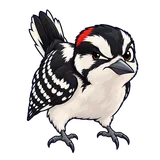
Woodpeckers
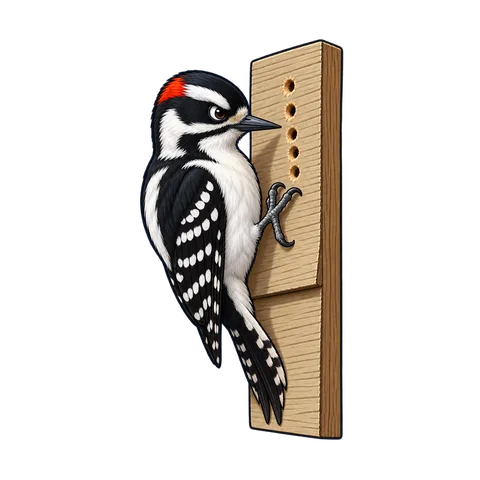
What pulls these birds into a single, unmistakable group is not just their habit of banging their faces against timber, but a very specialized set of built-in climbing gear. Every species in the family shares a zygodactyl foot arrangement, meaning they have two toes pointing forward and two pointing backward on each foot, which lets them cling vertically to tree trunks and wooden siding while propping themselves up with stiff tail feathers. Combined with heavy, chisel-like bills and reinforced skulls, these physical traits turn them into high-impact wood-boring machines.
If you are standing in your yard trying to figure out whether the hole in your cedar siding or fence post is the work of a bird or a mammal, look closely at the edges of the damage and the foot setup. Woodpeckers chip and drill cleanly into the wood to drum, forage, or nest, leaving smooth, round openings with zero teeth marks, whereas tree squirrels gnaw ragged edges with their distinct double incisors. Perching birds might hang around your eaves too, but ordinary songbirds sit horizontally on branches using a standard three-forward, one-backward toe layout, entirely unlike the vertical acrobatics of a woodpecker bracing flat against a wall.