
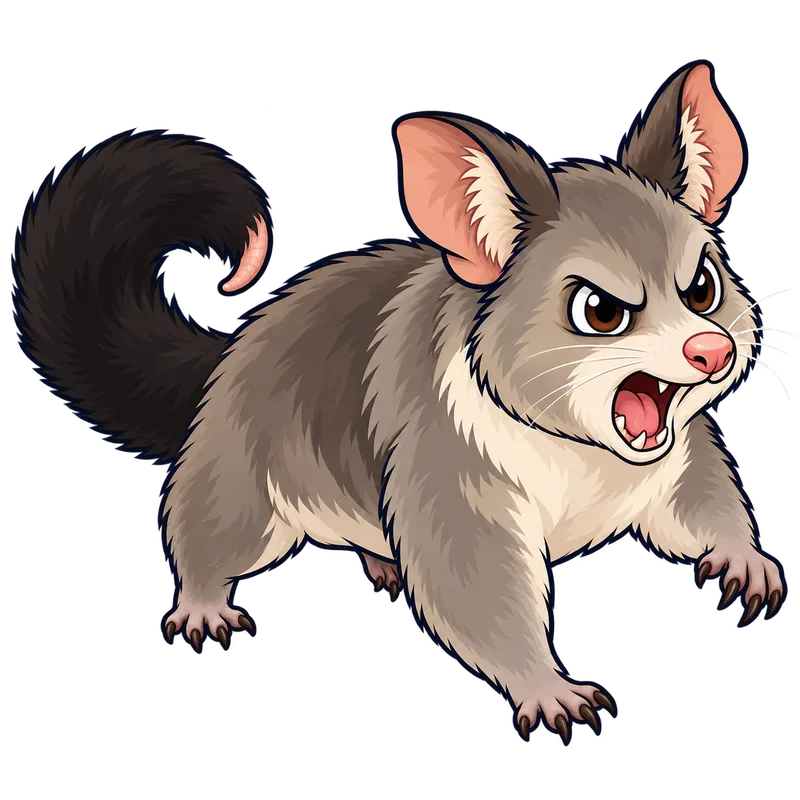
Common brushtail possum
Trichosurus vulpecula
- Size
- Not established
- Color
- Not established
- Habitat
- Urban and wild arboreal
- Diet
- Plant material and scavenged food
- Life cycle
- Pouch young to independent adult
The Common brushtail possum is an arboreal marsupial native to Australia and widely introduced in New Zealand, though North American readers often hear the name used loosely for local wildlife. While exact metric ranges for body length and weight remain unrecorded in standard domestic pest management literature, the animal is easily distinguished by its dense, bushy tail and broad, furry face. Telling this species apart from look-alikes comes down to a few key features. In North America, people frequently confuse it with the Virginia opossum. The Virginia opossum features a pointed white snout, hairless scaly tail, and dark leathery ears, whereas the brushtail possum has a heavily furred tail and rounded ears. Raccoons, another common visitor to roofs and attics, show distinct black facial masks and ringed tails, leaving hand-like tracks rather than the distinct marsupial prints of a possum. Tree squirrels are smaller, diurnal rodents that bound across power lines by day, unlike nocturnal marsupials.
Habitat & behaviour
As creatures that naturally spend their lives climbing in trees, these animals adapt readily to human environments when wild shelter grows scarce. They are strictly nocturnal, spending daylight hours hidden away and emerging after dark to forage. Overhanging tree branches act as natural bridges, allowing the animals to step easily onto roofs, slip through damaged soffits, or squeeze into uncapped chimneys. Once they find a quiet, dark space in an attic or wall void, they settle in for daily shelter. Access to unsecured garbage, garden fruit, ornamental foliage, and outdoor pet food bowls will quickly draw them in from surrounding trees and green spaces.
Visual variations
Because these mammals lack wings entirely, you will never mistake them for flying visitors, nor will you find them living in social colonies with distinct castes like ants or termites. They prefer a solitary life, moving through clear stages from a tiny pouch young to a self-sufficient adult. Mothers carry their underdeveloped newborns in an abdominal pouch that opens toward the front. Once the young grow too large to stay tucked inside, they climb out and ride piggyback on the mother's spine, gripping her fur tightly as she leaps through the canopy at night. Eventually, these youngsters wean and wander off to carve out their own territory. While males and females look somewhat different in their reproductive setup, such as the female pouch and the male scrotum, you will rarely notice those traits from the ground.
Why it matters
Hearing heavy thumps and scratching overhead usually means an arboreal mammal has moved into your roof void, where it will happily shred insulation and leave urine stains on the ceiling. Down in the yard, they browse through foliage and strip tree bark, which can quickly ruin your favorite ornamentals and garden fruit. Interacting with these creatures or cleaning up their waste carries real health risks, ranging from bacterial infections through bites to respiratory trouble if you disturb dried droppings without proper protective gear like gloves and a particle mask. Because local wildlife laws protect these animals, you often need a formal identification and a licensed professional to handle any structural extraction or exclusion safely.