
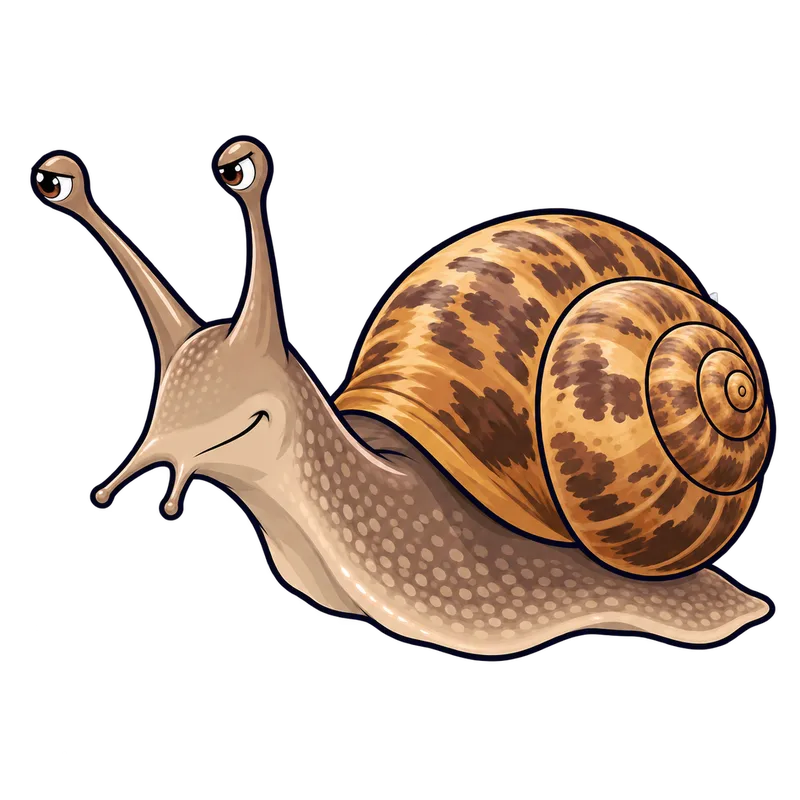
Brown garden snail
Cornu aspersum
- Size
- 25 to 40 mm across
- Color
- Brown with yellowish markings
- Habitat
- Damp, shaded microhabitats
- Diet
- Herbivorous on living plants
- Life cycle
- Eggs to juveniles to adults
The brown garden snail is a terrestrial mollusc carrying a hard, coiled, spiral calcareous shell on its back. If you watch one sliding across a damp paving stone, you will notice the soft, unsegmented muscular foot extending beneath that shell and two pairs of retractable tentacles on its head, with eyespots perched on the tips of the upper pair. Wings are entirely absent across every life stage, as these creatures belong to the class Gastropoda rather than the insect world.
Identity
At a casual glance from a few feet away, you spot them by the distinct, glistening silvery mucus trail they leave behind on foliage, soil, and hardscaping. Separating this specific animal from other land snails based on fine details like shell whorl banding or aperture structure requires close inspection using a 10x hand lens or specialist malacological review, though everyday field confirmation relies on the presence of the shell, the slime trail, and the nocturnal habits.
Habitat & behaviour
These creatures demand damp, shaded microhabitats to keep from drying out under the sun. During hot daylight hours, both adults and juveniles retreat into dark harborage spots such as beneath rocks, rotting logs, fallen timber, dense weed growth, leaf litter, inverted flower pots, garden boards, and asphalt shingles. They also aggregate along building foundations and exterior walls where artificial shade and moisture intersect.
Activity peaks at night or on overcast, cloudy days when atmospheric humidity climbs. Movement happens through the rhythmic muscular contraction of the ventral foot gliding over that signature mucus path. When dry conditions or extreme summer heat strike, or when freezing winter temperatures set in, they enter a dormant sheltering state under debris or soil until moisture returns.
Visual variations
You do not need to worry about tracking separate sexes or social ranks because these snails are hermaphroditic pulmonate gastropods, meaning each individual carries both sets of reproductive organs. The life cycle moves straightforwardly from tiny eggs tucked into damp soil and rotting bits of plants to active juveniles and finally fully shelled adults.
Since they belong to the snail family rather than the insect world, you will never spot larval stages, pupae, or flying adults during any part of their growth. Their appearance changes mostly in size and how tough their shells become over time. A freshly hatched snail is simply a miniature copy of the adults, wearing a see-through, delicate shell that grows thicker and darker as the creature feeds on the calcium it finds around the garden.
Why it matters
When these generalist plant eaters move through a garden, they chew rough, uneven holes in leaves, stems, blossoms, and ripening produce, leaving prize strawberries and flowers badly scarred or stripped bare. They will not chew through the wood of your home or harm its structure, but finding them clustered near your exterior walls tells you that moisture and shade are building up right against your foundation.
Choosing the right bait for control requires careful thought about safety. Metaldehyde baits have been used for years, but they bring a serious poisoning risk if household pets like cats and dogs, or visiting wildlife, happen to eat them. Iron phosphate baits offer a much safer path with very low toxicity for mammals, no waiting period before you can re-enter the area, and no worries about chemical residues, though both options need to be scattered thinly instead of piled in heaps. If you are dealing with heavy crop damage where basic weeding and clearing fail, or if you need an expert to confirm the exact species and rule out restricted quarantine pests, you should bring in a professional.