
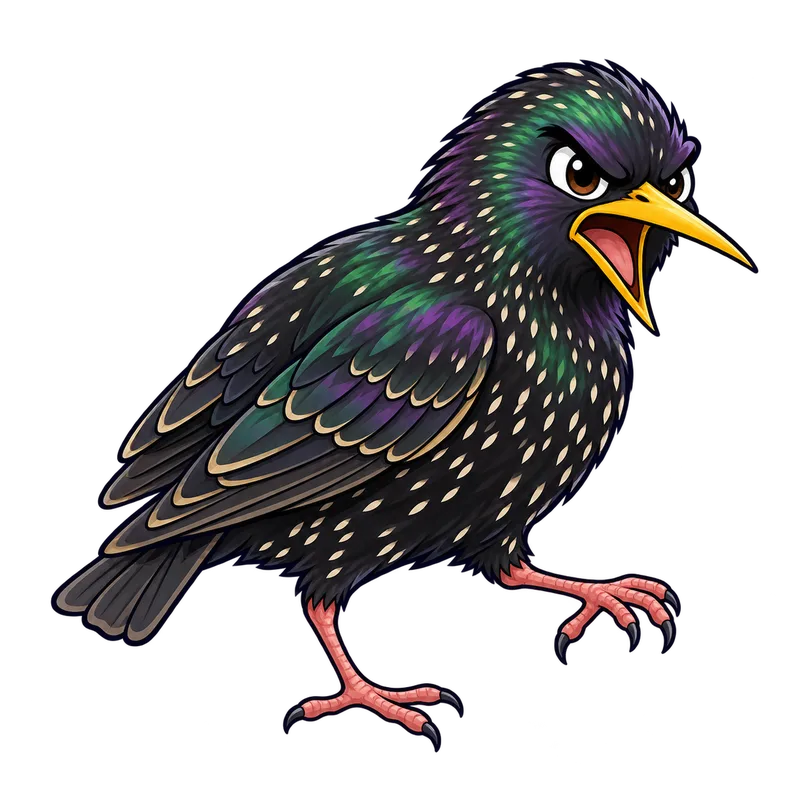
European starling
Sturnus vulgaris
- Size
- Not established
- Color
- Not established
- Habitat
- Open, agricultural, suburban, and urban areas
- Diet
- Agricultural grains, crops, and opportunistic food sources
- Life cycle
- Egg, altricial nestling, juvenile, breeding adult
The European starling is a familiar medium-sized bird often recognized more by its noisy, communal gatherings than its individual appearance. Spotting one in the yard usually reveals a creature that moves with a purposeful, ground-walking stride rather than the hopping gait common to many other common birds. Footprints left behind in mud or dusty ledges show a distinct track pattern with three slender toes pointing forward and one smaller toe pointing to the rear. Fecal deposits on structural surfaces typically display a characteristic white uric acid cap. Detailed verification of specific plumage traits generally requires a close inspection, as field identification at a distance relies primarily on behavior, silhouette, and flocking dynamics rather than minute physical measurements.
Habitat & behaviour
Starlings are adaptable creatures, making themselves at home in open fields, agricultural lands, suburbs, and dense urban centers alike. Their daily routine revolves around foraging for food and seeking secure roosting spots, which frequently brings them into direct contact with human structures. Buildings offer ideal shelter, with vents, eaves, soffits, and structural crevices providing cavities for nesting and overnight protection. These birds are intensely gregarious, meaning they rarely travel alone. Large flocks congregate at communal roosts, particularly during the winter months or after the breeding season wraps up. Such massive gatherings generate significant noise and concentrated messes. Populations are driven by the basic necessities of life, drawing them toward places with abundant food sources, reliable water, and accessible shelter. Leaving out unsecured food or unmanaged agricultural grain acts as an open invitation.
Visual variations
Since these are birds and not six-legged crawlers, you will not find any mysterious nymphs or hidden social castes running the show. Their growing-up story is simple and distinctly avian, starting inside an egg tucked away in a safe nook, moving to a helpless nestling waiting for dinner to be dropped into its open beak, turning into a gangly juvenile, and finally settling into an adult ready to start the cycle over. Functional wings give the grown-ups the ability to pull off those massive, synchronized aerial displays that look like living smoke clouds before they drop down for the night. You might notice their bills shifting color or their feathers looking a bit different depending on the time of year, but spotting those tiny details takes binoculars and patience. If you are just glancing out the kitchen window at a rooftop crowd, you are mostly seeing a sturdy, dark-feathered bird that knows how to muscle its way to the front of the food line.
Why it matters
Having these birds move into your neighborhood brings a few headaches, starting with the way they treat your house like a real estate opportunity. They will wedge themselves into gaps in your roofline or vents, and the ledges underneath them quickly turn into messy, acidic disaster zones that can eat away at paint and metal over time. Farmers and growers deal with a much heavier financial hit when hungry flocks descend on grain storage or fruit orchards to strip them clean before harvest time. Aside from property damage, accumulated droppings create a genuine sanitation headache that you cannot just ignore. Old, dried waste can turn into fine dust that carries health risks if you kick it up into the air. If you are tackling a serious cleanup job, you want to gear up with proper masks and gloves, and give everything a thorough misting with water first so you are not breathing in dust clouds. For big structural issues or massive roosts that refuse to move, bringing in a licensed wildlife control operator or pest management professional is the safest route to get things sorted out properly.