Starlings
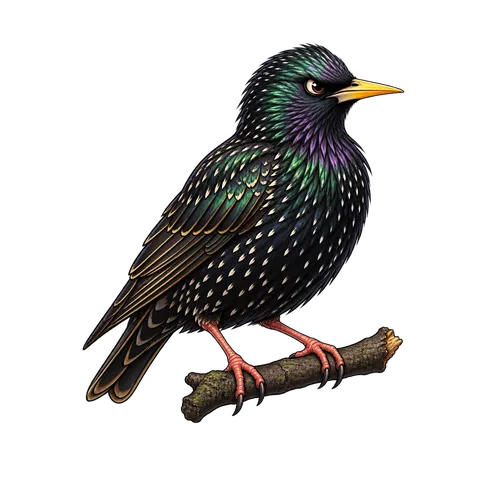
What binds starlings into a single pest group is not just their shared preference for nesting in building cavities and roosting in deafening, massive flocks, but their ability to transform from a solitary backyard visitor into an overwhelming architectural nuisance. When you spot a stocky, medium-sized bird with a short square tail, a sharp triangular wing profile in flight, and an iridescent sheen shifting to heavy autumn speckles, you are looking at a creature built for communal survival and persistent urban intrusion.
Telling them apart from their neighbors comes down to scale and silhouette rather than color alone, since blackbirds and grackles often share the same lawn. Unlike blackbirds that flaunt long, flowing tails, or massive crows with heavy bills and deep caws, starlings keep a compact, chunky frame and move with a hurried, purposeful walk rather than a heavy hop. If you notice a noisy flock darting into an unsealed dryer vent or a roof soffit with a mouthful of grass, you are dealing with starlings and not house sparrows or pigeons, which lack that distinct metallic flash and dagger-like bill.