
Are starlings aggressive?
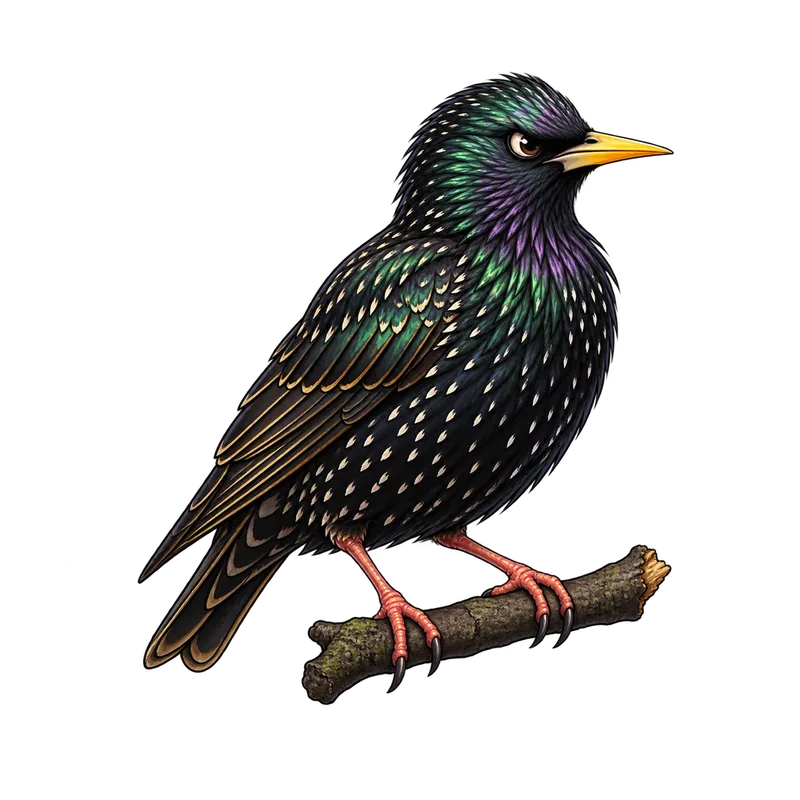
No, starlings are not aggressive toward humans, but they are exceptionally ruthless regarding other birds. Their entire repertoire of hostility is reserved for competing with other bird species for nesting sites and food. They will not dive-bomb you in the yard or chase your dog across the grass.
What is actually going on
Picture this: you are sitting on the back patio with your morning coffee, watching a pair of bluebirds darting back and forth near the nest box you put up last weekend. Everything is peaceful until a noisy, speckled bird swoops in, harasses the smaller birds until they flee, and immediately takes over the box. Naturally, you wonder what is going on and whether your family or pets are next on the hit list.
To answer the question right away: no, starlings are not aggressive toward humans, but they are exceptionally ruthless regarding other birds. They will not dive-bomb you in the yard or chase your dog across the grass. Their entire repertoire of hostility is reserved for competing with other bird species for nesting sites and food.
Think of it like a desperate housing shortage in a small town. Because starlings cannot carve out their own wooden cavities the way woodpeckers do, they rely entirely on finding existing hollows, birdhouses, or gaps in your roof. When a pair of starlings spots a nest box already claimed by a native bluebird or swallow, they do not wait for a vacancy. They move in with brute force, pecking the residents, destroying eggs, and sometimes killing nestlings before building their own messy nest right on top of the tragedy.
Beyond real estate disputes, starlings turn up the aggression during autumn and winter when they gather in massive flocks. If you put out a backyard bird feeder, you have probably seen how a visiting flock behaves. They act like the neighborhood bully, swarming the tray and clearing out the high-protein seeds in minutes through sheer chaotic numbers, leaving smaller songbirds with nothing.
The main doubt people raise at this point is whether these birds might eventually lose their fear of people and start attacking. The short answer is that they have lived alongside humans in urban and agricultural areas for generations, viewing us simply as part of the landscape rather than a threat or a target. Their aggression stays locked on avian competitors and food sources.
How to tell for sure
Spotting a starling usually depends on the season, because their appearance changes quite a bit throughout the year. During spring and summer, you are usually looking at a robin-sized bird with a stocky build, a short tail, and a long, slender bill. In the breeding months, their feathers show an iridescent, glossy black with metallic purple and green sheens, and their bills turn a bright lemon yellow.
Once autumn rolls around and winter sets in, those metallic greens and purples fade under a cloak of prominent white or cream-colored spots that look like tiny stars, which is how they got their name. At the same time, their bright yellow bills darken to a dull brownish-black. You can usually observe these details with the naked eye from five to ten meters away, or use binoculars if they are perched higher up on a roofline.
When you hear them, they usually give away their presence before you see them. Their vocalizations are a bizarre, rattling mix of harsh scolds, whistles, and uncanny imitations of other birds or mechanical sounds. If you see a dense, swirling cloud of dark birds wheeling across the sky in a synchronized flock before dropping onto a commercial warehouse roof or an agricultural feedlot, you are almost certainly looking at a starling roost.
What usually comes next
Deciding what to do about them usually comes down to protecting your property or the native birds nesting in your yard. If your primary goal is keeping starlings out of backyard birdhouses, physical exclusion is your best friend.
You do not need complicated traps or sprays to protect a nest box. The most reliable defense is changing the entrance hole. If you install a metal hole-reducer plate with an opening diameter of one and a half inches or smaller, starlings simply cannot squeeze their bodies through it. Native bluebirds and tree swallows fit through that smaller opening easily, leaving the starlings out of luck and forced to look elsewhere.
If you are dealing with starlings roosting on your building ledges or under open eaves, static deterrents like plastic owl decoys rarely work for long. Starlings figure out within a few days that a plastic owl never moves or poses a real threat, and they will happily perch right on top of its head. Effective deterrence requires changing things up constantly by moving devices around and mixing visual tricks with loud noises, or sealing up structural gaps wider than an inch using sturdy galvanized wire mesh.
When to get help
Most backyard starling issues can be managed with basic exclusion and feeder adjustments, but some situations call for outside help. If you find a massive accumulation of droppings inside an attic, soffit, or commercial crawlspace, do not grab a dry broom and sweep it up. Dry bird manure harbors fungal spores that can cause serious respiratory illness when inhaled.
When cleaning up significant droppings, always wear disposable gloves and a properly fitted N95 respirator mask, and lightly mist the waste with water first to keep dust from floating into the air. If the roosts are located at dangerous heights on steep roofs or require specialized scaffolding, or if the cleanup involves extensive biohazard remediation inside an enclosed space, it is time to call a licensed pest management professional or a wildlife control operator to handle the job safely.