
Wasps & Hornets
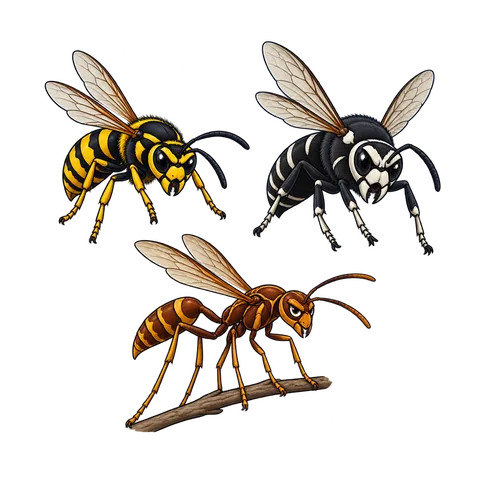
If you are standing on your back porch wondering why half a dozen striped flyers have suddenly claimed your patio table, you are likely looking at a member of this mixed bag of social colonists and solitary hunters. While library catalogues lump these species together under one heading, they actually split into two very different lifestyles, ranging from aggressive yellowjacket colonies that build enclosed paper nests inside wall voids to mild-mannered paper wasps that string open umbrella combs beneath your eaves and solitary mud daubers that mind their own business.
Spotting the difference between this group and their fuzzy, pollen-carrying bee neighbors comes down to a few naked-eye details, starting with the smooth, hairless body cuticles and that signature narrow waist that separates them from broad-waisted sawflies and wood wasps. You will notice they move in quick, darting flights rather than buzzing lazily from bloom to bloom, and while native species play a genuinely helpful role by hunting garden caterpillars to feed their young, invasive predators like the yellow-legged hornet require a call to state agriculture officials rather than a DIY spray can.
Explore wasps & hornets
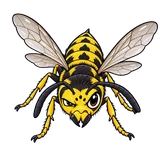 German yellowjacketVespula germanica
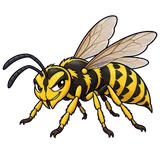 Eastern yellowjacketVespula maculifrons
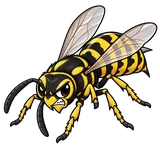 Western yellowjacketVespula pensylvanica
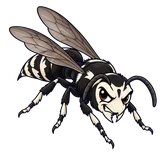 Bald-faced hornetDolichovespula maculata
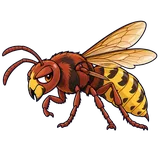 European hornetVespa crabro
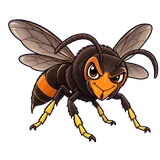 Yellow-legged hornetVespa velutina
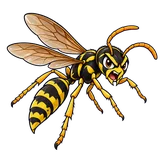 European paper waspPolistes dominula
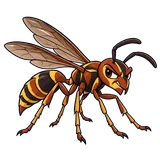 Paper waspsPolistes species
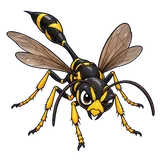 Mud daubersSceliphron and Chalybion species
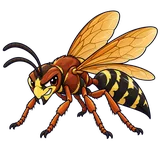 Eastern cicada killerSphecius speciosus
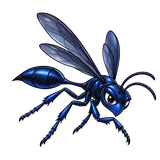 Blue mud dauberChalybion californicum