
Asian hornet vs European hornet: how can you tell?
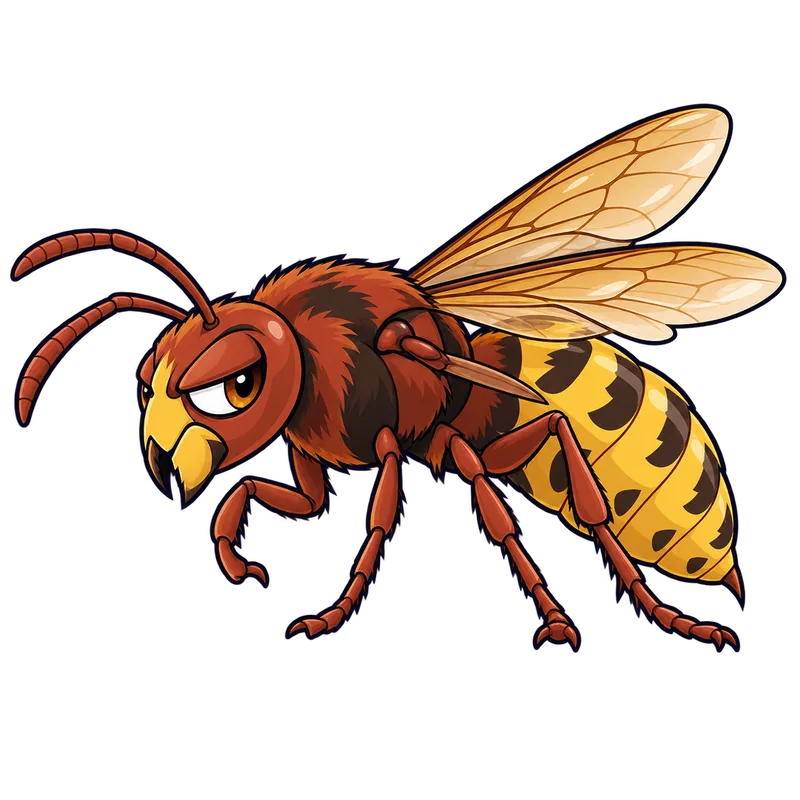
Telling an Asian hornet and a European hornet apart comes down to body size, leg color, and abdominal patterns. The invasive Asian hornet is smaller with a velvety dark thorax, bright yellow tips on its legs, and a single orange-yellow band on its abdomen. The native European hornet is larger, features a reddish-brown head and chest, and has dark teardrop shapes along its yellow abdomen.
What is actually going on
You are standing in the garden on a warm Tuesday afternoon, minding your own business near the flower beds, when a large insect zips past your ear with a deep, authoritative buzz. It lands on a blossom, and you freeze. Is that the infamous Asian hornet you have been hearing about on the news, or just one of the big European hornets that have lived around the woodpile for decades? It is an easy mistake to make, and with everyone on high alert for invasive pests, a buzzing stripe of yellow and black is enough to make anyone second-guess their afternoon outdoors.
The short answer is that while both insects are large and intimidating, telling them apart comes down to a few distinct color patterns and habits. The Asian hornet, more officially known as the yellow-legged hornet, is a bit smaller, features a velvety dark thorax and sports bright yellow tips on its legs that look remarkably like tiny athletic socks. The European hornet is generally larger, boasts a reddish-brown head and chest, and has an abdomen covered in distinctive black teardrop shapes rather than a single bright orange band.
People often panic when they see any large stinging insect near a hive or a sunny wall, assuming the worst. Yet the presence of a hornet nest does not automatically mean an ecological invader has arrived. Native European hornets have a long history here, and while their sting is just as painful, they tend to mind their own business unless their paper nest inside a hollow tree or wall void is directly threatened.
How to tell for sure
To know for sure what you are looking at, you usually need to get close enough to observe a few key features without putting yourself in harm's way. A safe distance of three to six feet is normally plenty if the insect is busy foraging or hovering.
Start by looking at the legs. The yellow-legged hornet gets its modern preferred name for a very good reason. Its legs are dark near the body, but the lower segments and feet are a striking, bright yellow. If you picture an insect that pulled on bright yellow socks before heading out for the day, you have the right image. The European hornet has uniformly dark brown or reddish-brown legs with no bright yellow ends at all.
Next, check the midsection, or thorax, which sits right behind the head. The Asian hornet has a dark brown or velvety solid black thorax. The European hornet features a prominent reddish-brown head and a thorax mixed with reddish-brown and black patterning.
Now look at the abdomen. The Asian hornet has a mostly dark body, but it features a single, unmissable bright yellow-orange band covering its fourth abdominal segment. The European hornet looks quite different, with a yellow abdomen marked by dark bands and a neat row of black teardrop-shaped spots along each side.
Behavior is another massive giveaway, especially if you happen to be watching near a beehive. The Asian hornet is strictly day-active and practices a rather ruthless hunting method called hawking. It hovers motionless in mid-air right in front of a hive entrance, much like a tiny helicopter waiting to ambush returning honeybees. The European hornet, on the other hand, is primarily nocturnal. It often flies after dark and is the large visitor you will frequently find bumping clumsily against your porch light or window screen late at night.
What usually comes next
Once you have studied the insect and suspect you are looking at an invasive Asian hornet rather than a native species, your next move requires patience and caution rather than immediate action. You need to decide whether you are dealing with a foraging visitor or an active nest site, because the two scenarios demand entirely different responses.
If you spot a lone hornet visiting garden flowers, you can safely observe it or set up a simple monitoring trap using a plastic soda bottle with the top inverted and filled with a sweet bait like grape juice and brown sugar. This is especially useful for beekeepers who want to keep an eye on apiary health during the spring and summer months.
However, if you spot a nest, your practical choices narrow down to a single responsible path. You should never attempt to knock down, spray, or destroy a hornet nest yourself. Asian hornets defend their colonies with aggressive numbers, and disturbing a nest can trigger a massive defensive swarm. Instead, your best course of action is to take a clear photograph from a safe distance, ideally placing a coin or pen nearby to show scale, and submit your observation through the appropriate state agricultural department portal or local wildlife reporting app.
When to get help
There are moments when a pest sighting moves past a simple garden puzzle and requires immediate intervention from professionals or medical personnel. If you discover a suspected Asian hornet nest on your property, you need to involve state agricultural inspectors, local biosecurity authorities, or a licensed pest control operator who has the specialized protective gear and authorized treatments required to handle large colonial stinging insects safely.
On the health side of things, hornet stings always cause immediate localized pain, swelling, and redness, but certain reactions demand emergency care without hesitation. If someone suffers multiple stings or shows red-flag symptoms of a severe allergic reaction, such as chest pain, swelling of the face, mouth, or throat, difficulty breathing, dizziness, or widespread hives, call emergency services immediately or contact your local poison control center. Because any insect sting carries a minor risk of infection or tetanus, anyone who has not had a booster shot within the last five to ten years should consult a healthcare provider promptly after being stung.