
What does a mud dauber nest on a house look like?
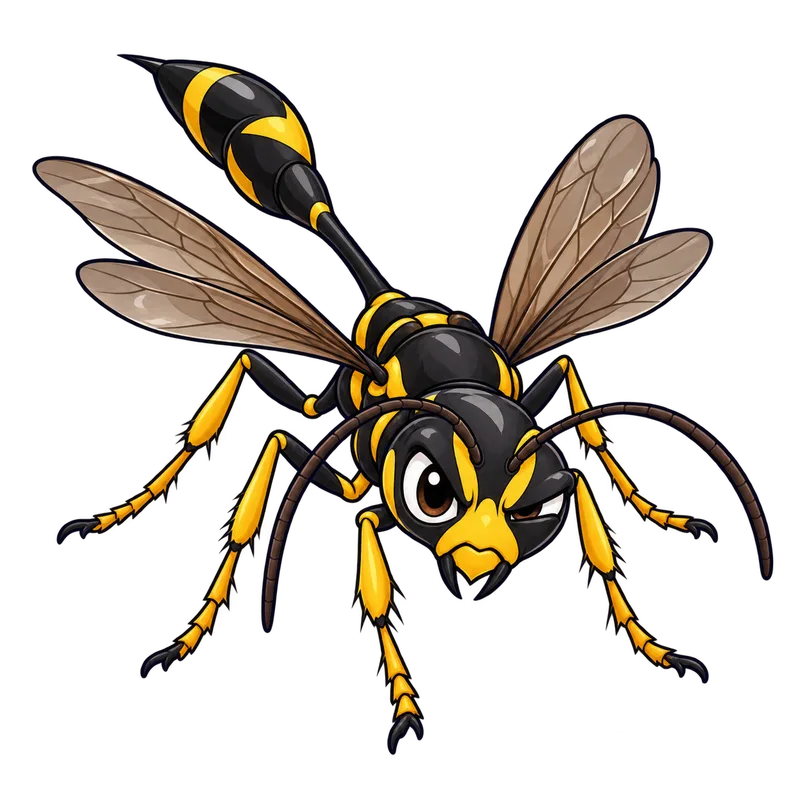
A mud dauber nest on a house looks like a rough, dry lump of gray-brown earth that resembles baked clay stuck to the wood. Depending on the species, the structure can appear as a fist-sized mass of dried mud over vertical tubes or as neat, parallel, cylindrical tubes resembling an organ pipe.
What is actually going on
You walk out to water the hanging ferns on the porch, glance up at the eaves, and spot a rough, dry lump of gray-brown earth stuck to the wood. It looks like someone slapped a handful of wet clay against your siding and let it bake in the sun. Naturally, you freeze, wondering if you are about to disturb an angry swarm of stinging insects that will chase you across the yard.
What you are actually looking at is a mud dauber nest, and the reality is far more mundane and a lot less terrifying than a paper wasp hive. A single, solitary female wasp built that little earth structure, working entirely alone. She scooped up wet mud from a damp patch in the garden, flew it over pellet by pellet, and shaped it into a private nursery for her future offspring.
She is not building a social empire or a defensive colony with queens and workers. Mud daubers do not have a home base to protect, which means that lump of dried mud is essentially an empty apartment building for a very quiet, uninterested tenant. The wasp herself is likely off hunting spiders somewhere in the petunias and will spend her night resting on a nearby leaf rather than inside the mud structure.
How to tell for sure
Spotting the nest is usually the easy part, but confirming what kind of mud dauber built it depends on the shape. If the structure looks like a smooth or lumpy fist-sized mass of dried mud plastered directly over a cluster of vertical tubes, you are usually looking at the handiwork of the black and yellow mud dauber. They tend to prefer sheltered overhangs, porch ceilings, and garage rafters.
If the nest instead consists of long, smooth, cylindrical tubes running side by side vertically or diagonally like a miniature musical instrument, you usually have an organ-pipe mud dauber on your hands. These neat parallel ridges look surprisingly deliberate, almost as if someone glued a row of tiny ceramic straws to your exterior brick wall or shed siding.
Sometimes you might spot a shiny, metallic blue wasp investigating an older nest. That is usually a blue mud wasp, and she usually does not build anything from scratch. Instead, she typically carries water droplets in her mouth to soften up an abandoned nest built by another species, clears out the old contents, and moves right in.
One common belief is that any gray or brown structure under a roof eave must be an active wasp hive full of buzzing defenders. In reality, you can tell the difference by looking at the material. Mud daubers use hard, mineral-based soil and clay that feels like dried cement, while paper wasps and yellowjackets scrape wood fibers to construct a lightweight, papery comb with open hexagonal cells. If it feels like rock, it is mud.
What usually comes next
When you find one of these nests on your house, your main practical choice usually comes down to whether you want to leave it alone or scrape it off. Because mud daubers are docile creatures that rarely sting unless you squeeze them directly in your hand, you do not actually need to panic or wage chemical warfare against your siding.
If the nest is old and abandoned, which you can usually tell by checking for clean, circular exit holes where the adult wasps already chewed their way out last season, you can simply remove it whenever you feel like tidying up. Even if it is active, the female wasp is remarkably tolerant of foot traffic and generally ignores humans entirely.
If the placement bothers you because it sits right above your back door or ruins the look of your fresh paint, you do not need an arsenal of expensive bug sprays. Grab a simple plastic putty knife or a flat scraper from the garage. Slide the blade gently between the base of the dried mud mass and the wood or brick surface, and pop the whole structure right off with a single firm push. Sweep away any leftover dust with a stiff brush and water, and the job is done.
When to get help
While most mud dauber encounters are harmless DIY moments, there are times when you should hand the situation over to a professional or seek medical advice. If the nest turns out not to be a mud dauber structure at all, but rather a papery yellowjacket or hornet nest hidden inside an enclosed wall void or attic space, step back and call a pest control operator. Invasive social species also require professional handling and reporting to state agricultural departments rather than a casual scrape with a putty knife.
If you do happen to be one of the rare people who gets pinched or trapped by a handling mistake and receives a sting, wash the area with soap and water and apply a cold pack to ease the mild swelling. However, seek immediate emergency medical care if the stung person shows signs of a severe allergic reaction, such as dizziness, throat swelling, or difficulty breathing. For non-emergency questions regarding unusual sting reactions, you can reach the Poison Help Helpline at 1-800-222-1222.