
Yellow jacket vs wasp sting: can you tell by the reaction?
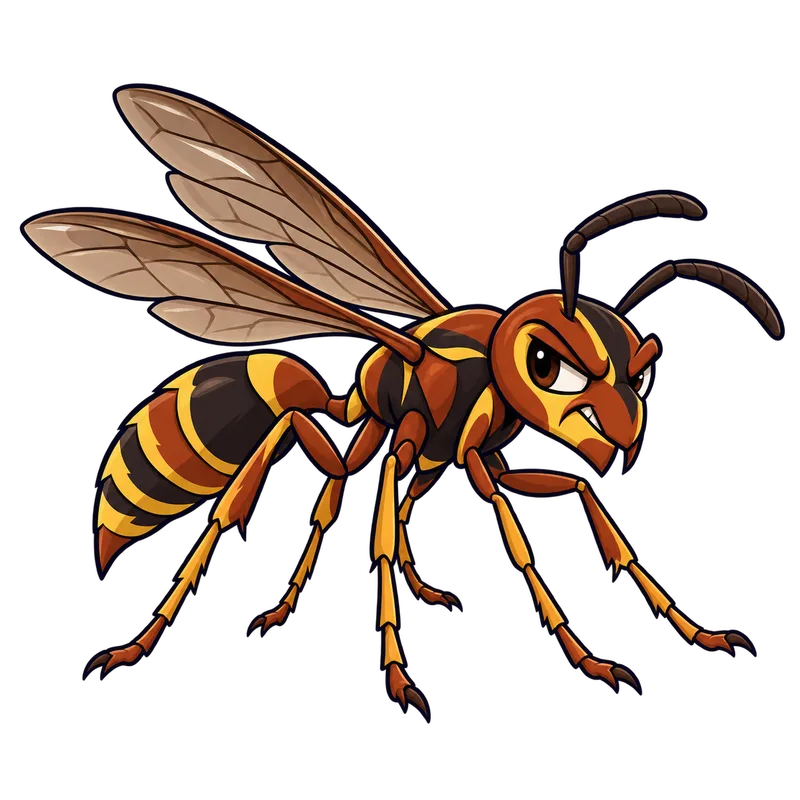
No, you cannot tell the difference between a yellow jacket and a wasp sting by looking at the skin reaction. Human skin reacts the same way to similar venom components from smooth stingers, so the resulting welt depends entirely on your personal immune sensitivity and where you took the hit.
What is actually going on
You are standing by the kitchen sink, running cold water over a throbbing red welt on your forearm, wondering if you just tangled with a yellowjacket or a regular wasp. Maybe you were out mowing the lawn and clipped an old rodent burrow hidden in the tall grass, or perhaps you reached under the porch railing to grab the garden hose and brushed against an open paper nest. Now you are staring at a swollen patch of skin, trying to remember if yellowjackets leave a different mark than other flying stingers.
The short answer is no. It is scientifically and medically impossible to tell whether a sting came from a yellowjacket, a paper wasp, or any other wasp or hornet based on the skin reaction alone.
When you get stung, your skin simply reacts to the chemicals in the insect venom. All of these stinging insects carry very similar venom components and possess smooth, unbarbed stingers. Because human skin responds to that chemical jolt through standard immune pathways, the resulting welt looks and feels pretty much the same no matter which specific pest delivered it.
You might wonder why some stings swell up to the size of a teacup while others barely leave a dime-sized pink dot if the venom is essentially the same. That difference comes down to your own body, not the insect. The size of the welt, the intensity of the localized pain, and the amount of redness depend entirely on your personal immune sensitivity, how much venom got injected, and exactly where on your body you took the hit. A sting on a tight patch of skin like a knuckle often hurts worse and swells differently than a sting on the fleshy part of an arm, purely due to anatomy.
How to tell for sure
Since your skin cannot give you a straight answer, you usually have to rely on the physical evidence of the insect itself or the surrounding environment.
Take a careful look at the wound site right after the incident. If you happen to find a dark, tiny stinger and a little attached sac still embedded in your skin, you were actually stung by a European honey bee. Honey bees have barbed stingers that tear away from their bodies during an attack. Wasps, yellowjackets, and hornets, on the other hand, have smooth stingers, meaning they can pull away clean and sting you multiple times without leaving hardware behind.
If you did not see the insect, look at where you were standing. Yellowjackets usually build paper nests underground in old animal burrows or hidden inside building wall voids, and they tend to get fiercely defensive if you step near their home. In late summer and fall, you will also spot them aggressively scavenging around garbage cans and outdoor picnic tables for meat and sugary drinks. Paper wasps usually build open, umbrella-shaped nests tucked under eaves, deck railings, and porch roofs, and they are more likely to sting when you accidentally brush against their hanging combs.
If you happen to spot an unusual pest, context matters. Invasive species like the yellow-legged hornet are actively tracked by agricultural authorities in parts of the southeastern United States, while other large hornets once making news headlines have long since been declared eradicated from North America. However, identifying the insect from a blurry photograph of a red skin lesion is simply not reliable.
What usually comes next
When you are dealing with a standard, local sting, your main job is keeping the area clean and handling the discomfort while your immune system calms down on its own.
Start by washing the sting site thoroughly with plain soap and water to clear away any surface bacteria. Next, grab an ice pack wrapped in a clean cloth or a towel dampened with cold water, and hold it against the skin for fifteen to twenty minutes to help dull the pain and bring down the swelling. If the sting is on your hand, arm, or leg, prop the limb up roughly to heart level to keep fluid from pooling in the area.
You can usually manage the lingering ache and itch with standard over-the-counter options according to the instructions on the product label, such as a basic pain reliever or an oral antihistamine. Resist the urge to squeeze, pinch, or cut the skin, and skip unverified home remedies that might irritate broken tissue.
If you are dealing with a nest on your property, remember that the directions printed on a pesticide product label are the law, and you must follow them to the letter. Never try to tackle large underground yellowjacket colonies, hidden wall nests, or high hornet combs with casual DIY sprays. When a nest is large, tricky to reach, or involves regulated invasive species, call in a professional pest control technician or notify your local agricultural extension office.
When to get help
Most stings are miserable for an hour and sore for a couple of days, but certain situations demand immediate medical attention.
Call emergency services right away if you notice any red flags pointing toward a severe allergic reaction. These include trouble breathing, wheezing, swelling around your lips, tongue, face, or throat, or difficulty swallowing and speaking. Chest tightness, a rapid pulse, dizziness, confusion, or a widespread rash breaking out far away from the sting site also require emergency care. You can reach the national poison control helpline at 1-800-222-1222 for free guidance if you are unsure about an envenomation.
Keep an eye on the sting over the next few days. If you develop spreading redness, increasing warmth, red streaks, worsening pain, pus, or a fever twenty-four to seventy-two hours later, you might be dealing with a secondary bacterial infection that needs a clinician's evaluation. It is also wise to check your vaccination records to ensure your tetanus booster is up to date, as any puncture wound can introduce tetanus spores.