
What is a red paper wasp sting?
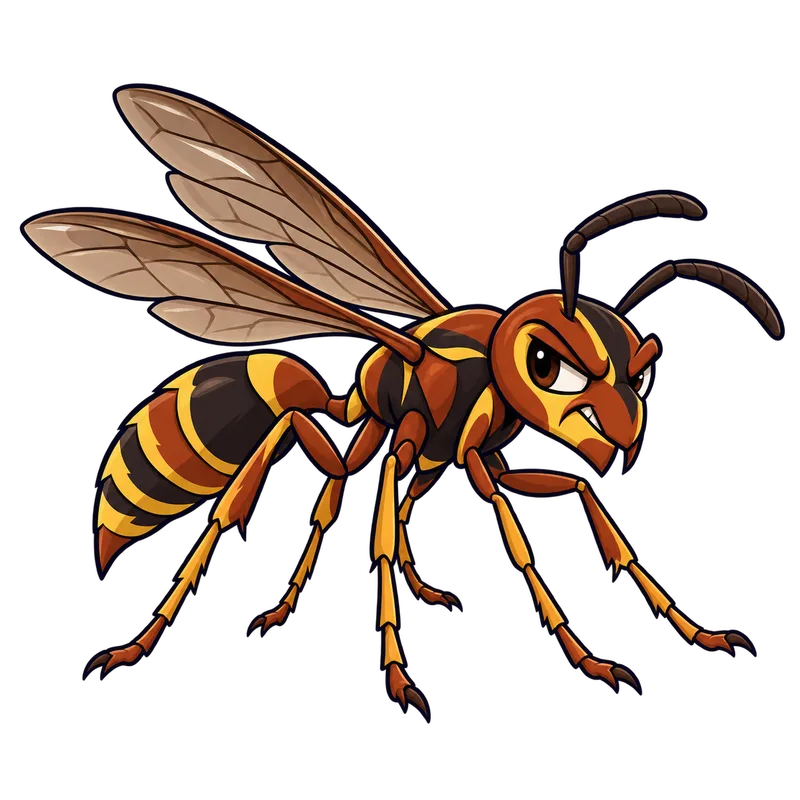
A red paper wasp sting is a defensive envenomation delivered by a female paper wasp when she feels her body or nest is under threat. The smooth stinger injects proteins that cause an immediate burning sensation and a raised pale welt, which typically fades within a few hours.
What is actually going on
You are standing on the back porch on a warm Saturday morning, reaching up to clear a few cobwebs near the light fixture, when a sudden sharp pinch bites into your knuckle. You jerk your hand back, shake it out, and watch a slender, brownish wasp with long, dangling legs cruise away from the eaves. A red paper wasp sting is a defensive envenomation delivered by a female paper wasp when she feels her body or her nest is under threat. Unlike a honeybee, which leaves its barbed stinger buried in your skin and dies afterward, a paper wasp has a smooth stinger. She can pull it right back out and sting you over and over if she stays angry.
When that smooth stinger enters your skin, it injects a mix of proteins and other chemicals meant to cause immediate local distress. You get a sudden burning sensation, a raised pale welt surrounded by redness, and a throbbing ache that usually settles down after a little while. For most people, that is the entire story. The body reacts to the venom with a localized burst of inflammation, the swelling peaks, and things return to normal within a few hours.
Why do some stings turn into a minor annoyance while others become terrifying? It comes down to how your immune system responds to those venom proteins. A normal reaction stays put right where the sting happened. But if your body is sensitized from an earlier encounter, those proteins can trigger an allergic cascade. Instead of just a red knuckle, you might suddenly feel lightheaded or notice hives breaking out across your chest. That is the difference between a local defense reaction and a systemic crisis.
People often wonder if you can tell which species of wasp got you by looking at the color of the welt or the shape of the mark. You cannot. Dermatological lesions and puncture marks do not carry nametags. If you want to know who is responsible, you have to look at the insect itself or the nest it left behind, rather than trying to read the skin.
How to tell for sure
Paper wasps belong to the genus Polistes, and they usually measure up to three quarters of an inch long. They have slender bodies, a very distinct narrow waist separating the thorax from the abdomen, and long legs that dangle noticeably when they fly. Their coloration typically runs to brownish with reddish, yellowish, or dark blackish markings.
The nest is the real giveaway. If you find a nest tucked under a porch overhang, a deck railing, or a window frame, look at its shape. Paper wasp nests consist of a single, open, umbrella-shaped comb with exposed hexagonal cells and no protective outer paper envelope wrapping around it. It usually looks like a small gray paper disc with holes facing downward. If you see an enclosed, football-shaped paper nest hanging from a tree branch or tucked inside a wall void, you are usually looking at hornets or yellowjackets, not paper wasps.
When you get stung, the immediate symptoms usually include a sharp burning pain, a localized red welt, and mild swelling that lasts anywhere from fifteen minutes to a few hours. Uncomplicated stings generally fade away within a day or two without requiring anything more than basic patience and simple first aid.
What usually comes next
Your main practical decision after a sting is figuring out whether you need simple first aid or immediate emergency care. If the pain stays local and you are just dealing with a red welt on your arm, wash the sting site thoroughly with soap and water to clear away any surface bacteria. Press a cold compress or an ice pack wrapped in a cloth against the skin for ten to fifteen minutes to knock down the swelling and ease the sting.
If the sting sits on your hand or arm, elevating the limb can help keep the swelling down. For lingering discomfort or itching, over-the-counter pain relievers or oral antihistamines can be used according to the package directions.
Do not fall for old stories about cutting the skin or trying to squeeze out the venom. Squeezing or slicing the site does not extract the venom, and it does a wonderful job of breaking the skin barrier to invite secondary bacterial infections like staph or strep. Just clean it, cool it, and leave it alone.
One detail people often forget is their tetanus vaccination. Because a wasp sting breaks the skin, you need to check whether you have had a tetanus booster within the last five to ten years. If your immunization is outdated, you will need to schedule a visit with a clinician to get that updated.
When to get help
Most paper wasp stings require nothing more than a cold pack and a bit of time, but certain signs mean you need to drop what you are doing and get professional help immediately. Call nine-one-one or seek emergency medical care right away if you notice any signs of anaphylaxis, which is a severe, life-threatening allergic reaction. These red-flag symptoms include difficulty breathing, shortness of breath, wheezing, swelling of the face, lips, tongue, or throat, or a feeling of tightness in your chest and throat. Dizziness, confusion, a rapid heart rate, fainting, or widespread hives breaking out far away from the sting site also demand immediate emergency intervention. If the person stung has a prescribed epinephrine autoinjector, use it immediately according to the instructions while waiting for emergency help.
For non-emergency concerns, you can contact the national Poison Center helpline at one-eight hundred-two-two-two-one-two-two-two for expert triage advice on sting reactions. Watch the site over the next few days as well. If pain starts escalating after twenty-four to forty-eight hours, if redness spreads rapidly, if you notice pus draining from the puncture, or if you develop a fever, you are likely looking at a secondary bacterial infection that needs a clinician's evaluation.
Finally, if you find a large paper wasp nest located right next to a high-traffic entryway, a door, or a window, or if someone in the household has a known allergy to insect stings, do not try to handle the removal yourself. That is the time to call a licensed pest control professional to take down the nest safely.