
What symptoms after a hornet sting need urgent care?
Urgent care or emergency help is needed for hornet stings if you experience trouble breathing, swelling in your face or tongue, or a widespread rash breaking out far away from the sting site. Emergency evaluation is also required for multiple stings from disturbing a whole nest or for stings happening inside the mouth and throat.
What is actually going on
You are out in the yard pulling weeds, or maybe reaching for a garden hose behind the shed, and suddenly it feels like someone touched a lit match to your forearm. You pull your hand back, hiss through your teeth, and see a tight red welt already forming. Naturally, your mind races. Was it a wasp, a yellowjacket, or one of those hornets you keep reading about on the local news?
The immediate emergency you need to worry about is not what kind of insect left its mark, but how your body decides to handle the venom. A normal, expected local reaction means sharp burning pain, some redness, and a small swollen welt right where the stinger went in. Those local annoyances peak within a few hours and usually calm down over a day or two.
The real trouble starts when the immune system overreacts to the venom proteins, triggering systemic anaphylaxis. That is a rapid, life-threatening allergic shock that can develop in minutes. If you experience trouble breathing, swelling in your face, lips, or tongue, a tight feeling in your chest, or a widespread rash breaking out far away from the sting site, that requires immediate emergency care and a trip to the hospital.
How to tell for sure
Dermatologists and entomologists will tell you a hard truth that ruins a lot of detective work. You cannot reliably identify an insect species by looking at a red bump or a skin lesion on your arm. A welt is like a broken window. It proves something rough happened, but it does not leave behind a driver license. Assuming an unexplainable skin mark came from a hornet can actually be dangerous if the wound is actually a growing bacterial infection that needs antibiotics instead of first aid.
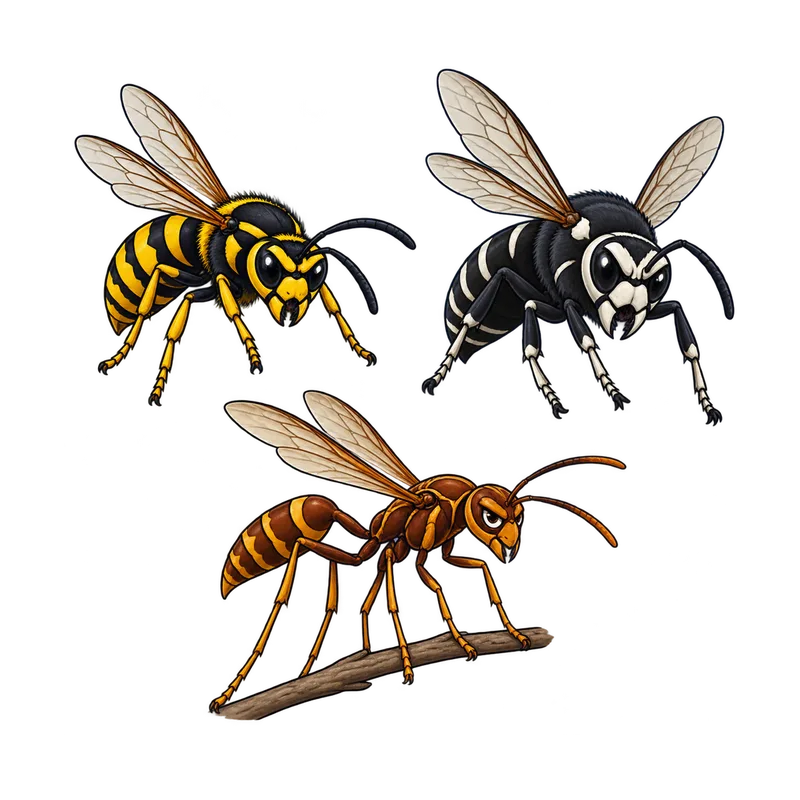
To spot an actual hornet, you usually have to look at the physical creature. In parts of the United States, attention has shifted to the invasive yellow-legged hornet, which is making its way through parts of Georgia, the Carolinas, and surrounding areas. These invaders have a dark, solid thorax and a dark abdomen with a bright yellow or orange fourth segment. The easiest field cue to remember is that they look like they are wearing bright yellow athletic socks on the lower segments of their legs.
If you happen to be in the Pacific Northwest, you can usually stop worrying about the northern giant hornet, which media outlets used to call the murder hornet. Federal and state agricultural authorities officially declared that species eradicated from the United States. Meanwhile, native look-alikes like cicada killers, paper wasps, and bald-faced hornets are common summer visitors that cause plenty of panic without being part of an invasive wave.
What usually comes next
When the pain and swelling refuse to wander away from the exact spot where the insect hit, you are usually dealing with a straightforward home remedy situation. Back away from the spot so you do not accidentally stumble into another angry swarm, and wash the whole area down with clean soap and water. Grab an ice pack or a cold damp towel and press it against the skin for ten or fifteen minutes to keep the swelling under control. If the sting landed on an arm or a leg, propping the limb up on a couple of cushions does wonders for stopping that annoying deep throbbing.
Never squeeze, scratch, or try to slice open a sting site to squeeze the venom out. That only welcomes everyday bacteria right into the broken skin.
You also want to check your mental calendar for your last tetanus booster. Outdoor puncture wounds can easily carry bacterial spores straight into deep tissue, so a medical check is usually smart if you cannot remember your last shot or if it has been more than five years. If you happen to spot a real invasive hornet or a suspicious nest dangling high in a tree, walk the other way. Never try a do-it-yourself nest removal with hardware store spray cans or gasoline, because riling up a large colony usually brings down a massive defensive attack. Instead, snap a safe, clear photograph if you can, and upload it to your local state agricultural department reporting website.
When to get help
You need to drop whatever you are doing and call for emergency help if the sting triggers any obvious warning signs of a severe allergic reaction. That means wheezing, throat tightness, dizziness, fainting, or hives breaking out across parts of your body that were nowhere near the sting.
Multiple stings from accidentally disturbing a whole nest also demand emergency evaluation, because taking in a massive venom load can cause severe systemic toxicity even in people who do not have a classic insect allergy. Stings that happen inside the mouth, down the throat, or right on the neck are another serious exception where swelling can quickly block your airway, needing professional medical assessment right away.
For stings that start showing signs of infection a few days down the road, such as increasing pain, warmth, pus, or red streaks crawling outward from the wound, contact an urgent care clinic or your regular doctor.