
How big is a yellow-legged hornet?
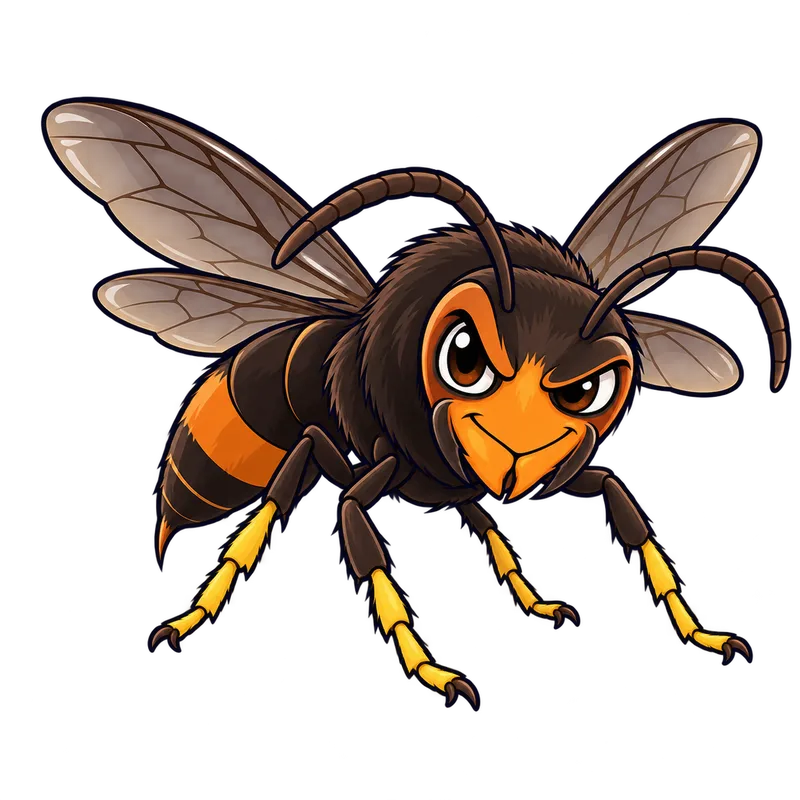
An adult yellow-legged hornet worker measures between 0.7 and 1.0 inches in body length. Spring queens are larger than summer workers, and first-generation workers from early nests tend to be smaller.
What is actually going on
Picture stepping out onto the back porch on a warm August morning to water the container plants, only to notice a thick-bodied insect hovering near the overhang like a miniature helicopter. It is noticeably larger than the paper wasps you usually swat at, and your mind immediately jumps to the sensational news stories about giant stinging pests. You wonder just what you are looking at and whether you need to run inside.
An adult yellow-legged hornet worker measures between 0.7 and 1.0 inches in body length. That makes it roughly the length of a US quarter or the top knuckle of an adult thumb. It sits in an awkward middle ground in the wasp world. It is about twice the length of a standard western honey bee or a common yellowjacket, but it is noticeably smaller than the European hornet and only about half the size of the northern giant hornet.
Size alone can play tricks on your eyes, especially when an insect is buzzing past your ear at high speed. A flying hornet often appears up to half as big again to an anxious observer because of wing blur and dangling legs. But if you manage to get a steady look at one, you are looking at an insect that is sturdy and substantial without being a lumbering giant.
The physical presence of these hornets also changes dramatically depending on the time of year, because their nests grow right along with them. A lonely queen starting an embryo nest in the spring builds something about the size of a tennis ball under a porch eave. By midsummer, that structure expands into a primary nest the size of a softball or a volleyball. Come autumn, the colony relocates high into a tree canopy or a roofline, where the secondary paper nest swells to the size of a basketball or a beach ball, occasionally growing large enough later in the season to fill the bed of a pickup truck while housing up to 6,000 workers.
How to tell for sure
Relying on measurements alone in the field is a gamble, because spring queens are larger than summer workers, and first-generation workers emerging from early nests tend to be on the smaller side. You usually need to look past sheer length and focus on a specific combination of physical traits to confirm what you have found.
Think of the insect as wearing a specific uniform. The chest, or thorax, is a solid velvet-black or very dark brown. The abdomen is mostly dark brown with fine yellow borders, featuring a prominent, broad yellow-orange fourth segment near the tail end. Most distinctively, the insect sports what look like bright yellow crew socks. While the upper parts of the legs near the body are dark, the distal segments, or feet, pop with a striking yellow color.
You can usually separate the yellow-legged hornet from its common lookalikes by checking these details from a safe distance of six to fifteen feet. The European hornet is larger, measuring up to 1.5 inches, and features a reddish-brown head and thorax with a yellow abdomen marked by black teardrops. The northern giant hornet is massive, reaching up to 2.0 inches with a distinctive bright orange head. Native cicada killers are similarly huge, up to 2.0 inches long, but possess a reddish thorax and round eyes.
Beekeepers often spot another reliable behavioral clue before they ever measure an insect. Yellow-legged hornets practice what scientists call hawking. They hover motionless in midair right outside a beehive entrance, waiting to snatch foraging honey bees out of the air as they return with pollen. If you see a medium-sized dark wasp with yellow leg tips maintaining a helicopter hover outside a hive, you are likely looking at this species.
What usually comes next
When you suspect you have spotted a yellow-legged hornet or a suspicious paper nest on your property, your next move should be careful observation rather than direct action. Take a step back and keep your distance, as these insects can defend their nesting sites aggressively when disturbed.
If you are a beekeeper or a homeowner living in an impacted region, you can set up simple monitoring traps to keep tabs on activity. A basic homemade trap made from a plastic soda bottle with the top inverted and baited with a sweet solution of grape juice and brown sugar can help catch foragers in the spring. In late summer, those traps are typically switched to protein-based lures. Check these containers every week or two and photograph any suspect captures alongside a coin for scale.
If you find a nest, your practical choices narrow down immediately. You must decide not to touch it, spray it, or attempt any form of do-it-yourself removal.
When to get help
Attempting to knock down or spray a hornet nest yourself is a quick way to trigger a defensive attack from thousands of stinging insects. More importantly, botched removal attempts often allow the founding queen to escape and establish new satellite nests elsewhere, which completely defeats regional containment efforts.
You need to involve professionals the moment you suspect you have found a yellow-legged hornet or an active nest. Take a clear photograph from a safe distance and report your sighting directly to your state department of agriculture or the relevant national plant health agency. In the United States, agricultural departments in states like Georgia, South Carolina, and North Carolina maintain dedicated online reporting tools for this exact purpose. In the United Kingdom, sightings are handled through the National Bee Unit and the Asian Hornet Watch app.
Keep in mind that hornet stings carry real medical risks. Their venom causes severe pain and localized swelling, and multiple stings can trigger systemic reactions or dangerous respiratory distress. Anyone who experiences throat tightness, difficulty breathing, or other signs of a severe allergic reaction after a sting must seek emergency medical evaluation immediately, or contact poison control without delay.