
Yellow-legged hornet vs Asian giant hornet: what is different?
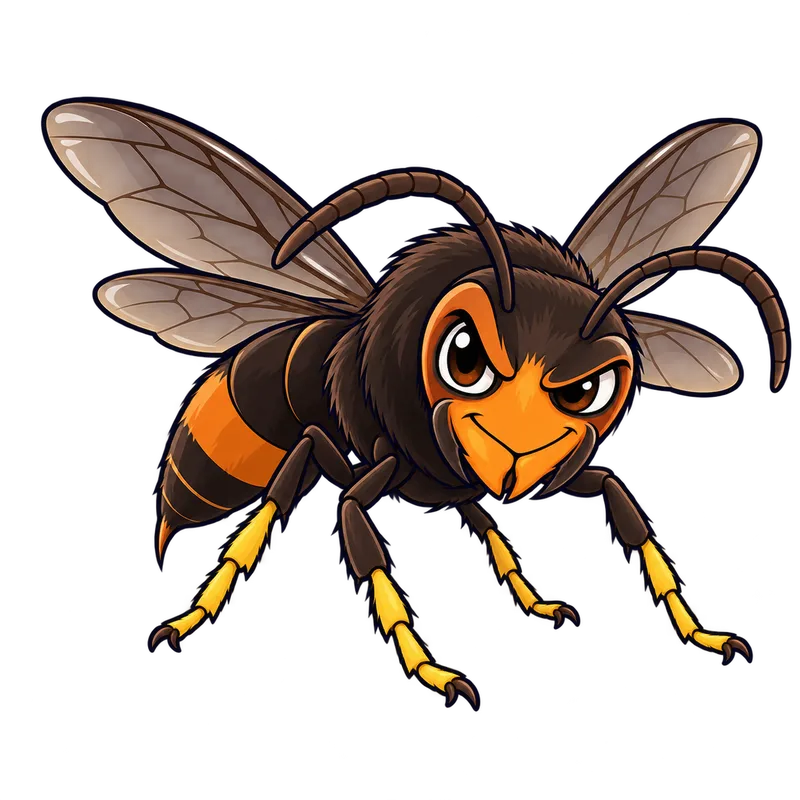
The yellow-legged hornet and the northern giant hornet differ mainly in their size, coloration, nesting habits, and geographic locations in North America. The yellow-legged hornet measures 0.7 to 1.0 inch long with yellow leg tips and builds high tree nests, while the northern giant hornet reaches up to 2.0 inches long and nests underground.
What is actually going on
Imagine walking out to check the mail on a warm morning, and you spot a thick-bodied insect hovering near the edge of the roofline. Your mind probably races straight to the headlines about giant hornets taking over the countryside. People tend to lump any large, menacing wasp into one terrifying category, but the reality on the ground is a bit more specific. When folks ask about the difference between the yellow-legged hornet and the northern giant hornet, they usually want to know which one they are actually looking at, and whether they need to pack up the family and flee the yard.
The short answer is that you are dealing with two entirely different species with distinct habits, sizes, and geographic footprints. The yellow-legged hornet measures about 0.7 to 1.0 inch long, features dark legs with bright yellow tips that look a bit like high-top socks, and builds massive paper nests high up in tree canopies. The northern giant hornet, formerly known as the Asian giant hornet, is much larger at 1.5 to 2.0 inches long, sports a solid yellow-orange head, and nests almost exclusively underground.
Mixing them up is easy to do if you only rely on panic, but their daily routines give them away. Yellow-legged hornets spend their time hovering outside beehives like tiny helicopters, picking off foraging honeybees out of the air. Northern giant hornets, on the other hand, are infamous for staging coordinated mass attacks that completely slaughter entire bee colonies within hours. Beyond their hunting styles, their current status in North America tells two very different stories that matter quite a bit depending on where you happen to live.
How to tell for sure
Size is usually the first clue that sets these two apart, though you generally want to measure from a safe distance rather than grabbing a ruler. A northern giant hornet approaches the length of an adult human thumb or an ordinary AA battery, making it the undisputed heavyweight champion of the wasp world. The yellow-legged hornet is much smaller, roughly the size of a US quarter coin, which often surprises people who expect an invasive giant.
Coloration offers another reliable roadmap once you look past the initial sting threat. The yellow-legged hornet has a dark thorax and a dark abdomen with one distinct orange-yellow band near the tail end, anchored by those trademark bright yellow lower leg segments. The northern giant hornet features a broad, solid yellow-orange head, alternating dark and yellow bands along its belly, and dark legs without any bright sock-like tips.
You also have to contend with a few homegrown look-alikes that cause plenty of false alarms. If a large wasp is bumping against your porch light after dark, it is usually a native European hornet, which loves artificial illumination. Yellow-legged and northern giant hornets are strictly daytime creatures. If you spot a massive, two-inch insect digging dirt tunnels in your lawn during midsummer, it is likely a harmless cicada killer minding its own business, not an invasive invader.
What usually comes next
If you suspect you have spotted a yellow-legged hornet, your main priority should be gathering evidence rather than grabbing a broom or a can of household bug spray. State agricultural departments rely heavily on photographic proof before sending field teams out to investigate a suspected sighting. Take a clear, zoomed-in picture from a safe distance of at least 10 to 15 feet. If you happen to find a dead specimen on a walkway, place a coin or a pen next to it for scale before taking the picture.
Resist the urge to spray any nest you find hanging high in a tree or tucked beneath an eave. Standard retail aerosol sprays cannot penetrate the thick paper envelope of a mature hornet nest, and trying to treat one yourself usually triggers an aggressive defensive swarm. Beekeepers dealing with suspected hovering hornets often set up simple bottle traps using sweet baits in the spring or protein baits in the summer to monitor their hives, but active removal of established nests belongs strictly in the hands of trained agricultural specialists.
The geographic divide is also worth keeping straight for your own peace of mind. The northern giant hornet was successfully eradicated from Washington State and the broader United States following years of intensive tracking, meaning it is no longer an active threat in North America. The yellow-legged hornet, however, remains an active eradication target with established populations and ongoing monitoring efforts in parts of Georgia and the Carolinas.
When to get help
Invasive hornets are serious agricultural pests, but the most immediate danger they pose is to your physical health through painful stings and potential allergic reactions. Anyone who experiences severe symptoms after a sting, such as trouble breathing, swelling in the throat or tongue, dizziness, rapid drops in blood pressure, or widespread hives, needs emergency medical help right away. Use an epinephrine auto-injector if one is prescribed, call emergency services immediately, or reach out to poison control for non-emergency guidance.
Regarding nest management, you must leave the job to professionals. Any primary or secondary nest requires specialized heavy-duty protective suits and authorized application methods that comply with strict pesticide regulations. If you live in an affected state and believe you have found a yellow-legged hornet, submit your photograph through your local state department of agriculture online reporting portal or contact your state plant regulatory official to let the experts handle the situation safely.