
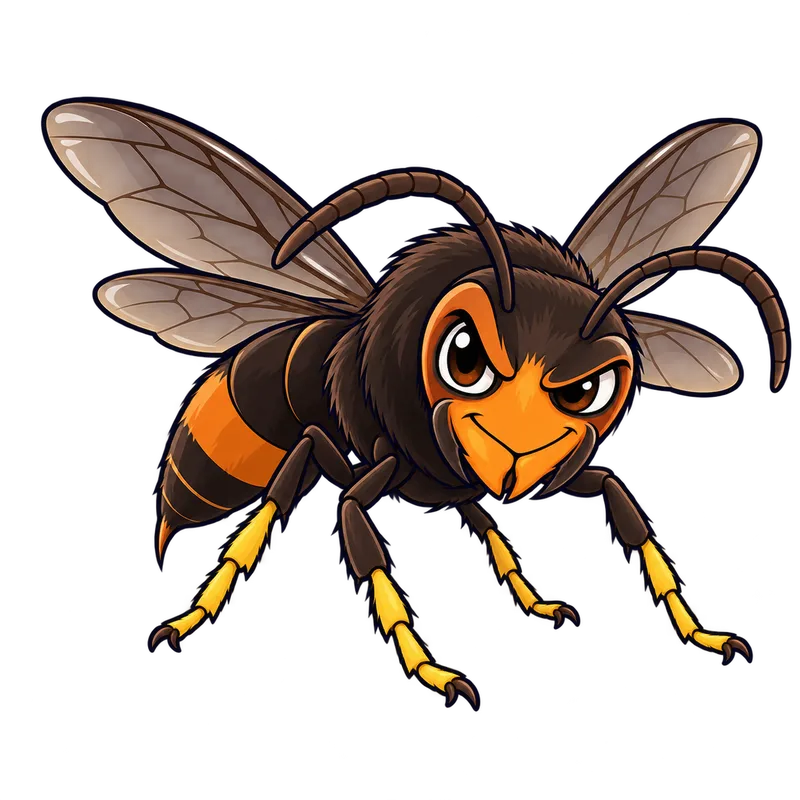
Yellow-legged hornet
Vespa velutina
- Size
- 0.7 to 1.0 inches long
- Color
- Dark thorax, orange 4th abdominal segment, yellow leg tips
- Habitat
- Sheltered low structures transitioning to high tree canopies
- Diet
- Nectar, fruit sap, and live insects including honeybees
- Life cycle
- Annual cycle from spring queen emergence to winter dormancy
You are probably looking at a flying insect near a flowering bush or a beehive and wondering if you have spotted the invasive pest that agricultural departments keep talking about. Telling the yellow-legged hornet apart from native look-alikes comes down to a specific combination of physical traits that you can spot without a microscope if the insect pauses long enough. The adult body length measures 0.7 to 1.0 inches, putting it in the medium-to-large range for social wasps. The most reliable field mark is the coloration of the legs, which end in bright yellow tarsal segments that look remarkably like the creature is wearing yellow socks.
Identity
Pair those bright yellow feet with a solid dark brown or black thorax and a mostly dark abdomen featuring one glaringly obvious, prominent yellow or orange fourth segment. The head is mostly black with a front-facing yellow or orange face and dark compound eyes. When you compare this diagnostic triad against native insects, the differences become clear. European hornets are larger, reaching up to 1.5 inches, with reddish brown thoraxes and dark brown legs without yellow tips. Northern giant hornets dwarf it entirely at up to 2.0 inches long, featuring a massive, solid orange head. Common yellowjackets are much smaller, around 0.5 inches, with a completely different banded pattern across their entire bodies and no yellow leg tips. Paper wasps and bald-faced hornets also lack those distinct yellow socks and dark thoracic plates. If you spot an insect, remember that a sting or a mark on your skin cannot identify the species. You need an intact physical specimen or a sharp, clear photograph to confirm what you are looking at.
Habitat & behaviour
This species builds two completely different types of nests as the seasons progress, shifting locations in a way that often catches property owners off guard. In spring and early summer, the overwintered queen starts out small, constructing an embryo nest about the size of a tennis ball in sheltered, low-altitude spots. You will typically find these primary nests tucked under building eaves, porch ceilings, garden sheds, garages, carports, utility boxes, or low bushes where rain and wind cannot reach. As the colony grows into mid-to-late summer, the workers often abandon that initial spot and build a massive secondary nest high up in tree canopies, frequently more than 32 feet above the ground, or attached to elevated building overhangs. These secondary structures can grow to the size of a basketball or a beach ball, occasionally holding around 6,000 workers.
Foraging workers travel up to 1,000 meters away from the nest in search of resources. Adults feed on carbohydrates like flower nectar, tree sap, and decaying fruit. The real trouble starts when they hunt for protein to feed their developing larvae. Worker hornets target live insects, especially honeybees, native wild bees, hoverflies, and butterflies. They use a distinct predatory technique called hawking, where they hover in stationary flight outside a honeybee hive entrance and snatch returning foragers right out of the air. Even when the hornets do not destroy a hive entirely, their relentless presence causes what is known as foraging paralysis, where honeybees refuse to leave their hives, leading to starvation and colony collapse.
Visual variations
The colony goes through a few clear life stages as the year moves along, shifting its membership and physical forms. Eggs start out tucked individually inside paper hexagonal comb cells deep within the walls of the nest. When they hatch, the resulting larvae look like legless grubs that stay put and wait for adult workers to drop off pre-chewed insect parts. Once they finish eating, those larvae cap their cells with silk and pupate in the dark, eventually chewing their way out as brand-new adult workers.
Sterile female workers measure 0.7 to 1.0 inches long, sporting those signature dark thoraxes, yellow faces, and bright yellow sock tips on their legs. Foundress queens look noticeably bulkier when they wake up from winter hibernation and start scouting for real estate. Early in the spring, the queen has to do everything herself, building the first nest, hunting for food, and raising the initial brood of workers. Once those first helpers take over the chores, the queen retires to the interior of the nest and focuses entirely on laying eggs. By late summer, the colony starts producing the next generation of reproductives, which includes male drones and new queens. The males show up first, hanging around the nest entrance to mate with the new queens before the frost kills off the older generation.
Why it matters
Finding this hornet near your home is not something to brush off, as it brings genuine risks to both your family and the local environment. Worker hornets guard their nests fiercely, and accidentally brushing against a low-hanging spring nest in your shed can set off a very angry defensive swarm. Their stings hurt badly, and getting hit multiple times or suffering a severe allergic reaction can turn dangerous fast because the venom packs active biological toxins. If a sting causes any unusual breathing trouble, swelling, or systemic distress, skip the home remedies and get medical help immediately or call poison control.
Beyond the personal danger, these hornets can wreck local ecosystems and agricultural pollination by treating honeybees like an open-air buffet. A single active nest can pick off enough bees to disrupt fruit and vegetable yields across the neighborhood. If you happen to spot a suspect hornet or run into a nest, resist the urge to grab a can of spray or knock it down with a broom. DIY removal almost always ends in painful stings and usually just scatters surviving queens to build fresh nests nearby. Take a clear photograph from far enough away to stay safe, write down where you saw it, and report the details directly to your state department of agriculture or local extension office so the professionals can take care of it.
Similar species
 European paper waspPolistes dominula
 Paper waspsPolistes species
 Mud daubersSceliphron and Chalybion species
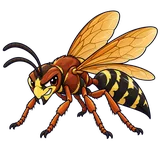 Eastern cicada killerSphecius speciosus
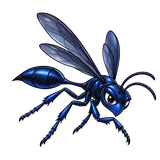 Blue mud dauberChalybion californicum
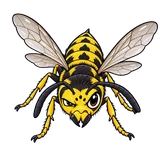 German yellowjacketVespula germanica