
When is it safe to remove a wasp nest?
It is safe to remove a social wasp nest without personal risk during late winter or very early spring when freezing temperatures have wiped out the entire annual colony. The safety window depends on whether the nest is empty, as active colonies in spring and summer will trigger a defensive swarm if disturbed.
What is actually going on
You walk out to the back deck on a crisp morning in February, coffee mug in hand, and notice a gray, paper-like orb dangling quietly beneath the eaves. It looks identical to the buzzing fortress that terrorized your garden party back in July, so you freeze and back away slowly. But nothing moves, the surface is quiet, the entrance hole is dark, and the temperature outside is well below freezing.
It is safe to remove a social wasp nest without personal risk or pesticide application during late winter or very early spring. At this point in the year, freezing temperatures and vanishing food supplies have wiped out the entire annual colony. The workers, the males, and the founding queen are gone. Only newly mated young queens survive the winter, and they do it by hiding deep under loose tree bark, in leaf litter, or in the soil, far away from those old paper structures.
People often assume that wasps hunker down inside their nests for the winter like bears in a cave, waiting for the first warm breeze to wake them up. They do not. Social wasps in temperate climates abandon those nests for good when autumn ends, and they never reuse an old nest the following year. If you find a confirmed empty nest in January or February, you can knock it down with a broom handle without a drop of chemical spray or a single protective pad.
The safety window shifts dramatically once spring arrives, though. In early spring, a single surviving queen emerges from her hiding spot and builds a tiny embryo nest, roughly the size of a tennis ball, to raise her first batch of workers. If you spot one of these small, early nests, you can still remove it, but you have to eliminate or catch that founding queen, otherwise she will just start building again a few feet away. Once those first workers hatch by late spring or early summer, the nest enters its active phase and grows rapidly into a massive secondary colony. Trying to knock down an active nest during summer is a great way to trigger a defensive swarm.
How to tell for sure
Telling an empty winter ghost town apart from an active summer hazard usually comes down to watching the entrance for a few minutes during the warmest part of the day. If the weather is mild and you see zero flight activity, nobody is home. You can also look at the physical architecture from a safe distance, as different species leave distinct visual clues.
Paper wasps usually build open, umbrella-shaped combs that hang right out in the open beneath porch ceilings, window frames, or deck railings without any protective paper envelope around them. Because the structure is completely exposed, you can easily inspect the individual cells from below to see if they are empty and dry.
Yellowjackets tend to build enclosed paper nests with stacked horizontal combs hidden inside dark cavities, such as abandoned underground rodent burrows or structural wall voids. If you are dealing with a wall void, you might not see the nest at all, which is why watching the exterior entry hole for returning foragers during daylight is essential.
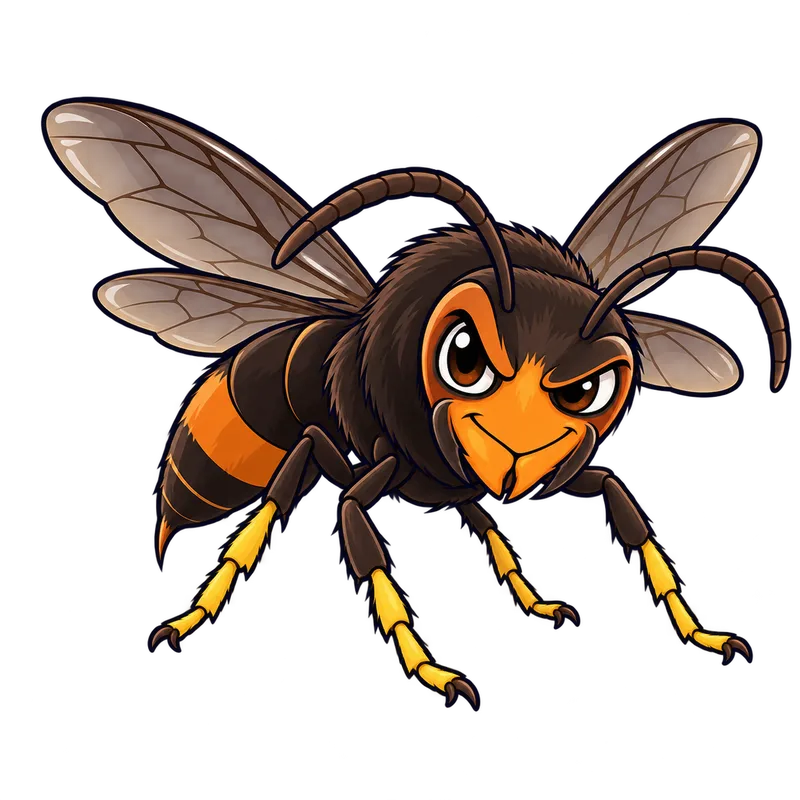
If you happen to live in the Southeastern United States, you need to be on the lookout for the invasive yellow-legged hornet. These pests feature a dark body, an orange fourth abdominal segment, and bright yellow leg tips that look like they are wearing yellow socks. Their late-summer nests can grow to the size of a basketball or even a pickup truck bed, housing thousands of aggressive workers.
You also want to make sure you are not destroying beneficial lookalikes that happen to cross your path. Cicada killers are massive, solitary ground-nesting wasps that can grow up to two inches long with reddish thoraxes and round eyes, but they are generally harmless and do not defend nests aggressively. Bumblebees and honeybees are covered in fuzzy body hairs and carry pollen baskets on their hind legs, which sets them apart entirely from smooth-bodied social wasps.
What usually comes next
Once you figure out if that paper envelope is just an old winter ghost town or a busy summer home, you have to decide what to do about it. If it is just an empty shell left behind from last year, grab a scraper or a broom and knock it straight into a garbage bag. You do not need any insecticides or safety gear for a dead nest.
Dealing with a small, exposed native paper wasp nest in early spring while the single queen is still on her own is a different story, though you can still manage it yourself if you stay calm. Wait until evening when the temperature drops and the insect slows down, put on thick clothing and eye protection, and apply an insecticide spray following the exact directions on the product label. Always remember that the pesticide label is the law, and straying from those instructions is a violation.
Never seal up an exterior entry hole if you think yellowjackets or hornets are actively nesting inside a wall void or your attic. Plugging the hole might feel like a quick fix, but trapped workers will simply chew right through your interior drywall or baseboards and pour straight into your living room.
If the nest sits high up in a tree canopy, hides deep inside a structural void, or belongs to an invasive species like the yellow-legged hornet, step away immediately. Invasive hornet nests must never be handled by homeowners. Take a clear photo from a safe distance and report it straight away to your state agriculture department or national plant health authority so trained crews can take care of the removal.
When to get help
There are plenty of moments when a do-it-yourself project is a terrible idea, and knowing when to hand the job to an expert keeps you out of the emergency room. Call a licensed pest control operator if the nest sits hidden inside a wall void, sits high on a roofline that demands a tall ladder, or rests near busy walkways where kids and pets run around.
If you or anyone else in your house has a known allergy to insect stings, stay far away from an active nest. A single sting can trigger a severe allergic reaction that requires immediate medical care.
If you get stung and feel severe symptoms like trouble breathing or swallowing, throat tightness, dizziness, widespread hives, or swelling around your face and mouth, call emergency services right away and use an epinephrine autoinjector if you have one prescribed. For general questions about pesticide exposure, accidental stings, or first aid guidance, you can contact poison control directly.
Keep in mind that insect stings can also lead to infection, so check that your tetanus booster is current if it has been more than five to ten years since your last shot. When you feel unsure, let a trained professional handle the danger.