
Are cicada killer wasps found in Kansas?
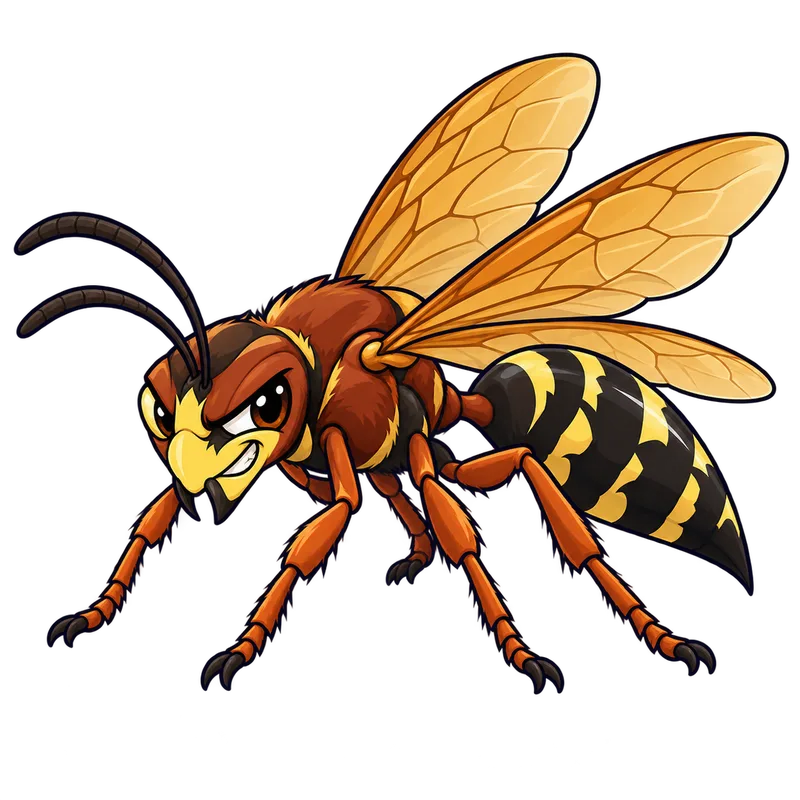
Yes, Eastern cicada killer wasps are found in Kansas because they are native to the Midwestern United States. You are overwhelmingly likely to encounter these native wasps darting across lawns and garden beds during peak summer, even though strict state survey inventories lack an explicit line item confirmation for the area.
What is actually going on
Picture walking out to mow the front lawn on a warm July afternoon, only to notice what looks like miniature volcanoes popping up across the sunny patch of turf near the driveway. A massive, thumb-sized wasp with a reddish thorax and yellow-and-black stripes comes zipping past your ear, inspecting the yard with high-speed purpose. Naturally, your mind jumps to the worst-case scenario. You wonder if those giant stinging insects from the news have finally made their way into your backyard.
To answer the core question directly, yes, Eastern cicada killer wasps are native to the Midwestern United States where Kansas is located, and their presence makes physical sense in the region. However, a technical quirk in available agricultural and state extension documentation reveals a localized documentation gap. While federal guidelines place the Eastern cicada killer squarely across the entire Midwest, state-specific survey inventories for Kansas focus heavily on other matters, such as structural arachnids like the brown recluse and state pesticide regulations rather than cataloging every native digger wasp.
This means that while you are overwhelmingly likely to encounter these native wasps darting across Kansas lawns and garden beds during peak summer, a strict inventory check lacks an explicit line-item confirmation for the state. People often panic because these insects grow up to 2 inches long, easily matching the size of an adult human thumb. That imposing size makes them prime suspects whenever someone spots an unfamiliar flying insect.
Yet, comparing their lifestyle to a typical social hornet reveals an entirely different creature. Think of a cicada killer as a solitary apartment dweller, where an individual female digs her own quiet basement home in loose, well-drained soil. This contrasts sharply with an invasive social hornet colony operating like a bustling high-rise building with thousands of aggressive worker castes defending a shared paper nest.
How to tell for sure
Telling a native cicada killer apart from an unwanted invasive visitor usually comes down to a few distinct anatomical clues that you can spot from a safe distance. First, look at the proportions. Cicada killers feature a head that looks rather small in comparison to their massive body width, alongside a distinctively reddish thorax and round eyes. They also sport clear yellow and black banding across the abdomen.
Compare that to the Northern giant hornet, which features a solid yellow or orange head with dark eyes and a stark, solid dark brown or black thorax. Another lookalike, the yellow-legged hornet, carries a dark body with an orange fourth segment on the abdomen and distinct bright yellow leg tips that look almost like the insect is wearing bright yellow socks.
Checking the nesting site also helps clear up confusion. Cicada killers dig underground burrows in dry soil, leaving small mounds of earth that resemble tiny backyard volcanoes. If you spot a massive, papery, spherical nest hanging high up in a tree branch or tucked safely underneath a porch roof, you are looking at social vespids like paper wasps, bald-faced hornets, or European hornets, not cicada killers.
Unassisted public identification usually stops the moment an insect is flying too fast or too high in a tree canopy to observe its markings. Never try to capture live hornets by hand or approach an active aerial paper nest just to get a closer look.
What usually comes next
When those miniature dirt volcanoes appear right in the middle of a high-traffic backyard path or a children's play area, homeowners usually feel an immediate urge to reach for a chemical spray. Before making that move, consider whether control is actually necessary. Male cicada killers often engage in territorial hovering around yard edges, but they lack stingers entirely and cannot hurt you. Females possess stingers for hunting cicadas, but they are notoriously docile and rarely sting unless roughly handled or trapped against bare skin.
If the burrows are tucked away in a quiet flower bed or a corner of the lawn where nobody walks, letting them finish their seasonal cycle is usually the simplest and most sensible path. If the burrows present a genuine hazard in a frequently used lawn, your choice of action must strictly follow federal law. Under the Federal Insecticide, Fungicide, and Rodenticide Act, the pesticide product label is the law. You cannot legally apply over-the-counter insecticides outside of exact label directions, and you should never dump random chemicals down soil burrows without a verified target pest identification.
If you suspect you have found an actual invasive hornet rather than a native cicada killer, take a clear photograph with a familiar size reference like a quarter coin or a pen held nearby, provided it is safe to do so. Submit that photo directly to your state department of agriculture or plant regulatory officials instead of attempting self-directed eradication.
When to get help
There are moments when a casual backyard observation crosses the line into a situation that requires professional intervention or emergency medical care. Wasp and hornet stings carry a real risk of severe allergic reactions or life-threatening anaphylaxis. If anyone stung by an unknown insect exhibits systemic symptoms such as widespread swelling, difficulty breathing, dizziness, or throat constriction, use an epinephrine autoinjector immediately if prescribed, and contact emergency medical services or a poison control center right away.
When dealing with suspected invasive hornet species, homeowners must never attempt to destroy or remove the nest independently. Disturbing an established social hornet colony risks defensive swarming and can cause reproductive queens to escape and found new colonies elsewhere.
Instead, leave the handling of invasive or structural pest infestations to licensed pest control applicators holding state certification who use registered products in strict compliance with label regulations. Professional intervention ensures that dangerous lookalikes are managed safely while protecting the beneficial native pollinators that keep our local ecosystems functioning properly.