
Paper wasp nest vs bald-faced hornet nest: how do shapes differ?
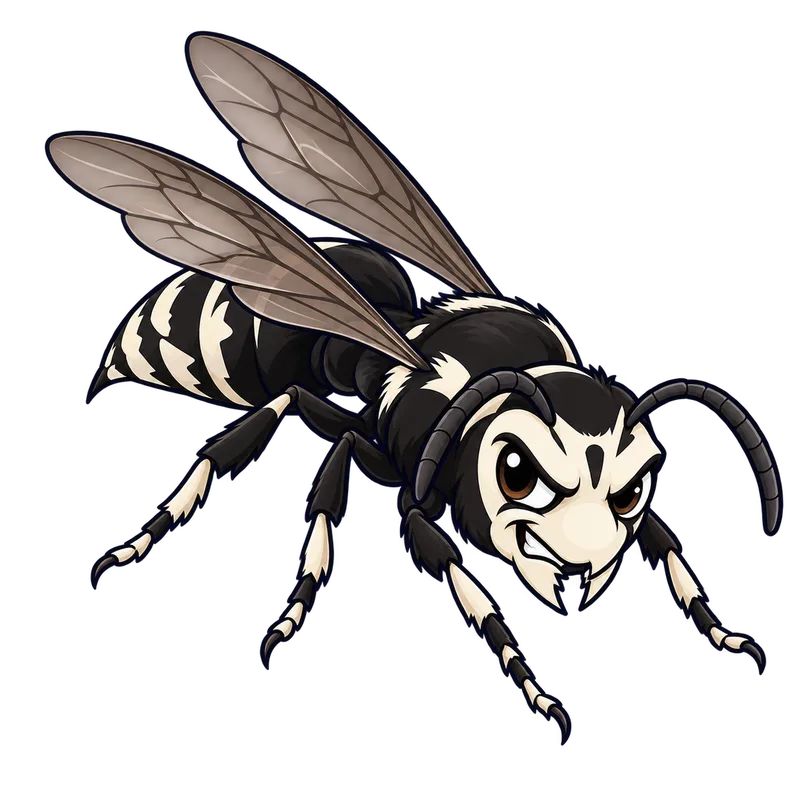
Paper wasp nests are open combs shaped like inverted umbrellas with exposed hexagonal cells, while bald-faced hornet nests are fully enclosed paper globes shaped like giant gray footballs or teardrops. A paper wasp nest forms an open disc measuring three to ten inches across, whereas a bald-faced hornet nest starts as a tennis-ball-sized sphere in spring and grows into a basketball-sized oval.
What is actually going on
Picture yourself stepping out onto the back porch on a crisp Saturday morning in spring, mug of coffee in hand, ready to plan the weekend garden work. You glance up at the wooden overhang of the roof and notice a small, grayish object dangling from the corner. Naturally, you stop to wonder who just moved in rent-free, and more importantly, whether you need to deal with them before they get comfortable.
People often lump all paper-making stinging insects into one bucket, but a paper wasp nest and a bald-faced hornet nest look completely different once you know what to look for. The easiest way to tell them apart is to look for a cover. Paper wasp nests are open combs shaped like inverted umbrellas, meaning every single hexagonal cell where the larvae live is completely exposed to the elements with no outer wrapper. Bald-faced hornet nests, on the other hand, are fully enclosed paper globes that resemble giant gray footballs or teardrops, completely wrapped in a thick protective shell with just a single small entrance hole near the bottom.
Both insects manufacture their homes using the same basic recipe, which involves scraping weathered wood fiber from fences or deck rails, chewing it up, and mixing it with saliva to create a wet papier-mâché paste. Yet their architectural styles diverge wildly. Paper wasps stick to a single horizontal layer of downward-facing cells hung from a slender central stalk tucked under sheltered structural spots like eaves, porch ceilings, or window frames. Bald-faced hornets build massive, multi-tiered apartment complexes stacked vertically inside their enclosed paper envelopes, usually choosing elevated tree branches or high building overhangs.
How to tell for sure
When you are standing a safe ten to fifteen feet away, identification usually comes down to checking three visual cues. First, observe the outer surface. If you can see individual hexagonal cups containing white pupal caps or wriggling grubs directly from underneath, you are looking at a paper wasp nest. If the structure is a smooth, solid gray globe where no internal cells are visible from the outside, it belongs to an enclosed-nesting species like the bald-faced hornet.
Next, check the overall shape and location. An open umbrella-like disc measuring roughly three to ten inches across, suspended by a thin stem under a porch roof, points straight to a paper wasp. A structure that starts as a small tennis-ball-sized sphere in spring and swells into a basketball-sized oval hanging high in a tree limb or a high gable usually indicates a bald-faced hornet colony. Keep in mind that bald-faced hornets are technically aerial-nesting yellowjackets rather than true hornets, despite their common name, and they feature distinct white or ivory markings on their faces.
You usually do not need special gear to tell them apart at a glance. Naked-eye observation from a safe distance easily separates open combs from closed paper globes. If you are examining a dead specimen up close later on, a hand lens can help you spot the fine details of head shape or body hair, but you rarely need that level of scrutiny just to figure out what is hanging from your porch.
What usually comes next
Once you have figured out what is hanging outside, you have to decide whether it can stay or needs to go, which usually depends entirely on traffic. A small paper wasp nest tucked quietly above a rarely used side door might cause zero trouble all summer, as paper wasps tend to be semi-social and generally docile unless someone physically bumps their home or blocks their flight path. Conversely, a growing bald-faced hornet nest near a heavily trafficked walkway or patio requires a lot more caution because these insects defend their larger colonies aggressively and can launch coordinated group attacks if approached too closely.
If you decide a nest poses a hazard, your choices typically involve physical proofing, timing, or calling in support. Remember that social wasp colonies die off naturally in late autumn when freezing temperatures arrive, and old paper nests are never reoccupied the following year because only newly mated queens survive the winter by hibernating in protected soil or bark crevices. If you choose to use an aerosol spray treatment, the product label governs the legal use under federal pesticide laws, meaning you must strictly follow instructions regarding spray distances, protective gear, and applying the treatment at dusk or dawn when the insects are inactive inside. Never invent custom chemical mixtures or exceed labeled concentrations.
When to get help
Some situations cross the line from a simple weekend task into territory that calls for a professional, a clinician, or an agricultural agency. If a massive bald-faced hornet nest is located high up in a tree canopy, near electrical lines, or on a second-story gable where you would need an unstable ladder to reach it, a licensed pest control operator should handle the removal to avoid a severe stinging incident.
Medical help is necessary immediately if a sting triggers the warning signs of a severe allergic reaction, which include systemic itching, facial or throat swelling, difficulty breathing or swallowing, dizziness, or hives. Anyone experiencing those symptoms should get to an emergency medical facility or call local emergency services right away, as insect venom can trigger rapid anaphylaxis in sensitive individuals.
You should also involve professionals if you spot something unusual that does not fit native patterns. If you discover a massive paper nest measuring over two feet tall with reddish or muddy paper high in a treetop, or if you notice hornets hovering persistently in front of beehives to capture honeybees, do not attempt to remove it yourself. Take a clear photograph from a safe distance and report it immediately to your state department of agriculture or university extension service, as experts track invasive species closely to protect local ecosystems.