
Ticks
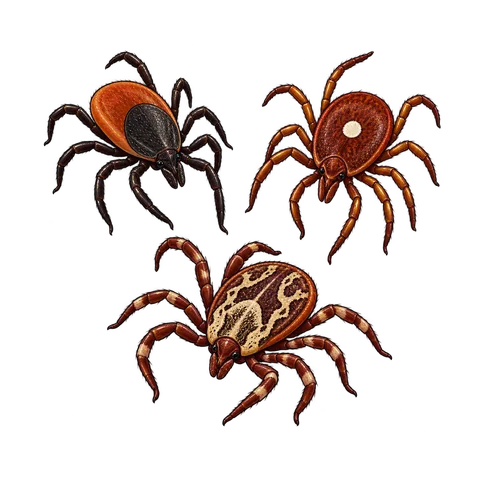
You pull your socks up over your trouser cuffs before heading out for a walk through tall grass, knowing that the tiny eight-legged arachnids waiting on the vegetation are closer relatives to spiders than to any flying insect. Ticks cannot jump, fly, or run away from you, relying instead on a patient strategy called questing, where they climb onto low plants and wait to latch onto a passing human or animal. Unfed adults are small, often the size of an apple seed or lentil, but after spending days taking a blood meal, they swell up into smooth, balloon-like shapes that look quite different from their flat, teardrop-shaped starting form.
Finding an attached tick on your skin can be unsettling, yet it is rarely an emergency if you handle it correctly. You do not need to panic or reach for matches, petroleum jelly, or old wives' tales, because the bacteria responsible for diseases like Lyme typically require many hours of continuous feeding to transmit, meaning a prompt and steady pull upward with fine-tipped tweezers will usually do the job safely. Because skin reactions and rashes never tell you the whole story, anyone developing a fever or other flu-like symptoms after a bite should check in with a doctor rather than trying to diagnose the bite at home.
Explore ticks
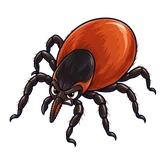 Blacklegged tickIxodes scapularis
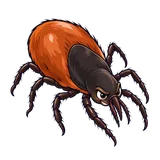 Western blacklegged tickIxodes pacificus
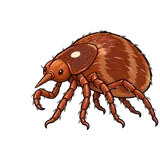 Lone star tickAmblyomma americanum
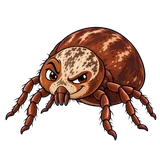 American dog tickDermacentor variabilis
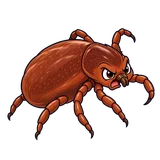 Brown dog ticksRhipicephalus sanguineus
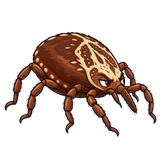 Gulf Coast tickAmblyomma maculatum
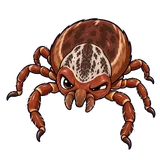 Rocky Mountain wood tickDermacentor andersoni
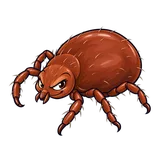 Asian longhorned tickHaemaphysalis longicornis
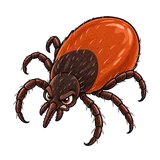 Castor bean tickIxodes ricinus