
What do seed ticks on humans look like?
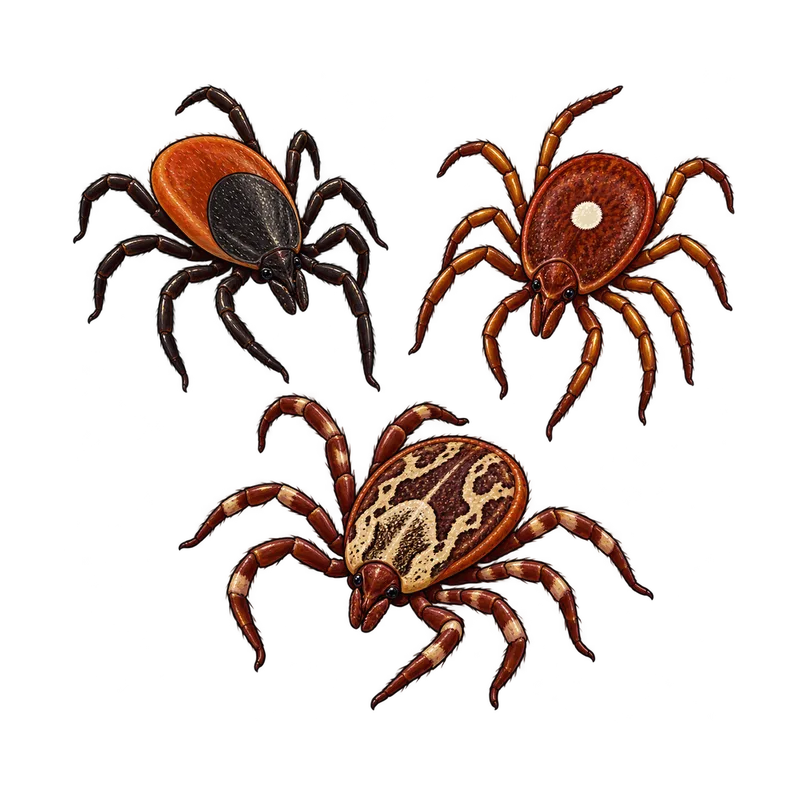
Seed ticks on humans look like moving freckles, dirt smudges, or grains of black pepper that measure roughly 0.5 to 1.0 mm in length. Unfed larvae usually appear as dark brown, mahogany, or straw-colored specks with six legs. Once they feed and swell up, they can transform into shiny, reddish-brown or grayish-blue ovals.
What is actually going on
You are sitting on the back porch after a long afternoon of clearing brush, when you notice what looks like a tiny, wandering grain of black pepper on your ankle. You swipe at it, but it does not budge. Closer inspection reveals not just one speck, but dozens of them dusting your socks, looking like a moving freckle or a smudge of dirt. If you have ever run into this summer surprise, you are likely looking at seed ticks.
To answer the question plainly, seed ticks on humans are the newly hatched, microscopic larval stage of hard ticks. They measure roughly 0.5 to 1.0 mm in length, which makes them about the size of a poppy seed. Unfed seed ticks usually appear as dark brown, mahogany, or straw-colored specks. Because female ticks lay thousands of eggs in a single mass on the ground, hundreds of these larvae hatch together and climb the exact same blades of grass. When you brush past that foliage, the whole swarm transfers to your clothing or skin at once.
A major point of confusion for people is the anatomy. While adult ticks and nymphs have eight legs, seed ticks only have six legs. This often leads folks to wonder if they are dealing with tiny biting insects instead of ticks. They do not fly or drop from high tree canopies, despite popular stories to the contrary. Instead, they wait on low vegetation with their front legs outstretched to grab onto a passing host.
Once they find a spot on your skin, they anchor themselves using a specialized protein cement. If they feed for a day or two, their appearance changes. An engorged seed tick swells up to ten times its original weight, turning into a shiny, spherical, reddish-brown or grayish-blue oval. Even when full, however, they rarely grow larger than 2 mm, keeping them much smaller than a standard adult dog tick.
How to tell for sure
It is entirely natural to want an instant answer about what bit you, but telling a seed tick apart from other microscopic critters usually requires more than a quick glance in the bathroom mirror. You cannot reliably identify a biting pest from a red mark, a bump, or a blurry smartphone photograph because human skin reactions vary wildly. Some people develop angry welts from the slightest irritation, while others show zero visible marks at all.
If you manage to capture one of the tiny specks using a strip of clear tape or a small vial, you can look for specific physical clues. Seed ticks are hard-bodied arachnids with six legs at this larval stage. If you happen to have a magnifying glass handy, counting those six legs usually separates them from adult mites or other pests. However, seed ticks have several common look-alikes that trick even experienced hikers.
Chiggers and oak leaf itch mites are often confused with seed ticks because they are also microscopic and arrive in large numbers. Chiggers are tiny red or yellowish larval mites that tend to bite where clothing fits tightly against the skin, but they do not anchor themselves with a cement plug the way hard ticks do. Oak leaf itch mites are even smaller and usually rain down from trees in late summer, leaving raised red spots mostly on the upper body under loose clothing.
Bed bug nymphs are another possibility that causes confusion. First-instar bed bug nymphs are about the size of a poppy seed and straw-colored, but they are true insects with six legs, and they feed quickly at night before retreating to mattress seams rather than permanently attaching to your skin. If you are dealing with an engorged seed tick, the swelling often obscures the mouthparts entirely, making it look like a smooth skin growth until you look closer. When definitive identification is necessary for medical or pest management reasons, you usually need to submit the physical specimen to a university extension office or public health agency.
What usually comes next
When you discover a cluster of seed ticks clinging to your skin, the most important practical decision you face is how to remove them without making things worse. The primary mistake people make is reaching for old folk remedies like dabbing the ticks with petroleum jelly, rubbing alcohol, nail polish, or a hot match in an attempt to make them let go. Do not do this. Smothering or burning an attached tick only agitates it, which frequently causes the creature to regurgitate its stomach contents directly into your bloodstream, raising the risk of disease transmission.
Instead, the evidence-based protocol requires fine-tipped tweezers and a steady hand. Grasp the tick as close to your skin surface as possible and pull straight upward with even pressure. Avoid twisting or jerking the tick, as that can snap the mouthparts off and leave them behind in the dermis. Once the ticks are gone, wash the bite site thoroughly with soap and water or rubbing alcohol.
If you happen to be in Australia and dealing with the paralysis tick, local medical guidance differs because disturbing those specific ticks can trigger a rapid release of toxins. In that specific regional context, health authorities often recommend freezing the tick in place with a specialized spray before attempting removal. For everyone else, using fine-tipped tweezers to pull straight up remains the standard rule. After you clear the skin, drop the removed ticks into alcohol or seal them in tape before throwing them away, and toss your clothes straight into a hot dryer to catch any stragglers.
When to get help
Most tick encounters resolve without lasting trouble once the pests are safely removed, but certain symptoms demand prompt medical evaluation. You should consult a qualified clinician or visit an urgent care center if you develop specific warning signs within a few weeks of a tick bite. Keep an eye out for an expanding circular or oval red rash, particularly one shaped like a bullseye that grows beyond 4 inches across.
Sudden flu-like symptoms also warrant a doctor's attention. If you experience a high fever, chills, severe headaches, extreme fatigue, or aching joints after finding seed ticks on your skin, let your healthcare provider know about the exposure. Another specific concern involves Lone Star seed ticks, which are found across the southeastern and central United States. Bites from these larvae are strongly linked to triggering Alpha-gal syndrome, a delayed allergic reaction to mammalian meat and dairy products. If you develop hives, stomach cramps, or respiratory distress a few hours after eating beef, pork, or dairy following a tick encounter, seek medical care immediately.
When you need professional help identifying an unknown pest for public health tracking or environmental management, reach out to your local university extension service or state health department. Remember that if you plan to treat your property with pesticides to suppress tick populations, those applications must be performed in strict accordance with state laws and product label instructions. In many regions, commercial property treatments must legally be carried out by a licensed pesticide applicator.