
What are poppy seed ticks?
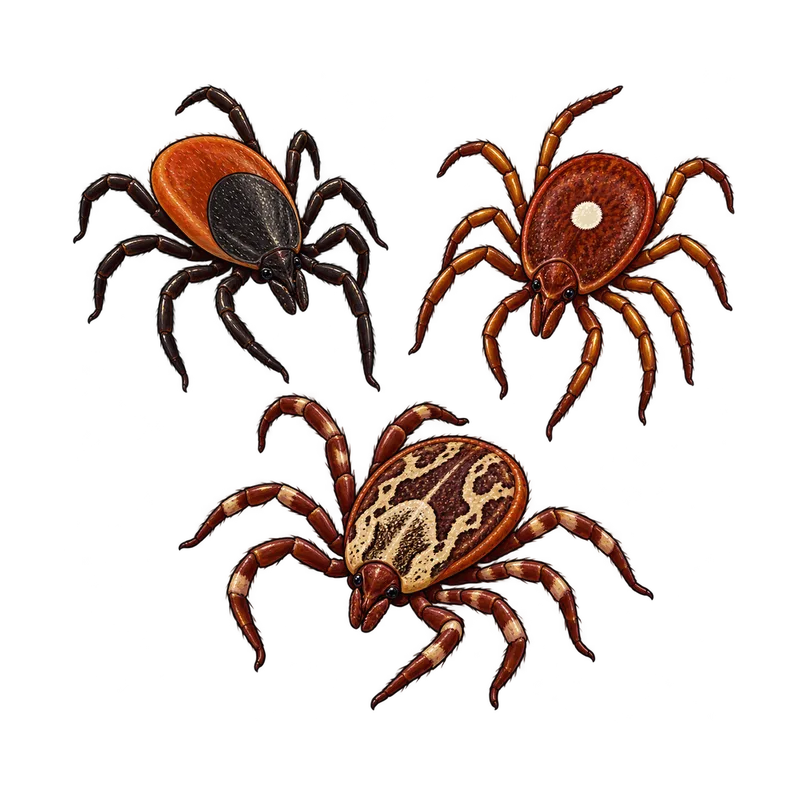
A poppy seed tick is the juvenile nymph stage of a hard tick that measures a mere 1.5 mm across and looks remarkably like a stray poppy seed. This size description depends on the tick being unfed, and this particular life stage causes the vast majority of human tick-borne illnesses.
What is actually going on
You get back from a weekend walk through the tall grass at the edge of the park, toss your clothes in the laundry, and hop in the shower. Later that evening, you notice what looks like a tiny speck of dark dirt on your ankle that will not wash off. You reach down to flick it away, only to realize it has legs. That tiny speck, measuring a mere 1.5 mm across and looking remarkably like a stray poppy seed from your morning bagel, is a nymphal hard tick.
To clear up any confusion right away, a poppy seed tick is not a distinct biological species. Instead, it is a casual, size-based description used by public health workers and entomologists for the nymph, or juvenile, stage of hard ticks. Ticks go through four distinct phases in their life cycle, starting as tiny eggs, hatching into six-legged larvae, molting into eight-legged nymphs, and finally maturing into adults. When a nymph is unfed, it is roughly the size and color of a single poppy seed.
This particular life stage causes the vast majority of human tick-borne illnesses, such as Lyme disease, accounting for 80% to 90% of reported cases. That high infection rate is not because nymphs are inherently more vicious than adults. Rather, it comes down to simple geometry and physics. Because they are so small and their saliva contains a natural numbing agent, you cannot feel them bite, and they are nearly impossible to spot against your skin or clothing until they have been feeding for a while.
How to tell for sure
Telling a poppy seed tick apart from everything else that might hitch a ride on your clothes or skin usually requires a magnifying glass and a bit of patience. First, count the legs. If the tiny creature has 6 legs, you are looking at a tick larva, often called a seed tick or grass tick in certain regions. If it has 8 legs, you are looking at an arachnid nymph or adult. Ticks do not have wings, they cannot jump or fly, and they move exclusively by crawling.
People frequently confuse these tick nymphs with other tiny household or outdoor pests that share that same 1.5 mm scale. First-instar bed bug nymphs are about the same size as poppy seed ticks, but you usually find them hiding in mattress seams and indoor furniture rather than crawling up from outdoor vegetation. Oak leaf itch mites are even smaller and drop from trees in late summer, leaving intensely itchy welts, while booklice and carpet beetle larvae show up indoors munching on dry goods or natural fibers.
Never try to identify a pest based solely on a skin reaction, a photograph, or a red mark on your body. Human immune systems vary wildly, and anywhere from 20% to 30% of people show no visible reaction to a bite at all, while others develop large, angry red welts. If you want a definitive answer on what bit you, you usually need to preserve the intact specimen in a sealed container and take it to a local agricultural extension office or a medical entomology lab for microscopic examination.
What usually comes next
When you discover a tiny tick anchored firmly in your skin, your immediate practical decision comes down to how you remove it. You should reach for a pair of fine-tipped pointed tweezers rather than your fingers, blunt household tweezers, or any folk remedies involving matches, nail polish, or petroleum jelly. Smothering or burning an attached tick only stresses it out, causing it to regurgitate its stomach contents and any potential pathogens directly into your bloodstream before it lets go.
Grasp the tick as close to your skin surface as possible right where its mouthparts enter the dermis. Pull straight upward with a steady, even motion without twisting or jerking the body. If a tiny fragment of the mouthpart stays behind in the skin, you can try to gently nudge it out with tweezers, but if it proves stubborn, you can usually leave it alone to let your body heal naturally. The microscopic mouthparts do not carry pathogens on their own, as the disease-causing agents reside in the tick's gut and salivary glands, which come away with the main body.
When to get help
You should consult a clinician or seek urgent medical care if you develop an expanding red rash, especially one shaped like a bullseye or measuring more than 2 inches across, within a month of a tick encounter. Medical attention is also mandatory if you experience flu-like symptoms such as high fevers, severe muscle or joint aches, intense fatigue, or an unrelenting headache in the weeks following outdoor activity.
Watch closely for neurological warning signs like facial drooping, confusion, or an unsteady gait, as well as symptoms of a severe allergic reaction such as trouble breathing or widespread hives. If you suspect you are dealing with indoor biting pests like bed bugs rather than outdoor ticks, involving a licensed pest management professional is the safest route to ensure proper treatment. Finally, if you live in a region where paralysis ticks are common, follow local health agency protocols immediately, as improper removal in those specific areas can release dangerous neurotoxins.