Skip to content
The Pest Guide logo: an orange ant behind a magnifying glass The PestGuide

Mites

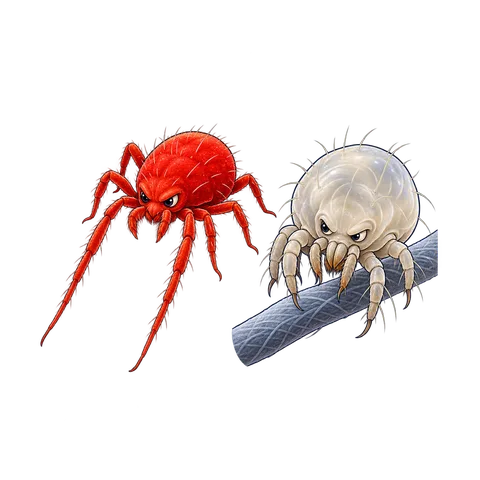
Stylized illustration of mites

By The Pest Guide Team · Updated
Edited by Fellipe Antequera · Editorial policy

You pull a sweater from the back of the closet on the first cool morning of the season, and by afternoon you are nursing an itchy rash across your shoulders, wondering if something crawled out of the upholstery. What unites these creatures in a single group is not a shared family tree, but their microscopic scale and unsegmented bodies, which means the various bugs lumped into this category actually behave in entirely opposite ways.

A house dust mite in your mattress survives quietly on shed skin flakes and triggers indoor allergies, while an oak leaf itch mite falling from a backyard tree drops in only to bite, and a bird mite migrating out of an attic vent is simply searching for a host after the birds left their nest. You can tell this group apart from insects in your kitchen or basement because they have eight legs instead of six and lack distinct body segments, though figuring out which specific microscopic visitor you are dealing with usually requires looking past the mere fact of their tiny size.

Explore mites
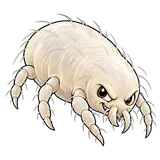
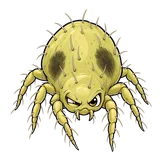
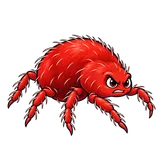
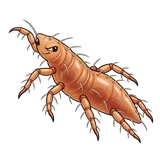
Illustration of House dust mitesHouse dust mitesDermatophagoides speciesIllustration of Bird mitesBird mitesDermanyssus and Ornithonyssus speciesIllustration of Tropical rat miteTropical rat miteOrnithonyssus bacotiIllustration of Clover mitesClover mitesBryobia speciesIllustration of ChiggersChiggersFamily TrombiculidaeIllustration of Twospotted spider miteTwospotted spider miteTetranychus urticaeIllustration of Concrete / sidewalk mitesConcrete / sidewalk mitesBalaustium speciesIllustration of Oak leaf itch miteOak leaf itch mitePyemotes herfsi

Questions about mites

MitesWhat do chigger bites look like?Explains what chigger bites look like, their characteristic distribution, identification challenges, and proper care.MitesDo chiggers burrow into your skin?No. Chiggers are mite larvae under 0.2 mm that stay on the skin surface, where they inject enzymes. The itch comes from your skin's reaction.MitesAre chiggers a type of tick?Explores whether chiggers are ticks, explaining their true biology, life stages, feeding mechanisms, bite patterns, and key differences.MitesHow do you get rid of chiggers?Learn how to effectively get rid of chiggers through personal protection, proper hygiene, and yard management.MitesDo dust mites bite humans?No. Dust mites cannot bite. The itchy welts come from allergy to proteins in mite droppings and shed skins. Here is what is really going on.MitesWhat are the symptoms of dust mite allergy?Dust mite allergy causes morning sneezing, runny or blocked nose, coughing and wheezing, and can trigger eczema flare-ups. See when to get tested.MitesHow do you get rid of bird mites in a house?Learn how to identify bird mites, safely remove nesting sources, and eliminate indoor migrations following an integrated pest management approach.MitesCan bird mites be found in a bed?Learn why bird mites occasionally end up in human beds, how to identify them, and what steps to take to resolve the issue safely.MitesWhat do bird mites look like?Learn what bird mites look like, how to identify them by size and color shifts, and what steps to take when they invade your living space.MitesHow do you reduce chiggers in a yard?Learn how to reduce chiggers in a yard using landscaping changes, habitat modification, and personal protection instead of ineffective broad lawn sprays.MitesHow do you reduce dust mites in a mattress?A zippered, allergen-proof mattress encasement is the main step to reduce dust mites, plus weekly hot washing of linens and regular vacuuming.MitesCan predatory mites help control thrips?Predatory mites can suppress thrips in some cases, but results depend on your plants, climate and region. Here is what to ask before you buy.MitesNo-see-ums vs chiggers: how can you tell the bites apart?Learn how to tell no-see-um bites apart from chigger bites by looking at environmental clues, bite locations, and feeding habits.MitesWhat are concrete mites?Learn what concrete mites are, where they come from, how to identify them, and when to seek professional help for outdoor mite problems.MitesHow do you get rid of concrete mites?Concrete mites may be clover mites, itch mites or nest parasites. Hose them off, trim plants back and seal gaps, but first find out which one you have.MitesConcrete mites vs chiggers: how can you tell?Compare concrete mites and chiggers, learn how to identify them, understand bite patterns, and find safe, practical prevention tips.MitesAre concrete mites harmful to humans?No. The bright red mites on sunny concrete are clover mites that eat algae and moss, not people. Itchy bites after yard work usually have another cause.MitesWhat do cicada mite bites look like?Learn what cicada mite bites look like, why they happen, and how to tell them apart from other insect bites using clear guidance.MitesHow are cicada mite bites treated?Cicada mite bites are treated with hydrocortisone cream, calamine and oral antihistamines. Heavy exposure or infection may need a doctor.MitesWhat do cicada mite bites look like in pictures?Discover what cicada mite bites look like in pictures, why photographic identification fails, and how to manage exposure and symptoms safely.MitesWhat are tiny red bugs that are not clover mites?Tiny red bugs that are not clover mites may be bed bug nymphs, bird or rodent mites, seed ticks after feeding, chiggers or oak leaf itch mites.MitesWhat do oak leaf itch mite bites look like?Oak leaf itch mite bites are small red bumps with a pinhead blister in the center, usually on the neck, face and arms, from mites falling from trees.MitesWhat are tiny red bugs in a house?Tiny red bugs in a house are usually harmless clover mites or boxelder bug nymphs, but they can also be fed bed bug nymphs or bird mites.MitesWhat tiny red bugs bite and itch?Tiny red bugs that bite are usually chiggers outdoors, or bird mites, rodent mites and bed bug nymphs indoors. Here is how to tell them apart.MitesWhy are tiny red bugs in a bed?Find out what tiny red bugs in a bed actually are, how to identify them correctly, what steps to take next, and when to call a professional.MitesWhat are tiny orange bugs that bite?Tiny orange bugs that bite are usually chiggers outdoors or bed bug nymphs indoors after feeding. Bird and rodent mites can also bite inside.MitesWhat are little red bugs on a windowsill?Little red bugs on a windowsill are most often clover mites, about 1/30 inch long. Boxelder nymphs and bird or rodent mites are other options.MitesWhat do spider mites look like?Spider mites are about 1 mm long and look like moving dust. Under a lens they are oval, eight-legged and pale green-yellow, often with two dark spots.MitesClover mites vs spider mites: how can you tell them apart?Clover mites are reddish brown with very long front legs and gather on sunny windowsills. Spider mites live on leaves and spin fine silk.MitesHow do you get rid of flour mites?Learn how to get rid of flour mites in your pantry with practical cleaning steps, identification tips, and prevention advice.MitesWhy are flour mites in the kitchen?Flour mites thrive on stored grain when humidity is 55% to 75% and the kitchen is warm. They usually arrive inside store packaging.MitesAre flour mites harmful?Flour mites do not bite, but they spoil food and their waste is a strong allergen that can trigger itchy skin, a stuffy nose and asthma.MitesIs food with flour mites safe to eat?Find out whether flour with mites is safe to eat, how to identify pantry mites, and the steps required to clean and protect your food storage.MitesWhy are grain mites in the kitchen?An explanation of why grain mites appear in kitchen pantries, how to identify them, and what practical steps to take next.MitesWhy are grain mites in dog food?Grain mites feed on the grains, fats and proteins in kibble and multiply when humidity rises above 55% in a warm home.MitesWhy are cicada mites a problem in Chicago?Cicada mites surge in Chicago when periodical cicadas lay millions of eggs in twigs. When the food runs out, the mites drift down from the trees.MitesChiggers vs ticks: are they the same type of pest?Chiggers and ticks are both arachnids, but they feed, bite and carry risk in very different ways. Here is how they differ and what each one means for you.MitesDo chiggers burrow under skin?No. Chiggers stay on the skin surface and inject enzymes. Your skin swells around the bite and hides the larva, which makes it look like it burrowed in.MitesWhy can chigger bites appear after yard work?Understand why yard work bites appear later and how to identify and manage chigger and mite irritation safely.MitesWhat do clover mites look like on a sunny windowsill?Learn what clover mites look like on a sunny windowsill, how to tell them apart from other pests, and what steps to take next.MitesClover mites vs chiggers: why do these red mites cause different concerns?Learn the key differences between clover mites and chiggers, how to identify them, and what steps to take for prevention and safe control.MitesDo clover mites bite people?Discover whether clover mites bite humans, what causes those red stains, and how to handle them safely without unnecessary chemicals.MitesWhy are clover mites entering a house in spring?Learn why clover mites enter houses in spring, how to identify them correctly, and what steps to take for removal.MitesBird mites in a house: what outdoor source should be investigated?Learn which outdoor sources cause bird mite invasions indoors, how to identify them, and how to safely handle nest removal.MitesBird mites vs rat mites: why does the host source matter?Learn why identifying the host source of bird mites and rodent mites determines the correct treatment approach and safeguards your home.MitesWhat do rat mites suggest after a rodent problem?Learn what rat mites indicate after a rodent problem, how to identify them, what steps to take next, and when to seek professional help.MitesCan a suspected mite bite identify the mite species?Explains why a suspected mite bite cannot identify the mite species and what steps to take for accurate identification and control.MitesAre dust mites visible without magnification?Learn why dust mites are invisible to the naked eye, how to correctly identify common household pests, and practical ways to manage indoor allergens.MitesDust mite allergy vs a biting-insect problem: what is different?Learn the key differences between dust mite allergies and biting insect problems, how to identify the true cause, and what steps to take next.MitesWhat should you inspect before assuming every tiny red dot is a mite?Learn what to inspect before assuming every tiny red dot is a mite, and how to properly identify household pests.MitesTiny red bugs on concrete: clover mites or concrete mites?Tiny red bugs on concrete are usually clover mites coming off nearby plants onto warm masonry. Telling mite types apart takes magnification.MitesTiny red bugs in mulch: chiggers or mites?Learn the difference between visible harmless red bugs in mulch and the invisible mites or chiggers causing itchy bites.MitesWhat is an oak leaf itch mite?Learn what an oak leaf itch mite is, why it bites, how to identify the welts, and what practical steps to take next.MitesOak leaf itch mite bites vs chigger bites: how can you tell?Learn how to tell the difference between oak leaf itch mite bites and chigger bites based on location, exposure patterns, and timing.MitesWhy are oak leaf itch mites associated with cicadas?Understand why oak leaf itch mites correlate with periodic cicada emergences, how to identify exposure, and what steps to take safely.MitesWhen are oak leaf itch mites most active?Learn when oak leaf itch mites are most active, how to identify their bites, and practical steps to avoid them during peak autumn yard work seasons.MitesConcrete mites vs clover mites: how can you tell?Learn how to tell concrete mites and clover mites apart, what they are doing on your walls, and how to handle them safely.MitesWhat signs distinguish an infestation from a single accidental visitor?Learn how to distinguish a single accidental pest visitor from a full-blown infestation using physical clues.MitesDust mites vs bird mites: why is the response different?Understand the crucial differences between dust mites and bird mites, why your reaction to each pest differs, and how to identify and handle them safely.MitesDo “dust mite bites” actually point to another cause?Explaining why dust mites do not bite humans and what the real causes behind so-called dust mite bites actually are.

Research sources

This page was researched with publications from these institutions, then written and reviewed by The Pest Guide Team: