
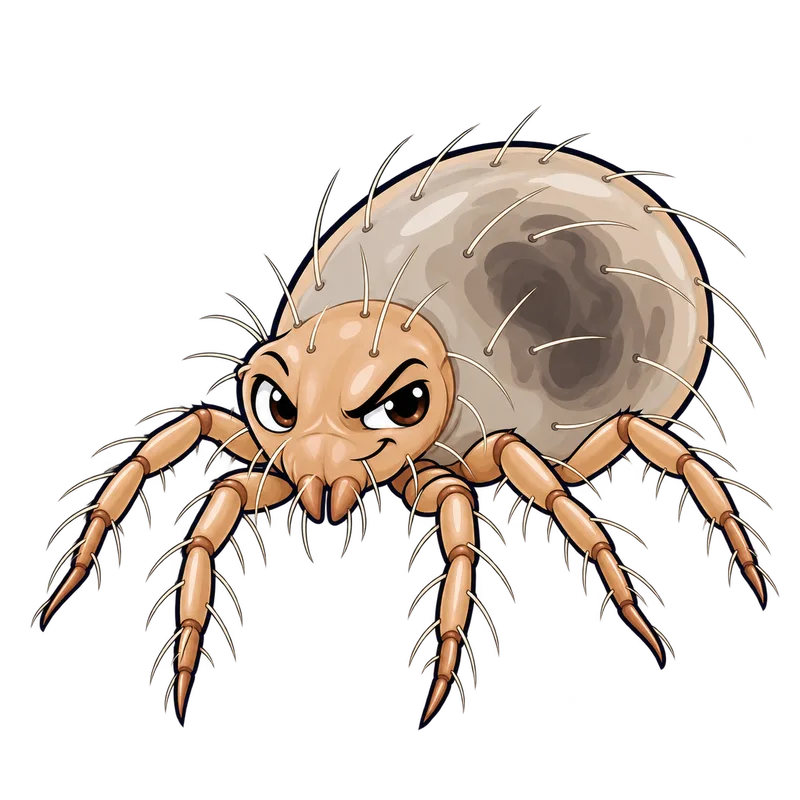
Tropical rat mite
Ornithonyssus bacoti
- Size
- Approximately 1/32 inch (0.8 to 1.0 mm)
- Color
- Pale straw when unfed, dark red-brown when engorged
- Habitat
- Rodent nests within wall voids and subfloors
- Diet
- Obligate blood meals from rodents, biting humans opportunistically
- Life cycle
- Approximately 2 weeks from egg to adult
The tropical rat mite is a tiny acarine, scientifically known as Ornithonyssus bacoti, that often surprises homeowners by appearing right after a rodent problem seems to be solved. Despite its common name, it is not restricted to the tropics and is instead a cosmopolitan species found worldwide in urban structures, apartment buildings, and commercial facilities. It belongs to the arachnid class rather than the insect group, meaning it shares more in common with spiders and ticks than with fleas or bed bugs.
Identity
To the naked eye, an adult tropical rat mite is a remarkably small creature measuring roughly 1/32 of an inch, or about 0.8 to 1.0 millimeter, in length. Unfed specimens appear pale, straw-colored, or semi-transparent, making them easy to miss against light-colored paint or wallpaper unless they are moving. Once they have fed, their color shifts dramatically to a dark red, reddish-brown, or dark brown as the ingested blood becomes visible through the cuticle. They have an oval, unsegmented body shape, and adults possess eight legs. They have no wings and cannot jump, relying entirely on extremely mobile crawling to get around. Separating this species from bird mites, house mouse mites, or spiny rat mites in the field is impossible. Definitive identification requires a trained specialist to examine microscopic details such as the shape of the ventral plates and the pattern of tiny hairs under a high-magnification microscope. A bite mark, a skin reaction, or a blurry photograph can never provide a reliable species identification.
Habitat & behaviour
These mites are obligate parasites closely tied to wild and commensal rodent populations, primarily Norway rats, roof rats, and house mice. Rather than living permanently on the body of the host animal, they spend most of their time tucked away in rodent nests, burrows, wall cavities, subfloor voids, and ceiling spaces. Infestations can happen in any season because these indoor harborage areas are climate-controlled. The real movement begins when the host rodents die, are trapped, or are removed through pest control efforts. Left on cold, abandoned nests, the surviving mites face starvation but can manage to stay alive without a blood meal for anywhere from 10 days up to two weeks. During this survival window, they leave their hidden cavities and travel significant distances along electrical conduits, plumbing pipes, and wall cracks. They are drawn toward heat sources by a biological process called thermotaxis, leading them straight toward hot water pipes, radiators, stoves, and eventually the human occupants living in the rooms above.
Visual variations
Life begins as a tiny egg tucked away safely inside hidden rodent nests or dark structural cracks. From that egg emerges a pale larva with just six legs, which soon molts into a nymphal stage where it picks up its final pair of legs and the serious drive to feed. Both adult males and females carry eight legs, unsegmented oval bodies, and sharp mouthparts designed for piercing skin, meaning both sexes need blood to get by. You will never spot a winged version because mites do not have wings at all, nor do they run complex social colonies like ants do. The most noticeable difference in appearance comes down to their last meal. An unfed mite stays flat and pale, while a fully engorged specimen swells into a rounded, darker shape that looks like a tiny crimson bead rolling across the floorboards.
Why it matters
Spotting these mites in your living room or kitchen is a reliable warning sign that rodents are currently living, or very recently lived, inside your structural walls. They will not chew through wood, damage your drywall, or harm your houseplants. While they can bite people opportunistically when their favorite rodent hosts vanish, tropical rat mites cannot complete their life cycle, reproduce, or sustain a population on human blood, and they never burrow under human skin or set up camp in your hair and bedding. Those bites often bring localized irritation, itching, and red rashes with small blisters at the center. Because scratching can break the skin and invite secondary bacterial infections, anyone dealing with severe skin irritation should talk to a healthcare provider. Trying to fix the issue by spraying your furniture with store-bought cans will not work as long as the rodent nest stays hidden inside the wall. Getting a professional to confirm the exact pest through physical specimens is the right first step, after which a pest management expert needs to remove the rodent hosts, clear out the nesting debris, apply targeted treatments into the structural voids, and seal up all entry points to put a stop to their migration.
Similar species
 Clover mitesBryobia species
 ChiggersFamily Trombiculidae
 Twospotted spider miteTetranychus urticae
 Concrete / sidewalk mitesBalaustium species
 Oak leaf itch mitePyemotes herfsi
 House dust mitesDermatophagoides species