
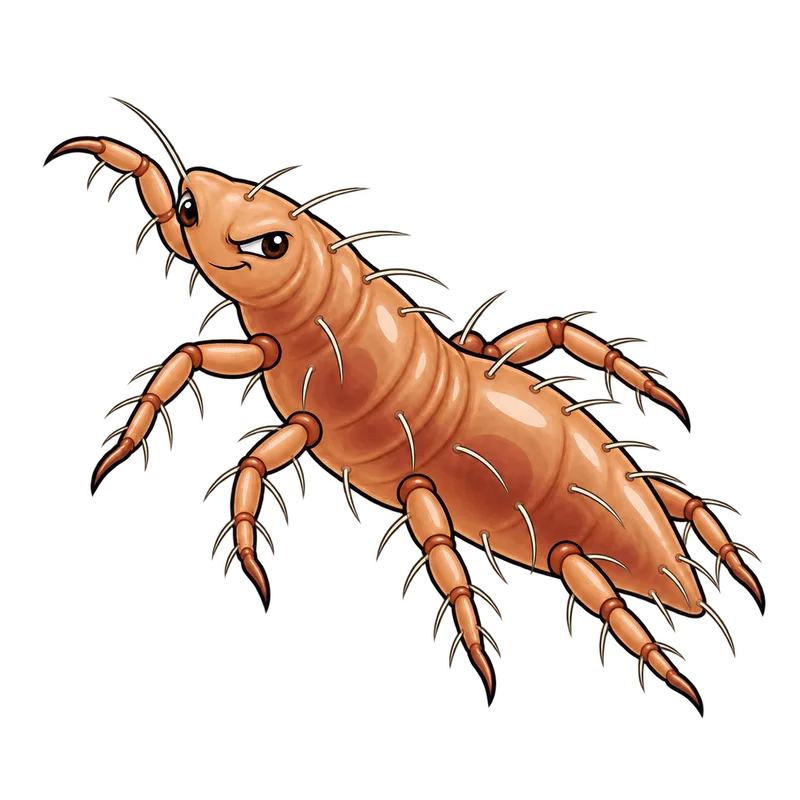
Oak leaf itch mite
Pyemotes herfsi
- Size
- 0.2 mm to 0.8 mm
- Color
- Reddish tan to pale straw-colored
- Habitat
- Oak tree leaf galls and fallen leaf litter
- Diet
- Generalist predator of insect larvae and eggs
- Life cycle
- Approximately 7 days from egg to adult
If you are trying to spot an oak leaf itch mite with your bare eyes, you are looking for something roughly the size of a period at the end of a sentence. At zero point two millimeters long, these creatures are virtually invisible without high-power optical magnification. A stereoscope running twenty to fifty times magnification or a compound microscope mount is necessary to confirm an individual specimen. Under that level of detail, an unfed adult female reveals a reddish tan body with a smooth, shiny exoskeleton, four pairs of legs split into two distinct anterior and posterior groups, and an elongated frame.
Habitat & behaviour
The common name tells part of the story, but these mites are actually generalist predators rather than strict oak specialists. In North America, they thrive by hunting the larvae of the oak marginal leaf fold gall midge, which induces pin, red, and black oak leaves to curl upward into protective tubular folds. You will find them living inside these sheltered galls during the summer months. When late summer and autumn arrive, their populations surge and individual mites drop passively from tree canopies in staggering numbers. Wind currents easily catch their minute mass and carry them for hundreds of yards, which is how they drift through residential window screens and land on unsuspecting people sitting in yards or raking leaves.
Visual variations
While these mites do not have different social classes, they go through a remarkable bodily transformation during reproduction that scientists call physogastry. An unfed or newly fertilized female starts out tiny and elongated. Once she feeds on the body fluids of her prey, the back portion of her body swells enormously into a round, fluid-filled pouch known as an ovisac. This inflated, pearl-like structure completely dwarfs the small, dark head and legs attached to the front end. Inside this abdominal pouch, the eggs hatch and the young develop directly into fully formed, sexually mature adults. Adult males are much smaller, making up only five to ten percent of the total population, and they lack functional mouthparts for eating. They exist purely to wait by the mother's genital opening, mate with the newly emerging females, and quickly die off.
Why it matters
The presence of these mites matters because walking into an invisible shower of them leads to a delayed skin reaction. Since humans are not their intended hosts, bites happen by pure coincidence when drifting mites land on exposed skin around the neck, shoulders, chest, arms, and face. You will not feel anything the moment the bite occurs. Instead, symptoms show up ten to sixteen hours later as intensely itchy, raised red bumps that often feature a tiny blister right in the center. These mites do not carry human pathogens or infectious diseases, which means the main medical risk comes down to secondary bacterial infections from scratching the skin raw. A heavy autumn population surge simply means you happen to be underneath a high volume of generalist predators dropping down from an infested oak canopy.
Similar species
 House dust mitesDermatophagoides species
 Bird mitesDermanyssus and Ornithonyssus species
 Tropical rat miteOrnithonyssus bacoti
 Clover mitesBryobia species
 ChiggersFamily Trombiculidae
 Twospotted spider miteTetranychus urticae