
Can predatory mites help control thrips?
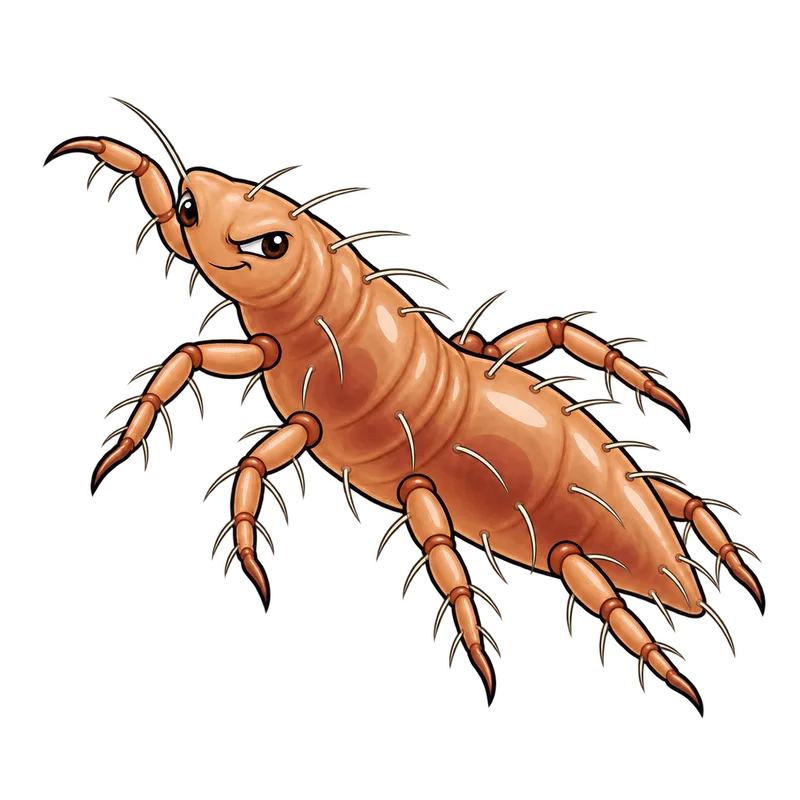
Nobody can responsibly promise that predatory mites will control your thrips problem. Whether a commercially raised mite will suppress thrips depends entirely on your specific plants, climate, and region, so you should consult your local extension service or a reputable biocontrol supplier before buying.
What is actually going on
Picture a warm Saturday in late spring. You pull a white sheet off the clothesline, fold it against your chest, and later that evening you feel a faint, prickly nip on your arm, like a static shock with opinions. That is often how people meet thrips: tiny, slender insects, usually under 15 mm long, that drift onto light-colored, damp laundry and occasionally give skin a mild, short-lived bite. Once you notice them, the next question comes fast. Fine, what eats these things? Can I just hire some predatory mites to handle it?
Here is the honest answer, and I would rather give it to you straight than sell you a nice story: nobody can responsibly promise that predatory mites will control your thrips problem. It is true that some mites are fierce predators of insect larvae. It is also true that some thrips are themselves predators, hunting spider mites and other small insects, which is a fun plot twist most people never hear. But "predators exist" and "this predator reliably controls that pest" are two very different claims, and the second one simply is not verified here. Anyone who tells you otherwise is guessing with confidence, which is the worst kind of guessing.
The doubt you are probably nursing is fair. Garden centers and greenhouse suppliers do sell predatory mites for various pests, so why would thrips be any different? The catch is that biological control is matchmaking, not a general vibe. A predator that works beautifully on one pest, in one crop, in one climate, at one population level may ignore another pest entirely, or show up too late, or starve when the buffet closes early. Whether a specific commercially raised mite will suppress your specific thrips on your specific plants is a question for your local extension service or a reputable biocontrol supplier who knows your crop and region. It is not something to assume from the word "predatory" on the label.
And there is a second, sharper reason to be careful with this idea. The best-documented predatory mites in everyday American life are not friendly greenhouse helpers. They are the ones that bite people.
How to tell for sure
Start with the thrips themselves. They are small, narrow, cylindrical insects, usually under 15 mm, with fringed wings that look almost feathery under magnification. Most of them feed on plant sap, pollen, or fungi using rasping-sucking mouthparts, which is a polite way of saying they scrape the surface and slurp what leaks out. On plants you will usually notice silvery streaks, distorted new growth, or tiny dark specks of droppings before you ever spot the insects. Around the house, the classic clue is the clothesline: bright, damp laundry in warm months attracts them, and they hitchhike indoors on the fabric.
Now the mites. The notorious one is the oak leaf itch mite, a predatory mite so small, roughly 0.2 to 0.8 mm, that you will generally never see the thing that bit you. All summer it does genuinely useful work in oak trees, paralyzing gall midge larvae and other soft-bodied insect larvae with neurotoxic saliva and feeding on them. A single mated female can produce up to 250 offspring in about 7 days, which is an astonishing little factory. The trouble starts in late summer and fall, when the host larvae run out. The mites leave the trees on the wind like microscopic paratroopers, and a single infested oak can shed up to 370,000 of them in a day. They pass through ordinary window screens, land on people raking leaves or reading on the porch, and try to feed. The bite is painless at first. Then, 10 to 16 hours later, you get intensely itchy red bumps, often with a tiny central blister.
Here is the part people resist: you usually cannot identify either culprit from the mark on your skin. Bite reactions vary wildly from person to person, and a red welt from a thrips, an itch mite, a mosquito, or a flea's opinion of you can all look alike. Trying to name the pest from the bump alone is like solving a crime with no fingerprints. If you genuinely need to know what is biting you, catch a specimen, look at it under a 10x hand lens or a microscope, or send it to your university extension diagnostic lab. That one step saves people from spraying the wrong thing, treating the wrong pest, and arguing with their own skin for a month.
What usually comes next
So what do you actually do with all this? The practical answer is boring, and boring is good. If your thrips problem is the laundry-and-houseplants kind, you can skip the exotic fixes entirely. Shake out and look over line-dried clothes and sheets before they come inside during spring and summer, and when you are not sure, run them through a hot dryer for 20 to 30 minutes. That finishes off any hitchhikers without drama. Give potted plants a once-over before they move indoors too. If a thrips lands on you and nips, wash the spot with mild soap and water. A cold compress, calamine lotion, or an over-the-counter hydrocortisone cream or antihistamine, used exactly as its label says, usually settles the irritation down. On ornamental plants, thrips almost never earn a chemical response, though a registered garden product from your local garden center is there if a population genuinely gets out of hand. Read that label and follow it to the letter. It is the law, and it is also the only part of the product anyone actually tested.
If you were still picturing yourself releasing a tiny mite army, hold that thought. Do not go recruiting wild itch mites as your control agents, because their retirement plan is biting you. And before you buy any commercial biocontrol mite for thrips, call your extension service or a licensed professional who can tell you whether that pairing is actually supported for your plants and your conditions. The word "predatory" on a label is a description, not a promise.
One more thing if oaks are part of your life: spraying the canopy with a conventional insecticide generally does nothing against itch mites, because they develop tucked inside curled leaf galls where sprays cannot reach. DEET-based repellents give inconsistent protection too, which is a polite way of saying do not count on them. The moves that work are deeply unglamorous. Spend less time under infested oaks in late summer and fall, shower and change clothes right after yard work, and send work clothes through the washer or a hot dryer. Nobody brags about this routine at barbecues, but it works.
When to get help
Call a clinician or urgent care if bite sites start showing spreading redness, warmth, swelling, or pus. Scratching itchy welts open is an engraved invitation to a secondary bacterial infection, and that is a worse party than the bites. Get seen as well if you are facing a large outbreak, dozens of bites or more, or any reaction that feels wildly out of proportion to a few itchy bumps. And if a pesticide exposure is anywhere in the story, call poison control instead of improvising a remedy from the internet.
If the biting keeps happening and you still cannot name the culprit, stop treating blind. Catch a specimen and send it to your university extension diagnostic lab, or bring in a licensed pest management professional. If things escalate to treating trees or applying anything beyond a homeowner product, that job belongs to a licensed applicator, partly because state rules say so and partly because, as the gall-dwelling mites keep proving, the obvious spray is usually the useless one.
The short version: thrips are mostly a nuisance with a laundry habit, the famous predatory mites are a public health problem wearing a beneficial costume, and the predator-versus-thrips pairing you were hoping for is unproven rather than promised. Identify first, let the dryer and the shower do the front-line work, and hand the rest to extension or a professional.