
What are tiny red bugs that are not clover mites?
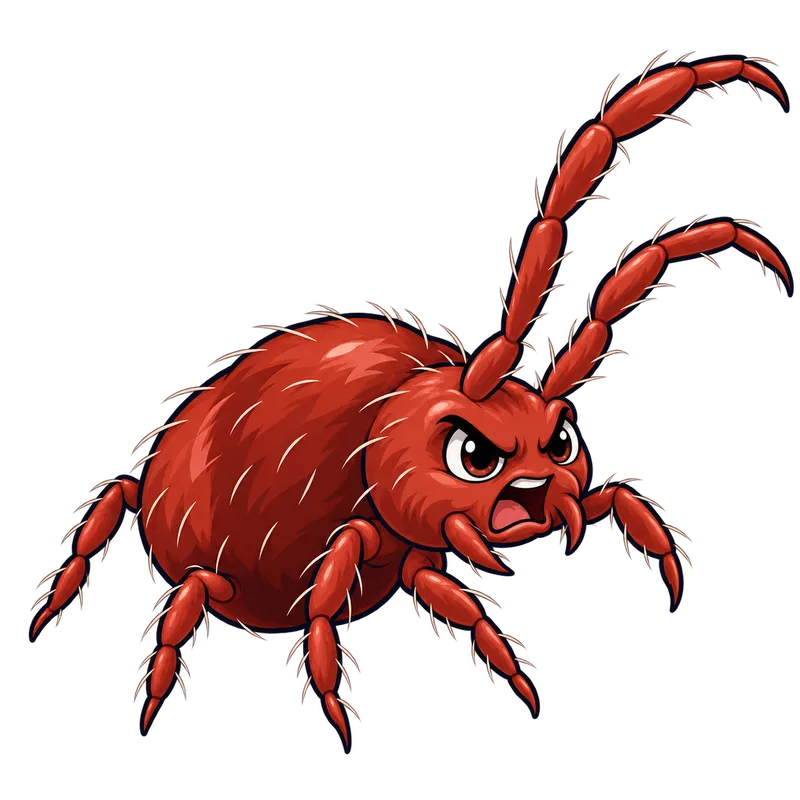
Tiny red bugs that are not clover mites are usually bed bug nymphs, bird mites, rodent mites, or seed ticks that appear bright red after feeding on blood. They can also be naturally reddish outdoor arachnids like oak leaf itch mites and chiggers that drop from trees or crawl from grass.
What is actually going on
You are sitting on the couch on a lazy Saturday afternoon, maybe scrolling through your phone, when you happen to glance down at your forearm or the sofa cushions. There, marching along with unmistakable purpose, is a tiny red speck. You lean in close, squinting because it is practically the size of a poppy seed, and wonder what on earth just appeared in your living room. Your first thought might be a clover mite, especially if you remember hearing about those harmless little plant feeders that leave a smudge when crushed. But clover mites do not bite, and if you are dealing with something that leaves an itchy welt or just behaves differently, you are likely looking at an entirely different creature.
So, what are these tiny red bugs if they are not clover mites? More often than not, they fall into two camps: either tiny predatory or parasitic mites that have drifted indoors or dropped from the trees overhead, or juvenile insects whose bodies have turned bright red for one very specific reason. Namely, they just finished eating.
That sudden crimson color is usually not a natural pigment at all. Bed bug nymphs, bird mites, rodent mites, and even tiny seed ticks start out life as nearly transparent, straw-colored ghosts. Once they latch on and take a vertebrate blood meal, their flexible outer skin expands, and the bright red hemoglobin shows right through. A first-instar bed bug nymph measures about 1.5 millimeters, looking like a tiny mobile drop of blood after feeding.
If you found these specks outdoors, or indoors near an open window during late summer or autumn, you might be dealing with oak leaf itch mites or chigger larvae. These little arachnids are naturally reddish or yellowish, and they arrive not by hitching a ride on a mattress, but by dropping from tree canopies or crawling up from tall grass. Identifying them requires looking past the fact that they are small and red, because half a dozen different creatures share that exact description depending on the season and the room you find them in.
How to tell for sure
Identification of the physical specimen under magnification must precede any chemical control or treatment plan. You cannot reliably guess what you are fighting by the look of a bite alone, since human immune reactions vary wildly from person to person. That means you need to get a closer look at the bug itself, usually requiring a magnifying glass or a hand lens with 10x magnification.
Start by counting the legs. Insects have six legs and two antennae, while adult mites and ticks have eight legs and no antennae, though newly hatched larvae of both mites and ticks start out with six legs. If the bug has a distinct oval, wingless body that changes from straw-colored to bright crimson after a meal, and you find it near a bed or sofa, you are usually looking at a bed bug nymph. If those bugs are turning up near an attic access, chimney, or upper-floor ceiling, take a pause. They can easily be bat bugs, which look nearly identical to bed bugs except for having longer fringe hairs on the collar region behind the head.
Where you find the bugs on your body or in your house usually tells a story. Oak leaf itch mites usually leave bites on the upper torso, neck, and shoulders because they drift down on the wind and drop into loose shirt collars. Chiggers usually target areas where clothing fits tightly against the skin, such as under sock cuffs, waistbands, and belt lines. Bird and rodent mites present as random, widespread prickling spots across the body, often appearing a week or two after you clear out a bird nest from the eaves or trap mice in the basement.
What usually comes next
Once you have a reasonable idea of what you are looking at, your best move is tracing the problem straight back to its source instead of aimlessly spraying chemicals around the room. If the culprit turns out to be bird mites or bat bugs, treating your bedroom baseboards will not solve a thing because the real infestation is hiding out in an abandoned nest up in the attic or tucked behind the siding.
Take a good look around the perimeter, the roofline, and any recent wildlife activity in the house. If you recently cleared out a mouse or a bird, or if bats live in your chimney, those stranded parasites are simply wandering away from empty nests and migrating along warm pipes or electrical wires straight into your living space. Closing off those entry points and dealing with the primary host structure stops the endless wave of new bugs much faster than any surface spray ever could. If you find actual bed bugs, your focus narrows completely to sleeping areas, furniture seams, and laundered garments. Match your next step to where the creature naturally belongs, rather than treating every tiny red speck as a generic indoor pest.
When to get help
Some situations demand outside expertise, whether you are worried about your health or need to stay on the right side of wildlife laws. Ectoparasite bites can occasionally trigger severe allergic reactions, so if you experience breathing difficulty, throat swelling, or dizziness, seek medical attention immediately. Persistent scratching of itchy bites also breaks the skin and creates a high risk for secondary bacterial infections, which a clinician can help manage.
Ticks are notorious for vectoring serious pathogens like Lyme disease and Rocky Mountain spotted fever, so monitor any tick bite site for an expanding rash or flu-like symptoms. If you happen to encounter a kissing bug nymph, never handle it with bare hands due to the risk of transmitting disease parasites. Collect it carefully using gloves or a plastic bag, and clean any exposed surface with a bleach solution.
On the structural side, bats and federally protected migratory songbirds, along with their active nests containing eggs or chicks, are strictly protected under wildlife laws. You cannot simply remove active bird nests or exterminate bats on a whim, as doing so violates federal and state regulations. Furthermore, distinguishing bat bugs from bed bugs requires a specialist to examine microscopic hairs under a lab microscope, and mistaking the two leads to costly treatment failures. When you are dealing with these complex hosts or protected wildlife, bring in a licensed pest management professional or consult the appropriate state agency.