
What tiny red bugs bite and itch?
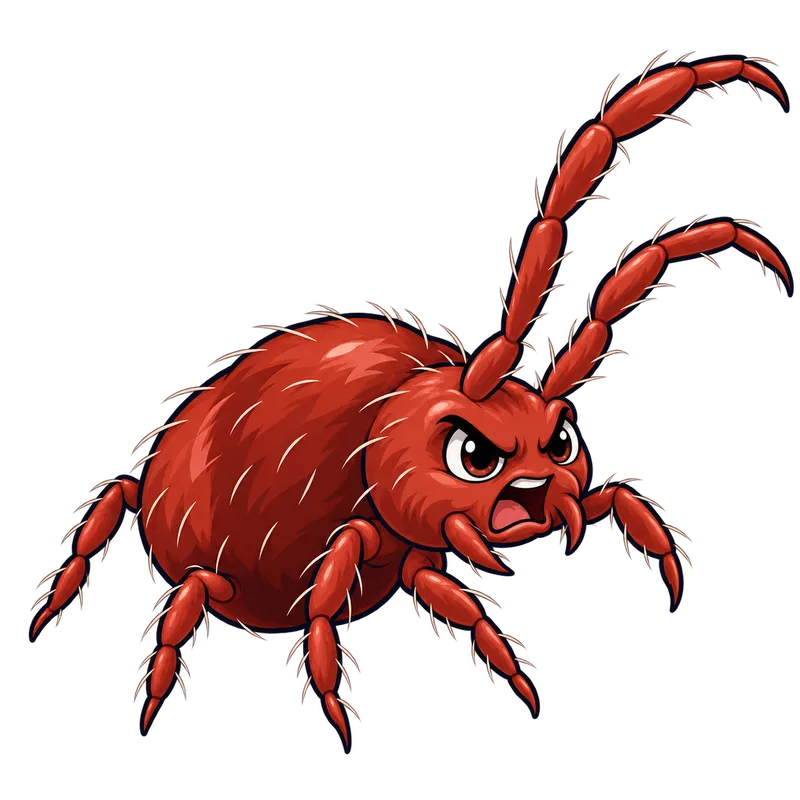
Tiny red bugs that bite and itch are usually chiggers if you were outside in tall grass, or bird and rodent mites and bed bug nymphs if you are indoors. Chiggers are microscopic larvae, while indoor bird and rodent mites are about the size of a printed period. Clover mites also appear indoors, but they only feed on plants and do not bite.
What is actually going on
You are wiping down the sunny windowsill in the living room on a warm Saturday morning when you notice several tiny, moving red specks. Later that evening, you wake up with an intense itch on your ankles, and you start wondering if those little red specks are the culprits. When people report tiny red bugs that bite and itch, they are usually dealing with one of a few common arthropods depending on where the encounter happened. If you were just out in the tall grass or working in the garden, you are likely crossing paths with chiggers, which are the immature stage of tiny harvest mites.
If these bugs are showing up indoors, the possibilities shift. You might be looking at bird or rodent mites that have wandered down from an abandoned nest in the attic after the original animal hosts left. Alternatively, you could be seeing bed bug nymphs. These small insects turn a bright red to dark reddish-black immediately after a blood meal because their recent meal shows right through their translucent skin.
It is also entirely possible that the bugs you see are not biting you at all. Clover mites are frequently spotted indoors or crawling along exterior walls. While crushing one leaves an alarming reddish-brown smear that looks like blood, they only feed on plants and do not bite humans.
This distinction matters because pinning down a pest purely by how a skin mark looks is nearly impossible. Dermatological reactions vary wildly from person to person. Two people can sit in the exact same spot and have completely different reactions, ranging from zero irritation to large, angry red blotches that might not even show up for several days.
How to tell for sure
Figuring out what you are dealing with usually comes down to location, timing, and a bit of magnification. If the bites happened after spending time outdoors in brushy areas, you are usually dealing with chiggers. They are microscopic larvae, so you typically need a hand lens to see their six bright red legs.
Indoors, you can often spot bed bug nymphs with the naked eye once they have fed, since their rounded bodies take on a distinct reddish color. Bird and rodent mites are about the size of a printed period and crawl near walls or windows when their animal hosts abandon a nest. If you spot tiny red or brownish bugs with front legs that look significantly longer than the rest, you usually have clover mites.
When you cannot quite tell what you are looking at, avoid guessing. Skin lesions and red marks alone can never confirm an arthropod identity. If you need a reliable identification, gently capture a physical specimen on a piece of clear tape, place it in a sealed container, and take it to your local university extension office or a medical entomology reference laboratory.
What usually comes next
Your most practical move right now is to stop guessing and match your next step to the exact spot where you found the bugs or felt the itching. If your trouble started outdoors in the yard, turn your attention to clearing tall grass, weeds, and brush away from where you sit, and think about using the right outdoor protection before you head back into the grass.
If the problem is happening indoors, look up toward the roofline or the attic to see if birds or rodents built a nest and left recently, which often triggers an indoor migration of mites. If you suspect bed bugs, avoid panicking or spraying random chemicals and instead methodically inspect mattress seams, furniture joints, and bed frames for physical proof of insects or dark waste spots.
When you decide to use any dust or pest control product indoors, keep in mind that the product label is the absolute law for how you must apply it. Never use pool-grade filtering dust inside a house, because it contains high levels of crystalline silica and creates a serious lung hazard. Always choose an official EPA-registered pest control product, and put it down sparingly as a very thin layer in hidden cracks and crevices instead of piling it up in plain sight.
When to get help
There are moments when standard do-it-yourself efforts fall short and you need to hand the problem over to someone else. If you are dealing with a heavy bed bug infestation that keeps spreading, or if you find out your biting pests are actually bat bugs living up in the attic, you need a licensed professional pest management company. Trying to treat bat bugs without first professionally excluding the bats from the building will never fix the underlying issue.
You should also call in professionals when structural work or regulated materials are involved. Removing wildlife such as bats or nesting birds protected by law demands a licensed wildlife control operator. On top of that, applying restricted use pesticides or carrying out specialized structural treatments legally requires a certified applicator.
On the health side, if you experience severe itching, spreading redness, pus, warmth, or red streaks around a bite that point to a secondary bacterial infection, visit a primary care doctor or an urgent care clinic right away. Get emergency medical help immediately if you notice any signs of a severe systemic allergic reaction, such as swelling of the face or trouble breathing. If anyone accidentally swallows or is overexposed to a pesticide, call poison control or emergency services without delay.