
Why are flour mites in the kitchen?
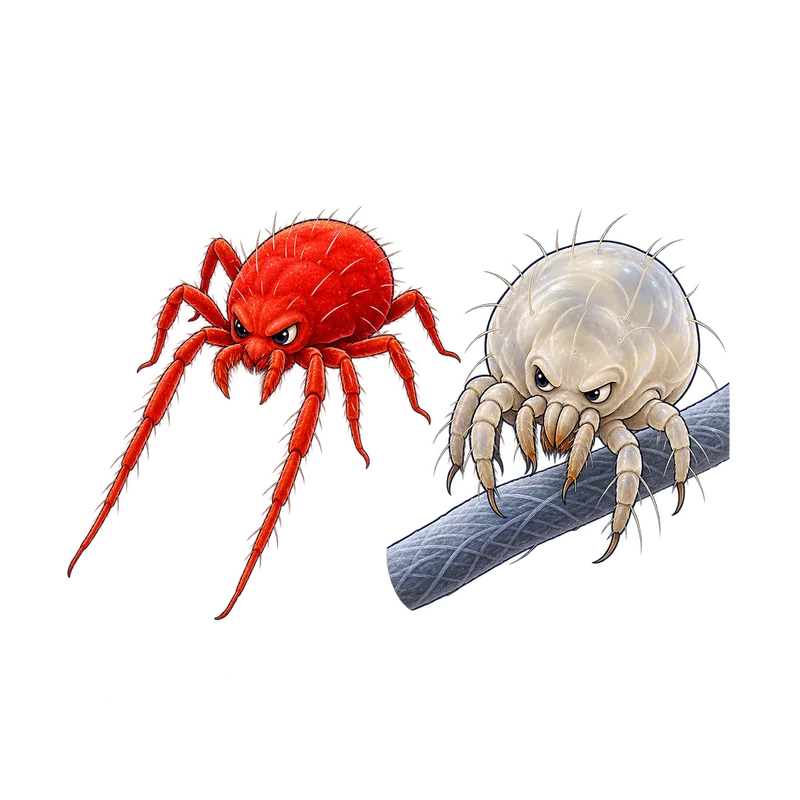
Flour mites are in the kitchen because stored grain products, high relative humidity between 55% and 75%, and ambient warmth provide their exact ecological requirements. They usually hitch a ride straight from the grocery store inside outer packaging, and they wake up from a dormant phase once kitchen moisture allows them to thrive.
What is actually going on
You reach into the back of a dark pantry cabinet for a bag of specialty flour you bought six months ago for a weekend baking project. As you lift the paper package, you notice a fine, grayish-brown dust coating the shelf underneath, and if you look closer, that dust seems to be slowly shifting on its own.
Flour mites enter and multiply in kitchens because stored grain products, high relative humidity between 55% and 75%, and ambient warmth provide their exact ecological requirements. These tiny creatures need moist carbohydrate substrates, accessible fungal growth, and lipid-rich grain germs to thrive, meaning your kitchen acts as a steady supply depot once moisture levels allow them to take hold.
You might wonder how they got there in the first place if the package was sealed shut. The reality is that they usually hitch a ride straight from the grocery store or a commercial warehouse inside the outer packaging or the dry goods themselves. Once they are inside your home, their survival depends entirely on moisture. When your kitchen stays humid from cooking, boiling water, or poor ventilation, stored grains absorb that ambient moisture, and the mites wake up from a dormant phase to feed and multiply rapidly.
Under optimal conditions of warmth and high humidity, a single female can lay hundreds of eggs, and the life cycle from egg to adult completes in less than two weeks. They do not just eat your flour and cereal, either. They also feed on surface molds and fungi, scattering spores as they move and leaving behind shed skins and waste that create that discolored powder known as mite dust. Sometimes, when a colony gets dense enough, crushing them releases a strange, faint smell of mint or sweet medicine, which catches many homeowners off guard.
How to tell for sure
Trying to figure out what is crawling in your pantry usually starts with realizing that individual flour mites are practically invisible to the naked eye. Measuring less than half a millimeter long, adults look like tiny, translucent or pearly-white specks. You usually spot the collective evidence, such as the moving dust on a shelf or clumpy, discolored grain, long before you can make out an individual body.
To tell for sure what you are looking at, you will usually need a hand lens or a pocket magnifier with 10x to 20x magnification. Under magnification, flour mites reveal soft oval bodies and eight legs, which separates them instantly from insects like booklice or flour beetles that have six legs and distinct body segments. Booklice are often mistaken for mites because they also show up in damp pantries to feed on micro-molds, but booklice have an enlarged nose-like structure on their heads and move with a jerky running motion, whereas flour mites usually crawl slowly and steadily.
You also want to rule out house dust mites, which people frequently confuse with pantry pests. Dust mites live in mattresses and carpets eating shed human skin, whereas flour mites live exclusively in dry foods and grain products. If you find tiny crawling specks near your spices, grains, or pet food, you are usually dealing with storage mites rather than anything living in your soft furnishings.
What usually comes next
When you confirm that you have an infestation, the most important practical decision you have to make is to clear out and discard all compromised food sources immediately, rather than trying to sift or salvage infested grains.
People often hesitate to throw away expensive flour, cake mixes, or large bags of pet food, hoping they can just use a sifter or heat the product up. Unfortunately, once a bag has enough moisture and warmth to support a visible colony, the food is laden with cast skins, waste, and allergens that you simply do not want to consume. Double-bag those heavily infested items in heavy-duty plastic garbage bags, seal them tightly, and take them straight to an outdoor trash bin.
After the contaminated food is gone, resist the urge to reach for chemical bug sprays or total-release foggers. Insecticides have no business being sprayed on pantry shelves where you store food, and they will not solve the underlying problem anyway. Instead, your primary focus should be lowering the humidity in your kitchen below 50% using an air conditioner or a dehumidifier, while wiping down shelves with hot, soapy water. By cutting off the moisture they need to survive, you pull the rug out from under any remaining pests without introducing unnecessary chemicals into your kitchen storage space.
When to get help
There are times when pantry pests point to a larger structural issue that goes beyond a single forgotten bag of flour. If you have thoroughly cleaned your cabinets, discarded old food, and run a dehumidifier for a few weeks, but the mites keep coming back, you usually need to involve a professional pest control operator. Persistent populations often indicate hidden structural moisture leaks, damp wall voids, or plumbing condensation that keeps feeding the microclimate behind your drywall.
You should also look outside the home for help if exposure to the pantry causes health concerns. While flour mites do not bite or transmit infectious diseases, heavy inhalation or contact with allergen-laden mite dust can trigger severe allergic reactions, contact dermatitis known as baker's itch, or asthma flare-ups. If you or someone in your household experiences persistent respiratory distress, wheezing, or severe skin rashes when dealing with pantry supplies, stop cleaning immediately and consult a qualified clinician or an allergist for proper medical evaluation.