
Clover mites vs chiggers: why do these red mites cause different concerns?
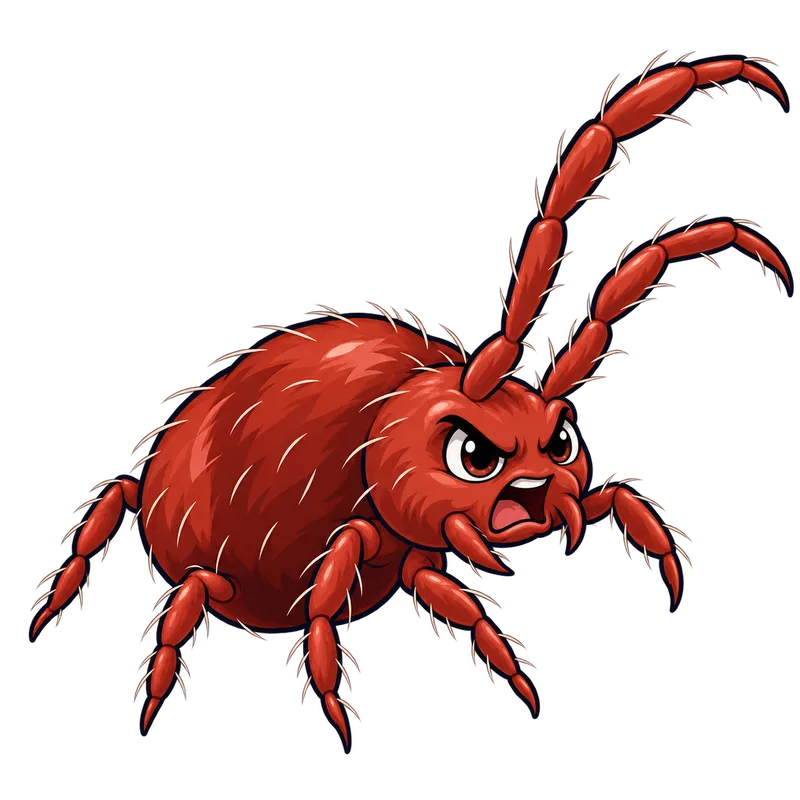
Clover mites and chiggers cause different concerns because clover mites feed on plant sap and cannot bite humans, while only the microscopic larval stage of chiggers bites people to drink tissue fluid. Clover mites wander onto sunny walls and leave red smears when squashed. In contrast, chigger larvae cause intensely itchy bumps clustered around the ankles or waistbands.
What is actually going on
Picture a bright spring morning when you walk up to your sunroom window and notice hundreds of tiny, reddish specks marching across the glass. They look like moving drops of red paint. Naturally, you wonder if you are about to be bitten, covered in welts, or worse, dealing with an infestation that requires calling in reinforcements. That knee-jerk panic usually leads to lumping all tiny red crawlers into one terrifying category, but clover mites and chiggers live entirely different lives and cause very different headaches.
Clover mites are outdoor creatures that feed strictly on plant sap. They do not care about your blood, they cannot bite you, and they do not carry diseases. They simply wander onto sunny walls and slip inside through window frames when the weather shifts. If you squash one, it leaves a bright red smear because of its internal fluids, which makes people assume it just fed on human skin. It did not. They are just annoying houseguests whose biggest crime is ruining your white baseboards.
Chiggers operate under a completely different set of rules, and they are the ones actually responsible for those maddening, intensely itchy bumps. But here is the part that surprises most people: adult chiggers are harmless soil predators that eat other tiny insects. The trouble starts and ends exclusively with their microscopic, six-legged larval stage. When those tiny larvae latch onto a passing human, they do not burrow under your skin the way urban legends claim. Instead, they inject digestive enzymes to liquefy your skin cells and drink the resulting tissue fluid through a hardened feeding tube.
How to tell for sure
Relying on a bite mark to identify a pest usually leads nowhere because human immune systems react so differently to skin irritation. Instead, look at where the irritation happens or where the bugs show up. Clover mites usually show up in large, visible groups on sunny exterior walls, concrete patios, and windowsills during the cooler months of spring and autumn. They have noticeably long front legs that stick straight out, making them look almost like tiny spiders when you get close enough to see them.
Chigger activity usually gives itself away through anatomy and location. Because those tiny larvae climb up from grass and brush, they typically catch a ride and crawl upward until clothing stops them. You will usually find chigger bumps clustered tightly around the ankles, behind the knees, along the waistband, or right where your socks press against your skin.
If you are dealing with tiny red bumps higher up on your neck, chest, or shoulders after spending time under trees, you might actually be looking at oak leaf itch mites rather than chiggers. Those microscopic predators drop from pin oak canopies in the late summer and fall, biting exposed upper body areas where clothing fits loosely. Bird and rodent mites show up indoors when an animal nest in the attic or wall is abandoned or removed, sending hungry parasites wandering into living spaces to look for a warm body.
Collecting a physical specimen usually solves the mystery when guesswork fails. Pressing a piece of clear adhesive tape gently over crawling bugs on a windowsill and sticking that tape to a piece of white paper gives you something a local extension office or entomologist can examine under a microscope.
What usually comes next
Keeping these unwanted visitors out of your daily routine starts by building a few simple physical barriers around your property. For clover mites, clearing a clean zone of bare gravel or wood chips right against your foundation stops them from easily bridging the gap between thick grass and your exterior walls. Sealing up cracks around windows and doors also keeps them from wandering inside when the weather turns. If you do find a few milling about on the sill, grab your vacuum cleaner rather than a wet sponge, and make sure to empty or freeze the bag so you do not accidentally grind those red pigments into your paint.
Keeping chiggers away from your skin takes a bit of planning before you step foot in the yard. Sticking to mowed paths, pulling your socks up over your pant legs, and wearing light colors makes it much simpler to spot tiny crawlers before they dig in. Spraying your skin and clothing with an insect repellent containing DEET or picaridin offers reliable defense, and treating your outdoor gear with permethrin provides an extra layer of security.
The single best habit after an afternoon working in the overgrown brush is heading straight inside for a hot, soapy shower. Scrubbing down thoroughly washes away any unattached larvae before they have a chance to settle in for a meal. Throwing your clothes straight into a hot washing cycle finishes the job.
When to get help
Most encounters with these tiny pests can be managed right at home with basic soap and water, paired with a bit of anti-itch cream to keep you from driving yourself crazy. Still, certain situations call for professional medical attention.
Scratching intensely at itchy bumps can easily break the skin and lead to secondary bacterial infections. If a spot starts feeling unusually hot, begins draining pus, or develops a spreading redness that refuses to fade, get it checked by a clinician or urgent care center. Anyone showing signs of a severe or unusual systemic allergic reaction needs emergency medical care immediately.
Where you have traveled also matters quite a bit. While the chiggers found across North America bring intense itching without any risk of disease, species living in tropical parts of Asia and northern Australia can transmit scrub typhus. Anyone who comes home from those regions with a fever, a dark scab at the bite site, or swollen lymph nodes needs prompt medical evaluation for targeted antibiotics.
When indoor invasions turn out to be bird or rodent mites, treating the symptoms inside your living room only buys you time until you fix the source. Removing old bird nests or rodent bedding solves the root issue, but remember that active nests belonging to native wild birds are protected by strict conservation laws and cannot be disturbed until the young birds leave for good. Calling in a licensed pest control professional or a wildlife specialist ensures that any structural work, animal removal, or nest clearance stays entirely within legal bounds.