
What should you inspect before assuming every tiny red dot is a mite?
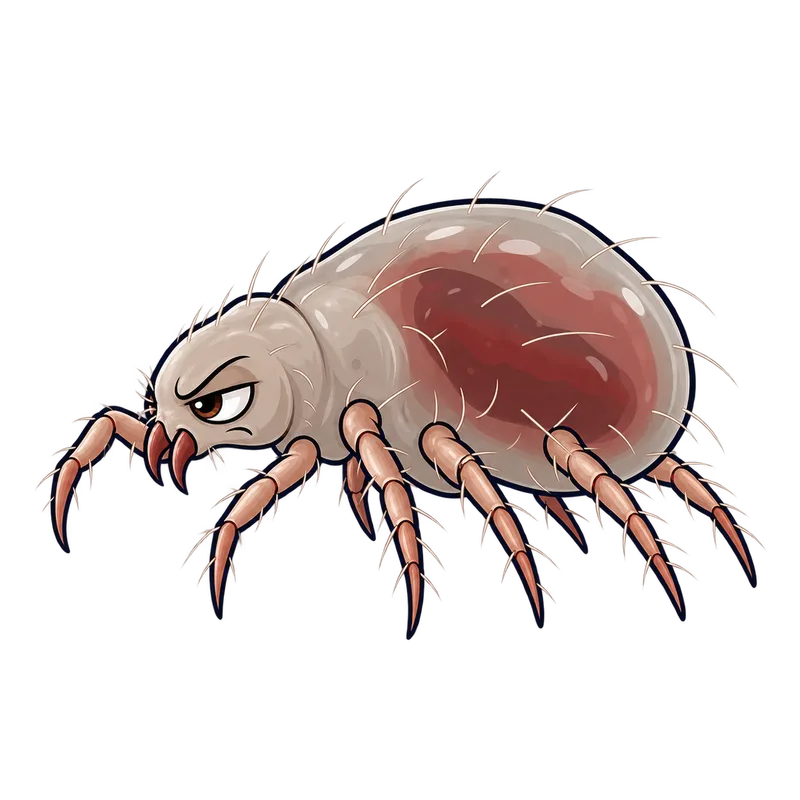
Before assuming tiny red dots are mites, you should inspect physical evidence in your environment rather than relying on skin marks alone. Human skin reacts the same way to many different stimuli, and up to thirty percent of exposed people show no reaction at all. Instead, look for physical bugs using a magnifying glass, check for droppings, or inspect attics for abandoned animal nests.
What is actually going on
You notice a constellation of angry red spots on your neck or arm after spending an afternoon working around the house, and your mind immediately jumps to the worst possible conclusion. Mites. You start imagining microscopic horrors crawling across your skin, multiplying in your mattress, and turning your living room into an invisible battlefield. Before you tear your bedroom apart or order industrial quantities of spray, take a breath. The truth is that skin marks are remarkably unhelpful when trying to identify what actually bit you. Human skin tends to react the exact same way to a dozen different stimuli, whether that stimulus is arthropod saliva, plant hairs, synthetic fibers, friction, or an ordinary systemic allergy.
Worse yet, human immune systems are entirely inconsistent. Roughly twenty to thirty percent of people exposed to biting pests show absolutely no skin reaction at all, which means your unblemished sleeping partner might be sharing a bed with active bugs while you suffer from mysterious welts. Relying on a bumpy rash to name your pest is like trying to diagnose a car engine failure by listening to the color of the smoke. It gives you a general hint that something is wrong, but it tells you nothing about the mechanism.
This misdiagnosis loop usually leads people down the wrong path entirely. If you assume a red dot automatically means a mite, you might treat your bed for an invisible enemy while ignoring the real source, such as a family of bats roosting quietly in your attic or a forgotten bird nest tucked under the eaves. Ectoparasites like bird mites, rodent mites, and bat bugs are fundamentally opportunistic hitchhikers. When their primary animal hosts leave, die, or get excluded from a building, these creatures find themselves out of a home and migrate into human living spaces looking for an alternative meal. They bite out of desperation, but they cannot reproduce or sustain a permanent population on human blood alone.
How to tell for sure
If your skin cannot tell you what is biting you, what can? You usually have to rely on physical evidence and proper magnification. Pests generally operate across three distinct visual scales, and you usually need more than just your naked eye to sort them out. Adult bed bugs, fleas, hard ticks, and engorged bird mites are large enough to spot without optics, usually measuring between one and seven millimeters, but their distinguishing anatomical structures remain completely obscured.
To bridge that gap, you need a basic ten times hand lens. Field examination with a magnifying glass allows you to check simple structural features, such as counting tick legs, observing wing pads, or evaluating the general hairiness of an insect. When you need to get definitive, you usually enter the microscopic scale. Differentiating a common bed bug from a bat bug, for example, requires measuring the tiny hairs behind the head against the width of the insect eye. In a true bed bug, those fringe hairs are noticeably shorter than the eye width, whereas bat bugs usually sport hairs equal to or longer than that eye width.
You also have to look beyond the bug itself and check the surrounding environment. If you notice dark spots on your baseboards or mattress seams, test them before you panic. Bed bug droppings are made of digested blood, which means they tend to dissolve and smear red when you press them with a wet cotton swab. Cockroach droppings will not do that. When your problem pops up in late summer or fall, the guilty party might not even be a structural pest at all. Microscopic oak leaf itch mites rain down from pin oak trees by the hundreds of thousands every day, floating on the wind while you are outside and landing on bare skin under loose clothing. They are far too tiny to spot without special gear, coming in at a fraction of a millimeter, so figuring out what happened usually means connecting your recent yard work to the timing of the bites instead of searching your sheets for bugs.
What usually comes next
Once you accept that a red dot is just a clue and not a name tag, your next step is gathering real physical bugs before you spray anything at all. You can press a strip of clear adhesive tape over an area where you think things are crawling, then gently lift the tape and stick it onto a clean white sheet of paper to trap the insects without squishing the parts you need to see. You can also slide passive sticky traps along baseboards and under furniture legs for a week or two to catch whatever is wandering around.
If you suspect bird mites or rodent mites, your game plan shifts away from treating your bedroom and goes straight to the building envelope. You need to look through attics, chimney flues, and crawlspaces for abandoned nests or dead critters. Spraying a living room for bird mites while a dead starling stays hidden in an overhead vent is pointless, because the surviving mites will just keep marching out of the wall void. If you spot a bug that looks big and menacing near a porch light, stop and think before you react. Harmless leaf-footed bugs often get mistaken for blood-sucking kissing bugs, but you should never pick up a suspected kissing bug with your bare hands. Trap it inside a hard container, seal it tight, and clean any surfaces it touched.
When to get help
There are times when a do-it-yourself check hits a dead end and you need to hand the job over to someone with the right license and training. If you find bats living in your attic or migratory birds building nests in your walls, back away. Federal and state wildlife rules often protect active bird nests with eggs or chicks inside, which means you have to wait until the animals leave on their own before you can clear out the nesting mess and seal up the holes.
You should also bring in a licensed pest control professional for deep-seated infestations like bed bugs or bat bugs, since those jobs usually call for specialized gear and targeted treatments that consumer sprays cannot match. On the health side, pay close attention to how your body reacts. If heavy scratching breaks the skin and causes a secondary bacterial infection, or if you feel very sick with facial swelling, dizziness, or trouble breathing after a bite, get medical help right away. A doctor can treat allergic reactions and skin infections safely, while the pest experts take care of the bugs in your home.