
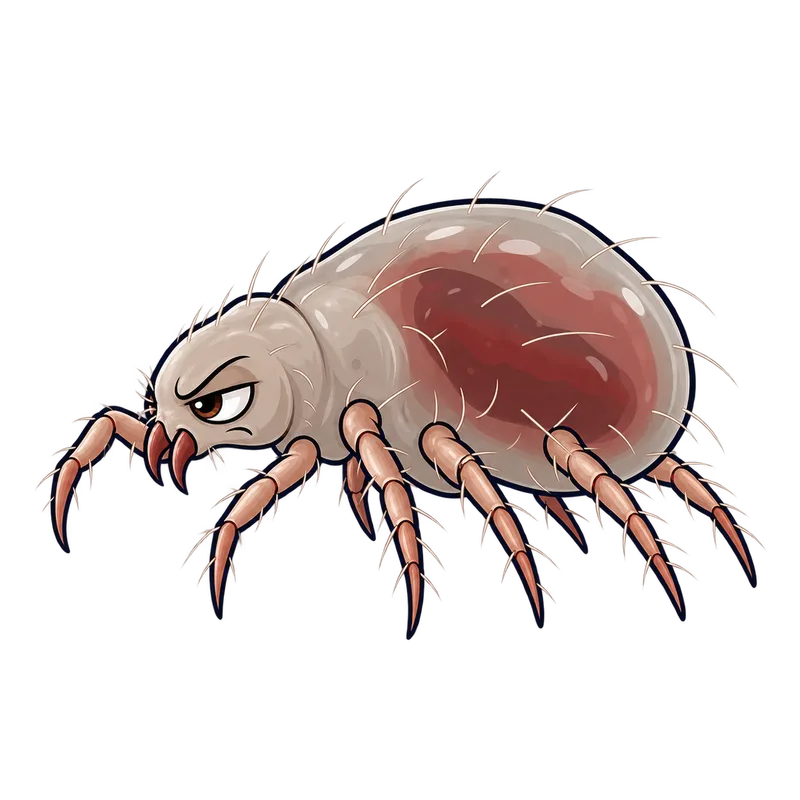
Bird mites
Dermanyssus and Ornithonyssus species
- Size
- One-thirty-second of an inch long
- Color
- Pale, straw-colored, or reddish-brown
- Habitat
- Avian nests and roosting areas
- Diet
- Avian blood
- Life cycle
- Egg, larva, protonymph, deutonymph, adult
Bird mites are not a single creature, but rather a functional complex of tiny arachnids that parasitize avian hosts, including the northern fowl mite, the chicken mite, and the tropical fowl mite. Measuring approximately one-thirty-second of an inch long, or about zero point seven nine millimeters, these creatures are barely visible to the naked eye when isolated. They are wingless and possess eight legs as nymphs and adults, though their larval stage starts with six.
Identity
Unfed adults and nymphs appear pale, straw-colored, whitish, or semitransparent, which makes them exceedingly difficult to spot against light-colored indoor walls or window sills. After taking a blood meal from a bird, their bodies swell and turn bright reddish-brown, dark red, or mahogany-black.
Separating bird mites from other tiny household invaders requires proper field marks. Unlike bed bugs, which are flat, oval insects measuring three-sixteenths to a quarter of an inch long with six legs, bird mites are arachnids with eight legs and a much smaller body. They are also easily confused with rodent mites, which look nearly identical to the naked eye. Confidently distinguishing bird mites from rodent mites or telling different mite genera apart requires microscopic examination at twenty to fifty times magnification to inspect minute details like mouthparts and body hair patterns.
Habitat & behaviour
Bird mites live primarily inside avian nests, under feathers, or within cracks and crevices of hen houses and wild bird roosting areas. They associate with a wide variety of hosts, including domestic poultry, pigeons, starlings, house sparrows, robins, and mynahs.
Activity is largely nocturnal or crepuscular. While they cannot fly or jump, they crawl rapidly across surfaces. Their movement into human living spaces usually begins when a bird population leaves a nest, when nestlings fledge, or when a bird dies. Deprived of their primary host, thousands of mites abandon the nesting material, crawling along exterior walls, through roof voids, attics, soffits, eaves, window frames, air conditioning units, and wall cavities to seek out alternative hosts. In temperate regions, human encounters peak in late spring and mid-to-late summer as wild bird nesting cycles conclude and mass migrations into adjacent buildings take place.
Visual variations
The mite life cycle moves through five separate stages, starting as an egg, moving to a larva, then a protonymph and a deutonymph, and finally reaching adulthood. The eggs are tiny, oval shapes that look pearly-white or clear, and females drop them right in the nests or among the feathers of their hosts. The larvae hatch out as minute, six-legged youngsters that are pale and see-through, and they generally feed very little or not at all before shedding their skin.
Both the protonymph and deutonymph stages have eight legs and look like miniature versions of the grown mites, changing color from a pale tan to a reddish-brown once they have taken a meal. The mature males and females keep an oval body shape that is covered only sparsely with short hairs.
You will also find physical differences between the two main genera you are likely to encounter. Dermanyssus mites carry long, needle-like mouthparts designed for piercing, along with a back shield that keeps a steady width toward the rear. Ornithonyssus mites sport shorter, stouter mouthparts that end in tiny pincers, plus a back shield that tapers down gradually toward the back end. Spotting crawling specks with your bare eyes tells you something is moving, but it cannot show you these microscopic details.
Why it matters
When these mites wander into your living spaces and run into people, they pierce the skin to feed, dropping saliva that brings on intense itching, localized skin irritation, and raised red bumps. Constant scratching can easily open the door to secondary bacterial skin infections. The one piece of good news is that bird mites do not transmit human diseases in North America or Australia.
A strict biological rule governs their time around us because bird mites are obligate avian parasites, meaning they rely entirely on birds. They cannot reproduce, lay viable eggs, or keep a population going on human blood alone. They might bite you opportunistically when they get separated from their bird hosts, but they will eventually die off or wander away on their own. How long they last off a host depends on the species, stretching from a few weeks for tropical fowl mites up to six weeks for northern fowl mites and even several months for chicken mites.
Since these creatures cannot set up permanent housekeeping on a human body, spraying indoor pesticides by itself only buys you temporary relief. Getting rid of the problem for good means finding and physically hauling away the abandoned bird nest from your gutters or roof voids, cleaning up access points, and sealing structural gaps so birds cannot build new nests there. If you happen to find an active nest belonging to a protected native songbird, wildlife laws require you to wait patiently until the nestlings fledge and leave on their own before you clear it out.
Similar species
 Tropical rat miteOrnithonyssus bacoti
 Clover mitesBryobia species
 ChiggersFamily Trombiculidae
 Twospotted spider miteTetranychus urticae
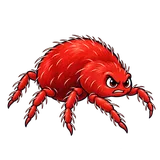 Concrete / sidewalk mitesBalaustium species
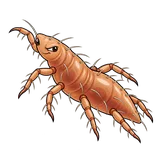 Oak leaf itch mitePyemotes herfsi