
Are dust mites visible without magnification?
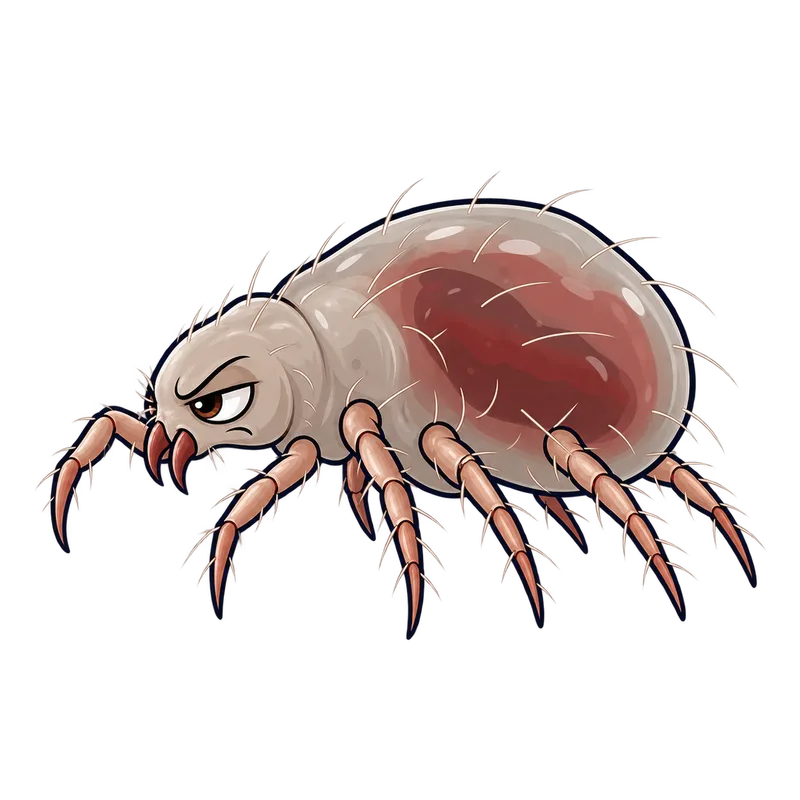
No, you cannot see individual house dust mites without magnification. Adults measure less than half a millimeter, making them about the size of a single particle of fine flour. Because they are translucent or cream-colored, they blend directly into household fabrics and remain practically invisible to the human eye.
What is actually going on
You are making the bed on a quiet Saturday morning, stripping off the sheets, and suddenly you notice a tiny speck moving near the edge of the mattress. Your immediate thought jumps to dust mites, and you wonder if you are suddenly endowed with microscopic vision or if something else is going on. The short answer is no, you cannot see dust mites without magnification. Individual house dust mites measure less than half a millimeter and are translucent or cream-colored, which makes them practically invisible against household fabrics, mattresses, or carpets.
Trying to spot an individual dust mite on a bedsheet is like trying to spot a tiny droplet of clear water on a windowpane from across the room. They lack the optical size, color density, and contrast needed for the human eye to register them. Even if you have exceptionally sharp eyesight, adults only reach about zero point two to zero point three millimeters in length. They are basically the size of a single particle of fine flour or powdered sugar, blending right into white cotton textile weaves.
People often confuse what they can see with what is actually there. When a homeowner spots a tiny crawling speck that is clearly visible to the naked eye, they are almost never looking at a dust mite. Those visible specs are usually bird mites, rodent mites, booklice, or early stage bed bug nymphs. Dust mites are free-living indoor scavengers that feed on shed human skin scales, fungal spores, and organic detritus. They do not bite humans, they do not crawl on skin, and they certainly do not march across your pillows where you can spot them during a sheet change.
How to tell for sure
Since you cannot rely on a visual sighting of the mites themselves, figuring out what is happening in your bedding usually depends on understanding the evidence they leave behind. Dust mites do not cause mechanical bite damage or leave red welts on your skin. Their primary impact is entirely immunological. If you wake up with a stuffy nose, sneezing fits, or worsening asthma symptoms that clear up once you leave the house, airborne fecal particles and shed exoskeletons are usually the culprits.
When you do spot a tiny pest that is actually visible to the naked eye, the identification process changes completely. Bird mites and rodent mites measure about zero point eight millimeters, which is roughly the size of a grain of coarsely ground black pepper, and they usually appear as tiny crawling specks after an animal host abandons a nest in a wall or attic. Adult bed bugs measure four to seven millimeters, making them fully visible and resembling an apple seed. Differentiating those larger pests from close relatives like bat bugs often requires optical magnification of twenty times to fifty times to examine tiny hairs under a microscope.
Physical identification must always precede control. Never treat a dwelling or diagnose an infestation based solely on vague skin irritation or morning bite marks because insect bites are notoriously non-specific and vary wildly from person to person. If you want to check a suspect crawling insect, the safest method is to place a strip of clear adhesive tape gently over the creature, fold it over a clean sheet of white paper, and submit it to a local extension service or diagnostic lab for verification.
What usually comes next
Tackling dust mites does not mean emptying cans of bug spray over your mattress, which is a common and thoroughly useless mistake. Total release bug bombs fail to soak through heavy fabric weaves and inside mattress cores, and they ignore the actual environmental triggers that help mites multiply. Because these microscopic scavengers survive by pulling moisture straight out of the surrounding air through their outer bodies, the smartest move is dropping the humidity inside your house. Keeping indoor moisture levels strictly under fifty percent using dehumidifiers or your air conditioner dries out the mites and causes their numbers to drop fast.
Besides managing humidity, physical barriers and hot washing cycles form the core of sensible upkeep. Wrapping your mattresses, box springs, and pillows in fully zipped, tightly woven protective covers blocks them from reaching their main food sources and hiding spots. Washing all bed sheets, blankets, and washable curtains every week in water at least one hundred twenty degrees Fahrenheit and drying them on high heat kills living mites and breaks down the proteins in their waste.
Swapping out wall-to-wall bedroom carpets for smooth floors like hardwood or tile also clears out a giant trap for skin flakes and house dust. When you do vacuum carpets and soft furniture, using a machine fitted with a high-efficiency particulate air filter stops allergen-filled dust from blowing right back into the room air while you clean.
When to get help
There are times when a do-it-yourself routine is not enough and you need to call in professional backup. If you or someone living with you deals with severe, nonstop itching, open sores, or infected wounds from scratching, make an appointment with a doctor or an allergy specialist to get proper medical care. Sudden trouble breathing, heavy wheezing, or major allergic reactions call for immediate emergency room care instead of home fixes.
On the structural side, spotting visible mites about zero point eight millimeters across usually points to a hidden wildlife problem instead of a basic housekeeping slip. If bird mites or rodent mites are wandering through your living rooms, a licensed pest control operator or university lab needs to verify what insect you are dealing with. Treating a house for biting mites without finding and clearing out the actual animal host, such as bird nests hidden under roof overhangs or mouse nests tucked inside wall gaps, is bound to fail.
Getting rid of bats, protected migratory birds, or wild rodents from a home must follow all federal, state, and local wildlife protection rules. Those cases call for licensed wildlife control experts who know the legal removal seasons and local conservation laws.