
Bird mites in a house: what outdoor source should be investigated?
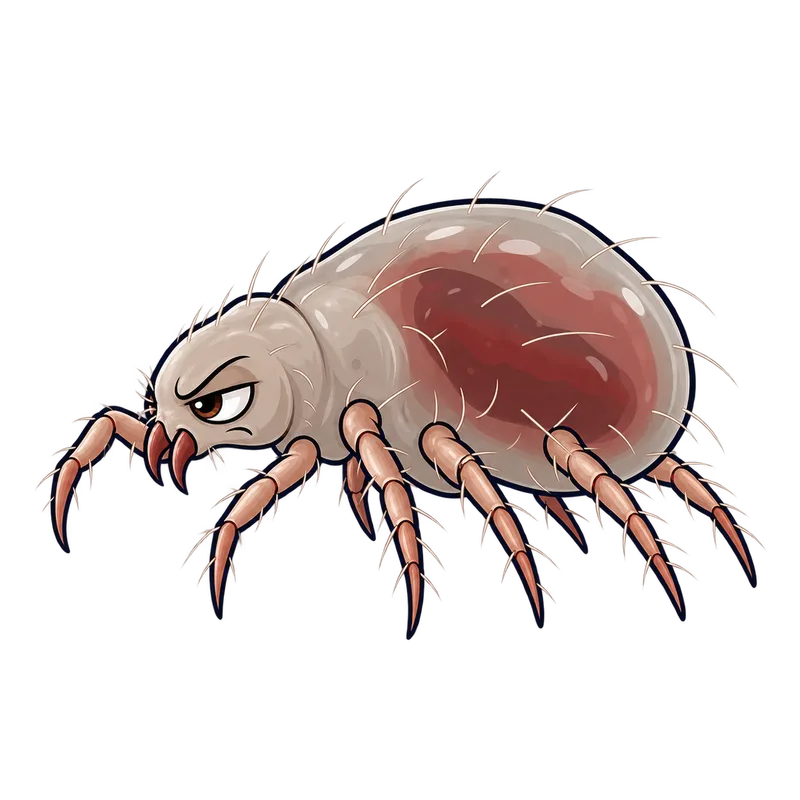
When bird mites show up inside a home, the primary outdoor source to investigate is any bird nest located on or directly adjacent to the building structure, such as under roof eaves, along window sills, in chimneys, or inside clogged gutters. These invasions happen when chicks fledge, a bird dies, or the nesting season ends, leaving hungry mites without a host.
What is actually going on
Picture yourself sitting at your desk on a warm morning in late spring, glancing over at the window frame. You notice a few tiny specks of dust moving across the white paint. At first, you figure it is just ordinary grime blown in by the breeze. By the next evening, though, you feel a faint prickling sensation on your arms, and a cluster of itchy red marks shows up overnight. If you look closely with a flashlight, those tiny specks are actually crawling. You are not dealing with dust, and you are definitely not dealing with bed bugs living in your mattress.
When bird mites show up inside a home, the primary outdoor source to investigate is any bird nest located on or directly adjacent to the building structure. Think about the spots where robins, starlings, pigeons, or sparrows love to tuck their nesting materials. That means checking right under the roof eaves, along window sills, inside exterior air conditioning units, within wall voids, roof cavities, attics, chimneys, or clogged gutters. If you have a poultry coop sitting close to the house, that counts too.
Most people panic and assume these pests have moved in for good, but bird mites cannot actually reproduce or sustain a population on human blood alone. They need avian blood to complete their life cycle. Under normal conditions, they stay on the birds or inside the nesting material. The massive indoor migration you are experiencing right now is almost always triggered by a change in that nest. When the chicks fledge and leave, when a bird dies, or when the nesting season winds down, hundreds of thousands of hungry mites are left behind without a host. Driven purely by starvation, they swarm outward en masse, finding tiny structural gaps around window casings, soffit vents, and utility lines to slip into your living spaces.
Trying to solve this by setting off bug bombs inside your bedroom is like trying to mop up a flooded bathroom without bothering to turn off the leaking sink tap. Indoor treatments only give you temporary symptom relief because the breeding source is still sitting right outside your window. Complete eradication requires tracking down that exterior nest, dealing with it properly, and sealing up the entry points so the migrants cannot find their way back inside.
How to tell for sure
Finding the culprit usually starts with a simple visual check. Grab a strong flashlight and inspect window sills, baseboards, and the tops of window air conditioning units. Bird mites appear as tiny, slow-moving specks that look like pepper or walking dust. Because adult mites measure roughly one-third of a millimeter to a full millimeter, you can usually see them moving, but you will not be able to make out their legs with the naked eye.
To get a better look without squishing them into an unidentifiable smudge, take a piece of clear household adhesive tape and press it gently over a few crawling specks. Stick that tape down onto a plain white sheet of paper. When you hold a standard ten-power hand lens up to the tape, you will usually see an oval body with eight legs, which tells you right away that you are looking at an acarine arachnid rather than a six-legged insect like a flea or a louse.
Even so, telling a bird mite apart from a rodent mite or certain stored-product mites usually requires sending that taped sample to a local university extension service or a diagnostic laboratory for a microscopic look. Never try to identify the pest from your skin reactions alone. Bite marks vary wildly from one person to the next depending on personal immune sensitivity. Some people develop intense itchy bumps while others show no visible reaction at all, meaning skin marks will never give you a reliable answer.
What usually comes next
Once you locate the outdoor nest that triggered the invasion, you have to figure out how to handle it safely and legally. First, verify that the nest is completely empty of eggs, chicks, and active adult birds before you touch anything at all. If you find native songbird nests with active occupants, federal wildlife laws in the United States and similar regulations elsewhere protect them, meaning you usually have to wait until the birds fledge and leave on their own. Non-native, invasive species like pigeons, house sparrows, and European starlings do not carry those same protections, so their abandoned or nuisance nests can typically be cleared away at any time.
When the coast is clear and you are ready to remove the material, put on long sleeves, pants, rubber gloves, and an N95 dust mask so you do not breathe in dried droppings or stray mites. Carefully detach the nesting material, drop it straight into a heavy-duty plastic garbage bag, tie it shut, and throw it out in your outdoor trash bin right away. Wash all the clothes you wore during the cleanup in hot water and dry them on high heat.
After the nest is gone, take care of the indoor cleanup by vacuuming window sills, carpets, and baseboards with a machine equipped with a high-efficiency particulate air filter. Mites are not killed by a vacuum alone, so you must seal that vacuum bag inside another plastic bag and freeze it or throw it in an outdoor bin immediately. Finally, grab some silicone caulk or fine mesh wire to seal up the structural gaps, window AC unit edges, and soffit vents they used to get inside.
When to get help
There are plenty of times when do-it-yourself methods are not enough, and you should hand the job over to a professional. If the nest is tucked high up inside a roof cavity, a second-story eave, a chimney, or a subfloor space that requires a tall ladder or awkward structural dismantling, leave it to a structural pest control technician. Dealing with high-altitude access or commercial-grade pesticide applications requires professional equipment, proper licensing, and strict adherence to exact label laws.
You should also step back and call a professional if you run into roosting bats or protected wildlife species that require special exclusion permits or seasonal restrictions. Trying to handle bat bugs or protected birds without proper guidance can land you in legal trouble or expose you to health hazards.
If you are dealing with severe itching, widespread skin rashes, or secondary infections caused by scratching, stop trying to treat it at home and consult a primary care clinician or a dermatologist. Over-the-counter anti-itch lotions or oral antihistamines can help soothe the skin in the short term, but a medical professional is your best resource when bites turn painful or refuse to heal.