
Can a suspected mite bite identify the mite species?
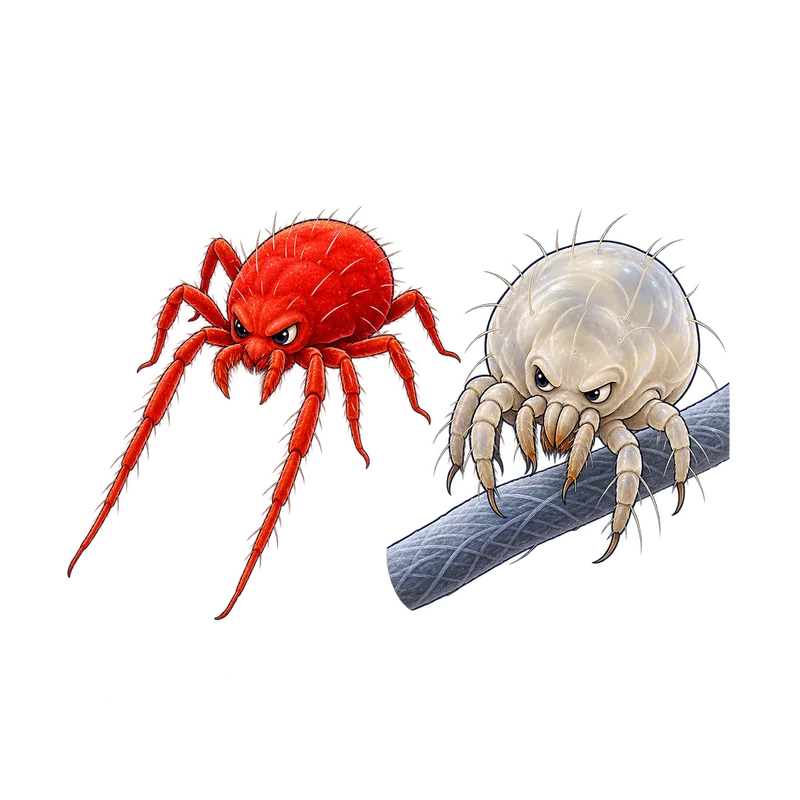
No, a suspected mite bite can never identify the mite species responsible for your discomfort. Human skin reactions are non-specific inflammatory responses that vary wildly from person to person and overlap completely across different pests. Accurate identification requires examining a microscopic physical specimen measuring one-hundred-and-twenty-fifth to one-thirty-second of an inch under laboratory magnification.
What is actually going on
Picture yourself walking inside on a crisp autumn afternoon after spending an hour raking mountains of dry pin oak leaves in the yard. Your skin feels completely normal, and you settle in for the evening without a second thought. But by two o'clock the next morning, you wake up tossing and turning because your neck, shoulders, and arms are driving you crazy with an intense, raging itch. Naturally, you grab your phone, turn on the flashlight, and stare at the angry red bumps scattered across your skin, wondering which bug got you.
No, a suspected bite, skin lesion, rash, or photograph can never identify the mite species responsible for your discomfort.
Trying to figure out which pest bit you by looking at a red welt on your skin is a lot like trying to name the exact make, model, and year of a car by staring at a single tire skid mark left in the mud. The mark on your arm only shows how your personal immune system reacted to being punctured and injected with foreign proteins. It does not give you a picture of the driver. Human skin reactions are non-specific inflammatory responses that vary wildly from one person to another and overlap completely across dozens of different biting insects, environmental irritants, and medical conditions.
In fact, roughly twenty to thirty percent of people exposed to biting pests are anergic, meaning they show zero visible skin reaction at all even after multiple feedings. On the flip side, someone who is highly sensitized might develop a massive, angry welt or a blister from that exact same exposure. Some mites, such as oak leaf itch mites, leave you wondering for ten to sixteen hours before the itch finally starts, while other pests might take days or react almost instantly if you have been bitten before. Because of this timing chaos, you cannot reliably match the appearance or the onset time of a mark to any specific creature.
How to tell for sure
If your skin cannot tell you the truth, what actually can? Accurate identification requires a physical specimen examined under laboratory magnification by a qualified specialist, such as a university extension entomologist or a trained diagnostic lab technician.
While larger pests like bed bugs or ticks are big enough to recognize at the family level with the naked eye, mites are microscopic. Measuring anywhere from one-hundred-and-twenty-fifth to one-thirty-second of an inch, they are practically invisible as they crawl across your skin. Confirming their identity usually requires high-magnification stereomicroscopy or specialized slide mounting to evaluate tiny anatomical structures like hair length and body shape.
Circumstantial clues can occasionally help you build a reasonable theory, but they never replace actual physical proof. Pay attention to where the marks appear on your body, as different pests tend to favor distinct hiding spots. Mites dropping from trees generally land on exposed upper areas like your neck and shoulders. Chiggers crawl up from low grass and prefer spots where clothing fits snugly against your skin. Bed bugs usually target skin left open during sleep, while human scabies mites burrow directly into the soft folds of your wrists and hands.
What usually comes next
When mysterious bites pop up, your best bet is capturing an actual specimen rather than guessing which spray to buy. If you think a crawling pest is loose in your room, press a piece of clear adhesive tape lightly over the area and stick it flat onto a clean white sheet of paper.
If the culprit turns out to be an animal-associated mite coming from birds or rodents, you have to follow a strict order of operations. Spraying room corners with an insecticide while ignoring the source is like trying to mop a kitchen floor while the sink faucet is running full blast. Until you physically remove the abandoned bird nest from the roof cavity or seal up the rodent entry point, new waves of mites will continuously spill out into your living space. Once the host is removed and environmental cleaning is done, the problem usually resolves.
When to get help
There are times when a simple household nuisance crosses the line into a medical or regulatory issue that requires outside intervention.
If your scratching breaks the skin and you notice increasing pain, expanding redness, warmth, swelling, pus, or red streaks spreading away from the bite, you need to see a clinician right away for evaluation of a secondary bacterial infection. You should also seek prompt medical care if you develop systemic red flags like a high fever, severe headache, stiff neck, confusion, or dark ulcerated sores, which can sometimes point to serious vector-borne diseases depending on your region.
When the problem stems from protected wildlife or requires large-scale chemical treatments, professional help is mandatory. Active bird nests containing eggs or flightless chicks are protected under federal wildlife laws and cannot be removed until the young have naturally fledged. Similarly, bat colonies must be excluded from structures in strict compliance with state and federal protection calendars. If you require commercial pesticide applications for stubborn infestations, those treatments must be performed by a licensed applicator operating under state regulatory oversight.