
Are chiggers a type of tick?
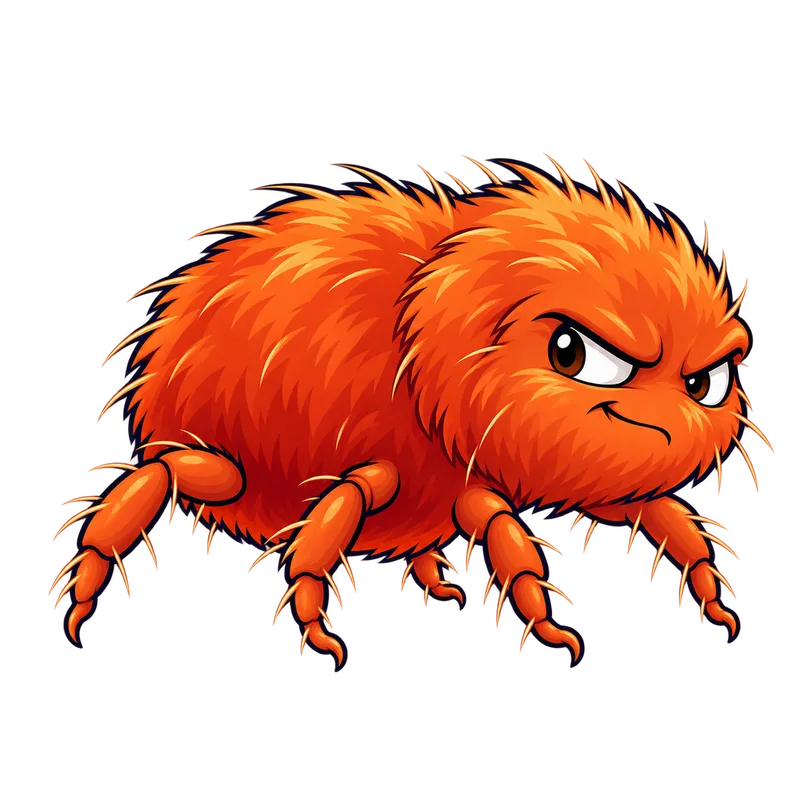
No, chigger mites are not a type of tick, because they belong to entirely different taxonomic orders within the arachnid family. Ticks are blood feeders across their life cycle, while chiggers are only parasitic during their microscopic larval stage and spend their adult lives eating tiny soil arthropods.
What is actually going on
You are sitting on the back porch after spending the afternoon clearing brush from the edge of the yard, and by morning your legs are covered in maddeningly itchy red welts. Naturally, your mind jumps to the usual suspects that lurk in overgrown grass. But are chiggers a type of tick? The short answer is no, chigger mites are not ticks at all. While both belong to the broad arachnid family and share a subclass of eight-legged creatures, they part ways biologically right at the taxonomic order level. Ticks belong to the order Ixodida, whereas chiggers are actually the immature larval stage of trombiculid mites, which fall under a completely different order called Trombidiformes.
It helps to think of a chigger as a developmental phase rather than a distinct, full-time insect or bug. When you encounter a chigger in the lawn or brush, you are dealing with the six-legged larval stage of a mite. That larva measures less than two-tenths of a millimeter, making it nearly invisible to the naked eye. In contrast, ticks have blood-feeding stages across their entire mobile life cycle, from larva to nymph and adult. Chigger mites, on the other hand, only feed on hosts during that brief, microscopic larval stage. Once a chigger finishes its meal on an animal or a human, it drops back down to the soil, grows eight legs, and spends the rest of its adult life as a harmless predator eating tiny soil arthropods and insect eggs.
Their dining habits also have nothing in common. Ticks use specialized, barbed mouthparts to drill directly into your skin and draw blood from your capillaries over several days. Chiggers do not drink blood and they do not burrow underneath your skin, despite what every backyard myth claims. Instead, a chigger attaches superficially to a pore or hair follicle, secretes digestive enzymes that liquefy your skin cells, and creates a tiny hardened feeding tube to drink up the dissolved tissue fluids and lymph. By the time you actually feel the intense itch, usually ten to twenty hours later, the larval chigger has typically already detached and gone on its way.
Trying to figure out what bit you by staring at a red mark on your skin is usually a guessing game. Clinical literature confirms that individual immune responses vary wildly, meaning a bite lesion alone cannot tell you whether a tick, a mite, or a mosquito was the culprit. If you want to know for sure what is crawling on you or your clothing, you usually need to capture a specimen. Pressing a piece of clear sticky tape lightly against your skin or clothing and then pressing that tape onto a piece of white paper can trap these tiny pests for an extension specialist to examine under magnification.
Where you find the bites on your body often points you straight toward the culprit. Chiggers crawl upward from the grass and low weeds until a piece of clothing blocks their path, which is why their red welts usually appear right where fabric presses against the skin, like at the waistline, around the socks, near the groin, or behind the knees. When you instead find red spots scattered across your neck, shoulders, and chest after walking beneath shade trees in the late summer, you are probably dealing with oak leaf itch mites that fall down from the leaves like tiny specks of dust. Ticks wander much higher and wider across your body until they finally settle into warm, thin skin folds like your armpits, your hairline, or right behind your ears.
Geography also changes the level of danger entirely. In North America and Europe, chigger mites leave you with maddening dermatitis and weeks of frustration, but they do not pass along systemic diseases. Ticks carry a heavy burden of serious bacterial, viral, and protozoan illnesses, including Lyme disease, which makes them a different category of health risk altogether. If you live in or travel through parts of northern Australia or rural Asia, certain chigger species can transmit scrub typhus, meaning your local region determines whether these mites are merely an itchy nuisance or a medical concern.
How to tell for sure
Your most practical choice before stepping back into overgrown brush is to set up a defense system. Treating your outer clothing with a zero point five percent permethrin spray ahead of time and putting an EPA-registered repellent with DEET or Picaridin on your skin blocks most encounters. Tucking your pants firmly into your socks creates a simple physical barrier that stops both ticks and crawling chigger larvae from finding an easy way in.
As soon as you walk back inside, your best move is a thorough washup. Peeling off your clothes, tossing them straight into a hot washing machine, and stepping right into a hot, soapy shower to scrub your skin with a washcloth will wash away any unattached larvae before they settle down to feed. If those red welts have already arrived, washing the spots and using over-the-counter anti-itch lotions or taking an oral antihistamine keeps the inflammation manageable while your body repairs itself.
What usually comes next
Most chigger bites fade away on their own with basic soap, water, and simple itch relief, but you should talk to a clinician if your skin gets worse or refuses to heal. Because scratching breaks the skin surface, secondary bacterial infections like cellulitis can easily take hold and require professional medical care. If you develop severe symptoms after working outdoors, such as a high fever, pounding headaches, swollen glands, an expanding bullseye rash, or a dark scab where something bit you, seek medical attention right away.
When to get help
If you face ongoing pest problems around your property because wild animals are nesting in your structures, such as rodents or bats bringing in mites and ticks, leave the wildlife management to the professionals. Wild animals are often protected by state or federal laws, meaning a licensed pest control operator or a local wildlife agency needs to handle the situation safely and within the law.