
How do you get rid of bird mites in a house?
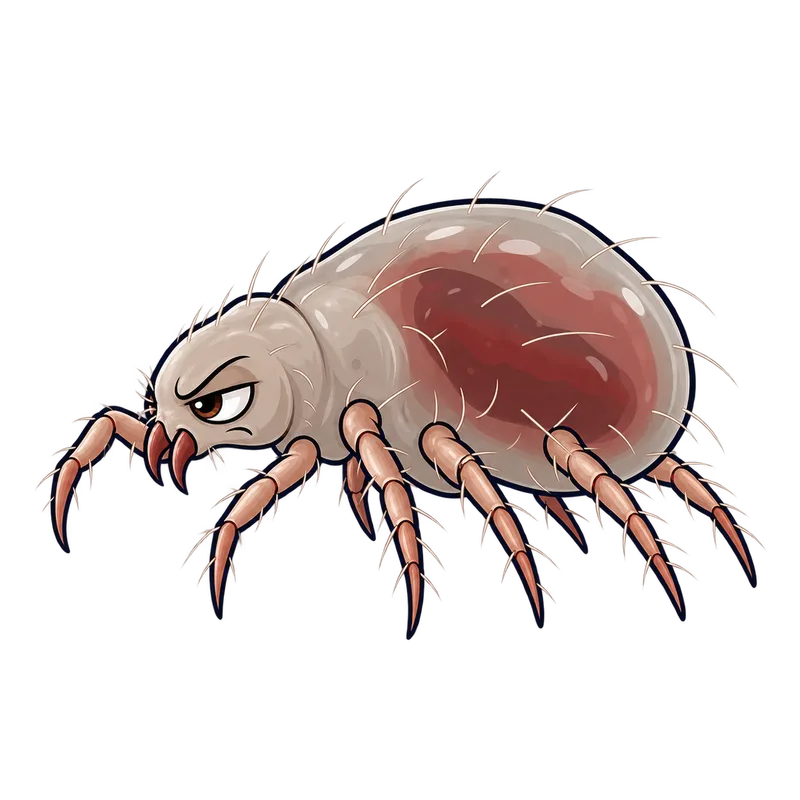
Getting rid of bird mites in a house requires removing the abandoned bird nest that launched the migration, vacuuming up indoor stragglers, and treating structural entry points with residual insecticides. The process depends entirely on whether the nest is safely accessible or located deep inside a roof void.
What is actually going on
You are sitting at the kitchen table on a sunny Tuesday morning, and you notice a tiny speck of black pepper moving across the white windowsill. You brush it away, but then you feel a sudden, faint prickle on your forearm. Within an hour, your skin is itching like mad. You grab a magnifying glass, squint at the wall, and realize you are sharing your kitchen with hundreds of microscopic crawling dots. If you recently heard starlings chattering inside your eaves or noticed a pigeon nest sitting squarely on your window air conditioner, you are dealing with bird mites.
Getting rid of bird mites in a house is not about grabbing a can of bug spray and fogging the living room. Because these tiny arachnids only bite humans out of desperation after their real hosts abandon a nest, you cannot solve the problem just by treating the indoor spaces where they show up. An indoor invasion is essentially a spillover event. Think of a bustling hotel that suddenly locks its doors and shuts off the kitchen, where the staff and guests have to pack up and wander down the hallway looking for food somewhere else. When fledgling birds leave a nest in the roof or gutters, thousands of starving mites find themselves in an empty hotel and start crawling through wall voids, electrical outlets, and ceiling vents into your living areas.
To clear them out for good, you have to follow a strict sequence that stops the source rather than just chasing the symptoms. You need to confirm what you are looking at, remove the abandoned nest that launched the migration, physically clean up the mites that already made it inside, and treat the structural entry points with registered residual insecticides. If you skip the nest removal and just spray the baseboards, you will keep finding new waves of mites every single day until the remaining stragglers finally starve out.
Bird mites are tiny blood-feeding parasites that naturally live in the nests of wild birds or domestic poultry. They depend entirely on bird blood to complete their life cycle and reproduce. But when young birds fledge and leave the nest, or when an avian host dies or is excluded from a building, thousands of hungry mites are left behind with nothing to eat. Driven by heat and humidity, they disperse from the nesting material and wander away from the roof voids or gutters, squeezing through tiny gaps in window frames, electrical boxes, and ceiling fixtures.
Once they drop into human living spaces, they crawl across walls, bedding, and furniture. If they encounter human skin, they will probe and bite out of sheer hunger. This opportunistic feeding triggers an intense allergic reaction on human skin, causing red bumps and severe itching. However, human blood lacks the specific nutrients bird mites need to develop or lay eggs. This means bird mites cannot establish a permanent population or reproduce indoors. An infestation is always temporary, and it will eventually die out on its own over several weeks, provided the original bird nest or animal host is completely removed and sealed off from the house.
How to tell for sure
You cannot diagnose a bird mite infestation by looking at your skin. It is completely natural to want answers the moment you break out in itchy red bumps, but mite bites usually look identical to flea bites, mosquito welts, or bed bug reactions. If you rely on the bumps alone, you might end up treating your mattress for bed bugs when the real culprit is nesting in your attic.
Bird mites are tiny. An adult typically measures about zero point eight millimeters, which is roughly the size of a single grain of coarsely ground black pepper. They usually have eight legs, an oval body, and a pale to reddish-brown color that comes from their last blood meal. Because they are so small, you usually need a ten times magnification hand lens to see their legs and mouthparts clearly, distinguishing them from ordinary dust or lint.
If you want a positive identification before you start tearing into your roofline, use a clever trick with clear office tape. Press a strip of clear tape gently over one of the crawling specks on your windowsill or baseboard, then stick the tape flat onto a clean sheet of white printer paper. You can also run a clean vacuum attachment along the edge of the carpet and inspect the contents. Take that sample to a local university extension agent or a licensed pest professional. Once an expert confirms you have bird mites rather than rodent mites, bed bugs, or bat bugs, you can finally move on to the actual cleanup.
What usually comes next
The single most practical decision you have to make right now is whether to deal with the bird nest yourself or wait for a professional. That choice usually depends entirely on where the nest is located and which bird species built it. If the nest sits in an easily accessible gutter, on top of a window air conditioner, or right under a low eave, and it belongs to an unprotected bird like a pigeon, a European starling, or a house sparrow, you can usually handle the removal yourself on a dry weekend afternoon.
Put on heavy-duty work gloves, long sleeves, and a dust mask before you touch anything. Carefully scoop the nesting material and any dead birds into a heavy-duty plastic contractor bag, tie it shut securely, and toss it straight into an outdoor trash bin. Scrub the surrounding area with warm soapy water to wash away residual debris. After clearing the nest, you will want to physically collect any mites that managed to make it inside. Running a vacuum cleaner equipped with a high-efficiency particulate air filter along baseboards and window sills is an effective way to pick them up, but you must remember that mites survive suction. Immediately remove the vacuum bag, seal it inside another plastic bag, and freeze it overnight or throw it into an outside bin. Finally, washing your bedding and affected clothing in hot water and drying them on high heat helps eliminate any stragglers hiding in fabrics.
However, if the nest sits deep inside a dark roof void, a high chimney, or an inaccessible attic rafter space, or if it belongs to native songbirds protected by wildlife laws, do not touch it. In many regions, disturbing active native bird nests with eggs or chicks violates federal wildlife statutes. If you cannot reach the nest safely without special ladders or if the birds have legal protection, your best move is to call a licensed pest management professional or a wildlife control operator who can legally manage the exclusion while keeping you on the right side of the law.
When to get help
There are moments when a weekend project has to stop and be handed over to someone with a license, a prescription pad, or a regulatory badge. If you have spent three weeks removing nests, sealing gaps, and vacuuming every corner, but the mites keep pouring out of your ceiling vents, you need a professional pest management company. Stubborn, unending migrations usually mean there is a second, hidden nest in an obscure wall void or an active rodent infestation bringing in different types of mites that require specialized commercial equipment and dust formulations to reach.
You should also involve a professional wildlife specialist if bats are roosting in your attic alongside the birds. Bats are heavily protected mammals, and handling them or their nesting spaces carries severe rabies risks that require specialized one-way exclusion doors installed during specific seasonal windows.
On the health side of things, if your skin is blistering, intensely inflamed, or showing signs of a secondary bacterial infection from relentless scratching, make an appointment with a primary care physician or a dermatologist. Mites do not transmit human diseases in most standard household scenarios, but broken skin invites bacteria, and a clinician can give you proper guidance for managing the allergic reaction. If you ever use a chemical spray during your cleanup and experience dizziness, nausea, or breathing difficulties, stop immediately, read the product label safety warnings, and contact poison control or emergency services right away.