
How do you reduce dust mites in a mattress?
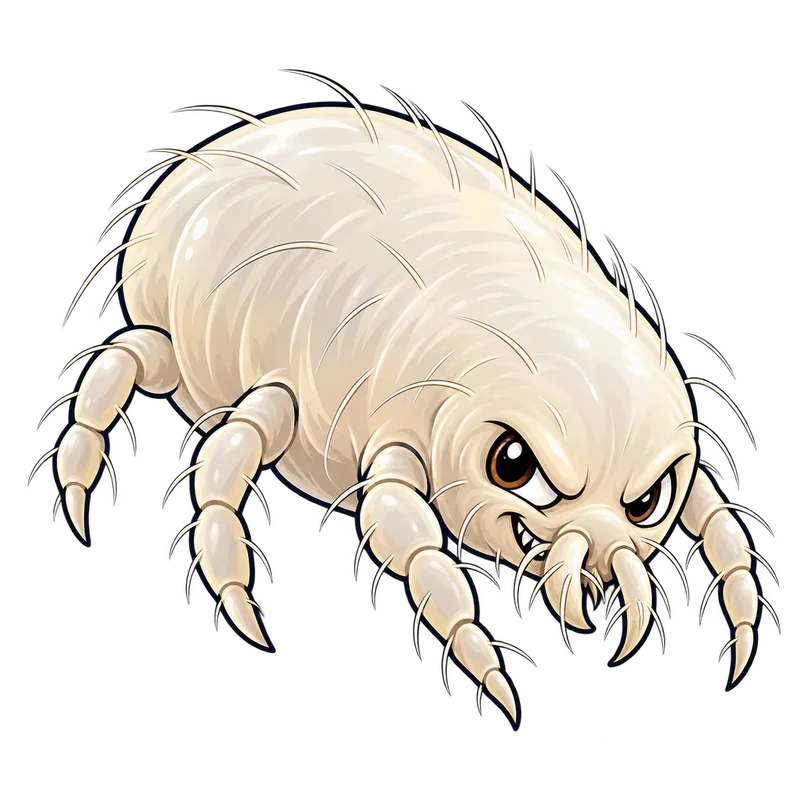
You reduce house dust mites in a mattress by installing a zippered, impermeable mattress encasement that traps the mites and cuts off their food supply. Success depends on adding three more physical steps, which include laundering linens in hot water weekly, vacuuming the bed frame with specialized particle filtration, and dropping room humidity.
What is actually going on
You strip the sheets off the bed on laundry morning, give the pillows a good fluff, and a tiny sunbeam catches a pale cloud of fine dust drifting right into your face. You sneeze, wipe your nose, and probably wonder what exactly is living in that mattress you bought five years ago. The short answer is that you are sharing your bed with millions of house dust mites, microscopic arachnids measuring less than half a millimeter across. They are totally invisible to the naked eye, meaning you will never spot one crawling across the duvet, but they are tucked deep inside the fabric fibers eating the microscopic flakes of human skin we all shed every single day.
People often assume that buying a chemical spray at the hardware store and giving the mattress a good soaking will solve the problem. Unfortunately, that approach misses the point entirely. Spraying an insecticide might kill whatever live mites happen to get hit by the mist, but it does nothing to remove their dead bodies or their waste. Those tiny fragments are what actually trigger your allergies, and they stay right where they are, crumbling into finer dust that floats into the air every time you turn over in your sleep.
Managing dust mites in a mattress is not an extermination job. It is a management exercise focused on cutting off their food supply, trapping them where they cannot cause trouble, and drying out their environment. Because these tiny creatures do not bite, take blood meals, or carry diseases, your goal is purely immunologic. You want to stop inhaling their allergenic proteins, which are responsible for that persistent morning sneezing, stuffy nose, and irritated skin.
Getting this under control relies on four physical pillars rather than a bottle of poison. You need to physically isolate the mattress with a specialized cover, launder your linens in hot water weekly, vacuum the bed frame using a vacuum with specialized particle filtration, and drop the humidity levels in the room. Once you set up those physical barriers, the population naturally dies out because they cannot reach their food or absorb the moisture they need to survive.
House dust mites belong to a group of tiny arachnids that thrive in the warm, dark, fibrous environment of a mattress. They do not feed on you directly, and they certainly do not bite your skin. Instead, they wait for you to shed dead skin cells during the night. Every time you roll over or fluff your pillows, you disturb this microscopic debris, launching tiny fecal pellets and cast-off skins into the air. Inhaling these proteins is what triggers the allergic reaction, leading to that familiar morning congestion.
How to tell for sure
Before you spend money on zippered covers and high-end vacuums, you usually need to confirm what is actually living in your bedroom. The clearest sign that you are fighting dust mites is respiratory misery rather than physical skin damage. If you wake up every morning with a runny nose, itchy eyes, a tight chest, or a nagging cough that disappears a couple of hours after you leave the house, dust mites are usually the culprits. They do not have mouthparts capable of piercing human skin, so if you wake up with actual bite marks, red welts, or tiny blood spots on your sheets, you can safely cross dust mites off your suspect list.
People often get confused because they assume any unwelcome creature in the bed must be a biter. Dust mites are close relatives of spiders and ticks, but they feed exclusively on dead skin flakes, pollen, and dander. They never crawl onto your skin to feed on blood. If you are seeing actual bugs or feeling sharp, itchy bites, your problem usually points toward bed bugs, bird mites from a nearby nest, or fleas brought in by a family pet.
Geography and climate also play a huge role in what you will find. If you live in a warm, coastal, or humid region, dust mite populations usually thrive because these creatures absorb moisture directly from the air around them. If you live in a high-altitude mountain town or an arid desert climate, your indoor air is usually dry enough to keep dust mite numbers very low naturally. Always match your symptoms to the physical evidence. If your skin is marked, look for insects. If your lungs and sinuses are rebelling, look to the microclimate inside your mattress.
What usually comes next
The single most effective practical decision you can make right now is to install a zippered, impermeable mattress encasement. Do not confuse this with a standard loose-fitting mattress pad that just covers the top and stretches over the corners with elastic straps. You need a specialized encasement that completely wraps around the entire mattress, sealing with a zipper that closes tightly without leaving a tiny gap at the end.
This works in two ways at once. First, it acts as a physical wall that traps any existing dust mites and their allergenic waste safely inside the fabric, preventing those microscopic proteins from ever becoming airborne again. Second, it cuts off the supply of fresh human skin flakes from the outside. Without food, the trapped mites eventually starve. When you pull that crisp white cover over the mattress and zip it shut, you effectively quarantine the problem in one smooth motion, making every subsequent cleaning step much easier to manage.
When to get help
There are times when home management routines simply are not enough, and you need to bring in outside help. If your respiratory symptoms escalate into severe asthma attacks, chronic wheezing, or persistent skin eczema that does not respond to basic bedroom cleaning, you should schedule an evaluation with a physician or an immunologist. Formal allergy testing can pinpoint whether dust mites are the true trigger, and a clinician can guide you through proper medical management, such as inhalers or immunotherapy, to get your symptoms under control.
You also need to change strategy if you discover physical evidence of biting pests rather than dust mites. If you find dark fecal spots, shed insect skins, or actual crawling bugs in the mattress seams, stop trying to treat it as an allergy issue. Collect a physical specimen on a piece of clear tape if you can safely do so, and contact a licensed pest management professional or your local agricultural extension office for a proper identification. Never apply general household insecticides to a mattress or sleep surface unless the specific product label explicitly permits it. Treating a bed with the wrong chemical creates unnecessary exposure for anyone sleeping there, making it vital to let licensed professionals handle structural treatments when biting insects are involved.