
What do bird mites look like?
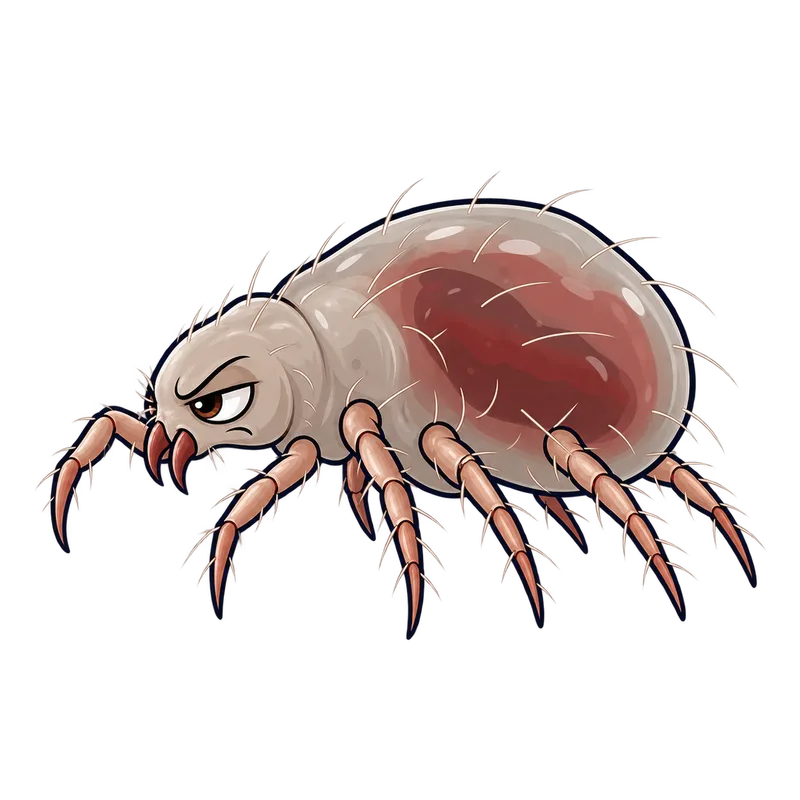
Adult bird mites are tiny, oval arachnids measuring about 0.8 mm, looking like a single grain of coarse black pepper. Unfed bird mites are flat, semi transparent, and off white, but they turn dark reddish brown or black after feeding on blood.
What is actually going on
You walk past the living room window on a sunny afternoon and notice a tiny speck crawling along the white frame. You lean in closer, squinting against the light, and suddenly realize there are dozens of them, marching in a scattered line across the sill. Your mind immediately races to the worst-case scenario. Are those bed bugs staging an invasion, or is it something else entirely? If you recently heard birds chirping a bit too close to your roofline, you are likely looking at bird mites.
So, what do bird mites actually look like? To the naked eye, an adult bird mite is barely visible, measuring about 0.8 mm, which puts it right at the lower limit of what human eyes can pick out. If you need a mental picture, think of a single grain of coarse black pepper or the printed period at the end of a sentence in a newspaper. They are tiny, oval-shaped arachnids with eight legs as adults, though they start out with six legs in their larval stage. They lack wings and specialized hind legs, meaning they move strictly by crawling and are completely incapable of flying or jumping.
Their appearance changes dramatically depending on whether they have fed recently. Think of an unfed mite as an empty, clear latex balloon. When it has not had a meal, the body is flat, semi-transparent, and off-white or yellowish, making it almost invisible against light-colored paint. Once it feeds on blood, the body swells up like a filled water balloon, taking on a dark reddish-brown or black hue. This color shift explains why you might find pale, ghost-like specks one day and darker, more noticeable crawlers the next.
These creatures are obligate avian parasites, meaning they rely strictly on birds like pigeons, starlings, sparrows, or poultry to complete their life cycle. They live in bird nests built in attics, eaves, soffits, or window air conditioning units. When the chicks fledge or the nest is abandoned, the remaining mites lose their host and begin wandering outward in search of a new meal. That is why thousands of starving mites can suddenly appear in a moving aggregation along your ceilings and walls, transforming a hidden outdoor problem into an obvious indoor event.
Trying to identify a pest based on a skin rash or an itchy bite is a recipe for frustration. Bite reactions vary wildly from person to person based on immune sensitivity, and bites from fleas, bed bugs, mosquitoes, and oak leaf itch mites produce overlapping clinical signs. You cannot use a red welt on your arm to confirm you have bird mites. Reliable identification usually requires looking at the physical creature under magnification, such as a hand lens or a stereomicroscope, because individual mites are simply too small for the naked eye to reveal diagnostic details.
You can rule out several common impostors by watching how the pest moves and checking its physical traits. If the creature jumps a foot into the air, it is a flea, not a bird mite. If it flies toward a lamp, you are dealing with a gnat or another flying insect. Bed bugs are another frequent point of confusion, but a bed bug is vastly larger at 5 to 7 mm, roughly the size of an apple seed, with a broad, flat body and visible antennae. Bird mites are much smaller, lack prominent antennae, and usually show up near windows or ceilings connected to roof voids rather than hiding in mattress seams.
If you want to know for sure what you are dealing with, collection is the next logical step. You can press a piece of clear adhesive tape gently over a few crawling specks to trap them, or vacuum the sill using a clean nylon stocking stretched inside the hose extension. Drop the tape or the contents of the stocking into a small glass vial containing 70 percent isopropyl alcohol. This preserves the specimens so a local university extension office or a pest control professional can examine them properly.
Keep in mind that regional species variations exist. In temperate North America and parts of Europe, you will usually encounter the northern fowl mite or the chicken mite, while tropical fowl mites tend to appear in warmer regions and the southern hemisphere. Despite these regional differences, their basic size, crawling habits, and dependence on bird hosts remain consistent, giving you a reliable set of behavioral clues even before you get a magnified look.
How to tell for sure
Once you confirm or strongly suspect that bird mites are migrating into your living space, your immediate practical decision involves dealing with the source rather than just spraying the symptoms. Treating indoor rooms with store-bought bug sprays will offer little relief if the abandoned bird nest packed inside your roof soffit or chimney flue remains in place, because the remaining mites will simply keep marching in. The most effective step you can take right now is to locate and remove the abandoned bird nest fueling the invasion, provided the nesting season has ended and local wildlife regulations allow it.
Before you start poking around gutters or vents, pause to check the legal status of the nest. In many regions, active nests of native wild birds are protected by federal and state wildlife laws, meaning you cannot legally disturb or destroy them while eggs or live chicks are present. However, non-native and invasive species like feral pigeons, European starlings, and house sparrows are generally exempt from these protections, allowing you to clear their old nesting materials at any time. If the nest is active with native birds, your hands are tied until the fledglings leave on their own, and you will need to rely on physical exclusion around indoor entry points to keep the wandering mites out of your rooms.
Once the nest is safely removed or the birds have naturally departed, clean the surrounding area thoroughly. Vacuum affected window sills and baseboards to pick up wandering mites, making sure to seal the vacuum bag tightly in a plastic trash bag and freeze it before disposal so the captives cannot crawl back out. Wipe down hard surfaces with damp cloths and wash nearby curtains. If the infestation is confined to a simple window unit or an accessible eave, these physical steps often stop the migration entirely.
When the mites are emerging from complex architectural spaces like sealed attics, multi-story roof voids, or intricate wall cavities, attempting a DIY cleanup becomes impractical. In those situations, your best course of action is to hand the problem over to a licensed pest control professional who can safely apply appropriate dusts or residual treatments into hidden voids and install exclusion materials like bird-proofing mesh to prevent future nesting.
What usually comes next
There are moments when a household pest issue crosses the line from a manageable DIY annoyance into a situation that requires outside intervention. If you or members of your household are suffering from severe itching, widespread rashes, intense allergic reactions, or signs of secondary skin infections caused by aggressive scratching, you need to step away from the pest guides and consult a primary care clinician or an urgent care clinic. Medical professionals can address the skin symptoms and provide proper treatment, whereas pest control literature cannot diagnose or cure a medical reaction.
You should also bring in a professional pest control operator when the mite swarms originate from inaccessible locations. If the bugs are dropping down through overhead light fixtures, emerging from closed wall voids, or hiding deep inside complex roof architectures where you cannot reach with a vacuum or a cloth, a licensed technician has the specialized equipment and registered residual products needed to treat those hidden harborages safely.
Sometimes the root of the problem involves animals that carry strict legal protections or public health risks. If your mite invasion turns out to originate from a bat roost in the attic rather than a bird nest, stop immediately. Bats are heavily protected under wildlife conservation statutes, and their presence carries potential rabies exposure risks. In that scenario, you should contact local public health authorities, animal control, or a specialized wildlife removal service rather than attempting to handle the situation yourself. Letting the right agency or professional take over ensures that public safety and wildlife laws are respected while your home gets cleared.
When to get help
When bird mites appear indoors, checking window sills, tracking the source to an abandoned nest, and collecting physical specimens in alcohol for proper identification are the key steps to clear the issue safely.