
How do you get rid of chiggers?
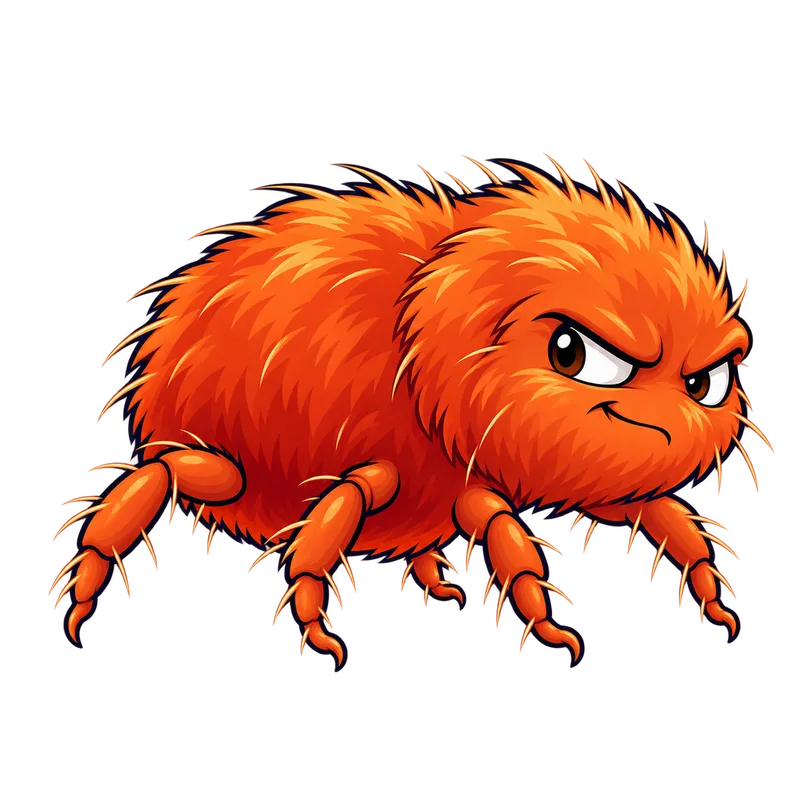
Getting rid of chiggers does not involve calling an exterminator, because these creatures cannot survive or breed indoors. Managing outdoor chiggers relies on protecting your skin before going outside, washing yourself and your gear immediately afterward, and keeping your turf mown short to remove their favorite hiding spots.
What is actually going on
- - -
You spent Saturday afternoon clearing out brush and overgrown grass behind the garden shed, enjoying the warmth until you came inside to shower. By Sunday morning, you wake up to a fiery, relentless itch forming a neat little red ring right where your socks met your jeans. Did something move into your house? Not quite. What you are dealing with are chiggers, the microscopic larval stage of harvest mites, and they are nothing like the bed bugs or fleas that take up permanent residence in a home.
Getting rid of chiggers is not about calling an exterminator or fogging your living room, because these creatures cannot survive, breed, or infest indoor spaces. They are strictly outdoor freeloaders. Only the tiny, six-legged larval stage is parasitic on humans and animals, while the older nymphs and adults live harmlessly in soil and leaf litter eating tiny organic matter. When you brush past low vegetation, these larvae transfer to your clothing and crawl upward until tight fabric blocks their journey, which is why those maddening bites almost always concentrate near sock cuffs, waistbands, or underwear elastics.
Because they do not build nests in furniture or lay eggs in mattresses, managing the problem relies entirely on three straightforward steps. You protect your skin before you go outside, wash yourself and your gear immediately afterward, and tidy up the yard so they lose their favorite hiding spots. Broadcast chemical spraying of a whole lawn is rarely effective and usually unnecessary. Instead, keeping your turf mown short, clearing away dense leaf piles, and discouraging wild rodents will cut down their numbers without turning your yard into a chemical zone.
How to tell for sure
- - -
People usually assume any itchy bump after yard work is a chigger bite, but your own skin usually tells a distinct story if you look at where the irritation happens. Chigger larvae are nearly invisible to the naked eye, measuring less than a fraction of a millimeter, so you rarely see the culprit in the act. They do not burrow under your skin or suck your blood either. Instead, they pierce a skin pore or hair follicle, inject saliva containing digestive enzymes, and feed on liquefied tissue through a tiny feeding tube before dropping off.
That delayed, intense itching usually starts a few hours after exposure and peaks around twenty-four to forty-eight hours later, driven by an allergic reaction to those left-behind salivary proteins rather than a live bug still inside you. If your bites are clustered exclusively on your lower legs, ankles, and waistline, chiggers are usually the culprits.
If your bites show up mostly on your neck, chest, shoulders, and upper arms after you were raking leaves beneath pin oak trees in late summer, you are usually looking at a completely different pest called the oak leaf itch mite. These microscopic mites drop from tree canopies instead of crawling up from the grass, completely bypassing your socks and targeting your upper torso. Knowing where the bites appear keeps you from treating your lawn for a canopy problem or blaming indoor bugs for outdoor encounters.
What usually comes next
- - -
You wake up to fiery welts and a bathroom cabinet full of old remedies, so what is the single most practical decision you need to make right now? Stop wasting time painting clear fingernail polish, rubbing alcohol, or petroleum jelly over those bumps. That old folk remedy assumes the chigger is still trapped under your skin waiting to be suffocated, but the larva usually dropped off hours before the itching even began.
Your immediate priority is soothing the allergic reaction and stopping the itch before a stray scratch invites a secondary bacterial infection. Grab an over-the-counter anti-itch lotion like calamine, crotamiton, or one percent hydrocortisone cream to calm the inflammation, and take an oral antihistamine if the itching keeps you awake at night. Keep your fingernails trimmed short, and resist the urge to tear at the skin.
Looking ahead to your next trip into the yard, your main decision is whether to dress for defense. Slipping on long trousers tucked securely into your socks and treating your outer clothing with permethrin spray before you step outside will stop those crawling larvae long before they ever reach your skin.
When to get help
- - -
Most chigger bites heal up fine with a little patience and some soothing cream, but certain warning signs mean you need to step away from the home remedies and talk to a professional. If relentless scratching tears the skin and you notice spreading redness, increasing warmth, swelling, pus, or red streaks extending away from the bite, you need to see a clinician because a secondary bacterial infection has likely taken hold.
While rare, severe systemic reactions involving hives, dizziness, or trouble breathing require immediate emergency medical care. If you happen to travel through tropical regions or northern Australia where chiggers can occasionally vector scrub typhus, any bite that develops a dark, painless scab accompanied by a sudden high fever and severe headache needs urgent medical evaluation for prescription antibiotics.
On the property side, if you find yourself getting bitten while sitting indoors on your living room sofa or sleeping in your bed, you are no longer dealing with outdoor chiggers. That indoor biting usually points to bird mites migrating down from an abandoned nest in your eaves or rodent mites moving out of wall voids after a mouse control effort. When biting mites take over your living spaces, you should call a licensed pest management professional who can safely locate bird nests, seal structural entry points, and apply targeted treatments where they actually belong.