
Do dust mites bite humans?
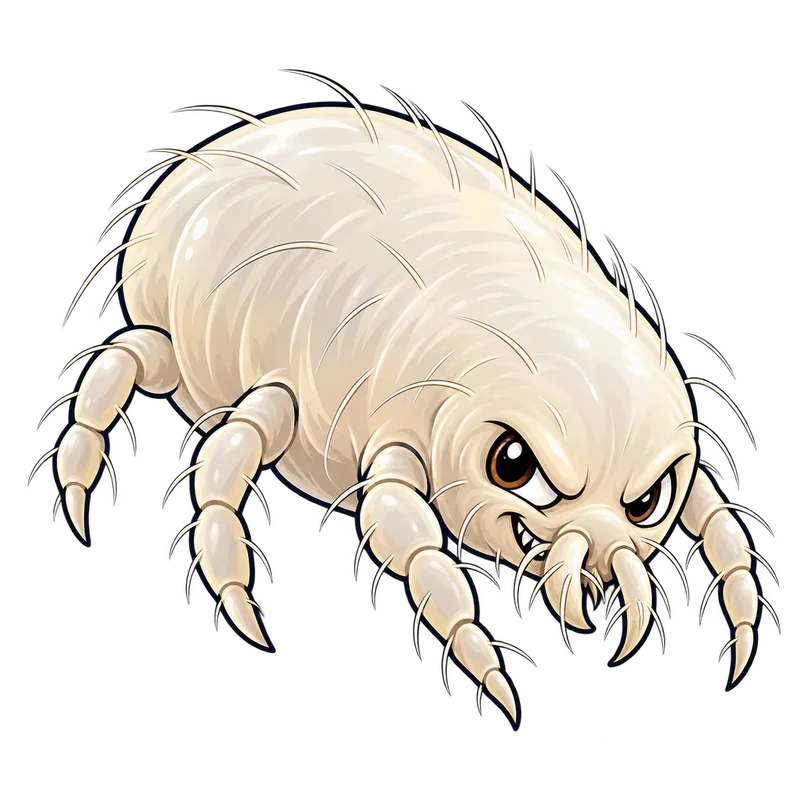
House dust mites do not bite humans because they lack piercing mouthparts and only scavenge for shed skin flakes. The itchy red welts you feel actually result from an allergic reaction to proteins found in dust mite fecal pellets and shed skins.
What is actually going on
Picture this: you wake up on a Tuesday morning, scratch an itchy red welt on your arm, and immediately think of the invisible creatures living in your mattress. It is easy to assume that dust mites are the culprits munching on your skin while you sleep, especially when your skin feels irritated after a restless night. But the short answer is no. House dust mites do not bite humans.
If you were to look at a house dust mite under a microscope, you would not find any piercing fangs, stinging tails, or blood-sucking mouthparts. They are not tiny vampires waiting for lights out. Instead, they are equipped with mouthparts meant strictly for scraping up loose, microscopic bits of organic debris. Their absolute favorite meal is shed human skin flakes, which is why they hang out in our mattresses, pillows, and carpets in the first place. They are harmless little scavengers, at least in terms of physical attacks.
So why do you feel like something is chewing on you? The irritation comes from chemistry rather than a physical bite. Dust mites produce digestive enzymes that help them break down tough proteins in dead skin, and these enzymes end up packed tightly inside their microscopic fecal pellets and shed skins. When you toss and turn in bed, you create a tiny snow globe effect in your sheets, lofting these microscopic particles into the air where they land on your skin or float into your nose.
For people who are sensitive to these proteins, the contact triggers an immune response. Your skin reacts with red patches, intense itching, or even eczema flare-ups. It feels very much like a string of bug bites, but it is actually a contact allergy. Blaming dust mites for a bite is a classic case of mistaken identity, because the real troublemakers are usually hiding elsewhere in the house.
When mysterious red bumps show up overnight, people usually rush to judgement and blame dust mites. But since dust mites cannot bite, something else is usually to blame for nocturnal welts or sudden rashes. Identifying the actual culprit usually requires looking beyond the bedding and considering what else shares your living space.
If you are dealing with actual bites, you are usually looking at true biting insects or opportunistic mites that have strayed from their usual hosts. Bed bugs are a common suspect, emerging from mattress seams or bed frames in the dark to take a blood meal. Unlike dust mites, bed bugs leave behind distinct puncture marks and feed directly on living tissue.
Other times, the irritation comes from microscopic mites that accidentally wander indoors. If you live near pin oaks or red oaks and have been out raking leaves in the autumn, you might be dealing with oak leaf itch mites. These tiny predators drop from tree canopies like invisible rain, landing on your neck and shoulders and leaving intensely itchy red papules about ten to sixteen hours later. Similarly, if your home recently had mice cleared from the walls or birds nesting in the eaves, hungry rodent or bird mites can abandon their empty nests and migrate into living areas in search of a meal, biting humans when their primary hosts are gone.
How to tell for sure
Figuring out the exact pest from a snapshot of a skin mark is usually a fool's errand. Human skin reactions vary wildly from person to person, meaning two different people can be bitten by the same insect and show entirely different rashes. A visual inspection of a red bump rarely provides a reliable diagnosis. If you want to know what is actually biting you, you usually need to catch a physical specimen.
Pressing a piece of clear adhesive tape gently over a crawling insect or using a fine nylon mesh over a vacuum hose can help you trap a specimen without crushing it, which you can then submit to a local extension service or pest professional for proper identification.
What usually comes next
Once you realize that dust mites do not bite and that your allergy symptoms stem from airborne proteins rather than active pests, your next practical decision usually involves how to tackle the allergen load in your bedroom. The most effective approach relies entirely on physical environmental controls rather than reaching for a spray can. Insecticide sprays will not cure a dust mite allergy, because even if you manage to kill the live mites, their leftover bodies and fecal pellets remain embedded in your fabrics and will keep triggering your immune system until you physically remove them.
Focusing your energy on the mattress and bedding gives you the highest return on investment. Encasing your mattress, box springs, and pillows in zippered, allergen-impermeable covers blocks the mites and their waste from escaping into your breathing zone. Pairing those covers with a weekly wash of your bed sheets and pillowcases in hot water heated to at least one hundred thirty degrees Fahrenheit will kill live mites and dissolve the allergenic proteins.
If you prefer to skip complicated routines and want one straightforward rule to live by, make it about humidity. Dust mites do not drink liquid water. Instead, they absorb moisture directly from the air through their bodies, and they cannot survive when the relative humidity drops below fifty percent. Keeping your indoor humidity strictly controlled with air conditioning or a reliable dehumidifier turns your home into a hostile environment for them, causing populations to drop significantly without a single drop of chemical pesticide.
When to get help
While most indoor allergies and minor rashes can be managed at home, certain situations cross the line into territory that requires outside help. If you or someone in your home experiences severe swelling of the lips or throat, hives, or any difficulty breathing after an insect encounter, treat it as an emergency and seek immediate medical attention for possible systemic allergic reactions.
For persistent skin rashes that are weeping, warm to the touch, or covered in pus, you should schedule a visit with a primary care clinician or an urgent care center. Excessive scratching can break the skin barrier and lead to secondary bacterial infections that require professional medical treatment. Remember that pest professionals and clinicians have distinct roles, meaning a doctor diagnoses and treats your skin reaction while a licensed pest control operator handles active infestations in your home.
When dealing with structural pests or unusual bite outbreaks, you may also need to bring in licensed professionals. If your mysterious bites are coming from bird mites or rodent mites, removing the underlying animal host is the only way to stop the migration. However, native songbirds and their active nests are protected by federal wildlife laws, meaning you cannot legally disturb or spray them while birds are present. In these cases, working with a licensed wildlife control specialist ensures that animals like bats or birds are excluded safely and legally. Furthermore, if you decide to hire a commercial company to treat a severe structural pest issue, state regulations in many regions require a licensed pesticide applicator to handle the job correctly and safely.