
Where are ticks most likely to be encountered around a yard edge?
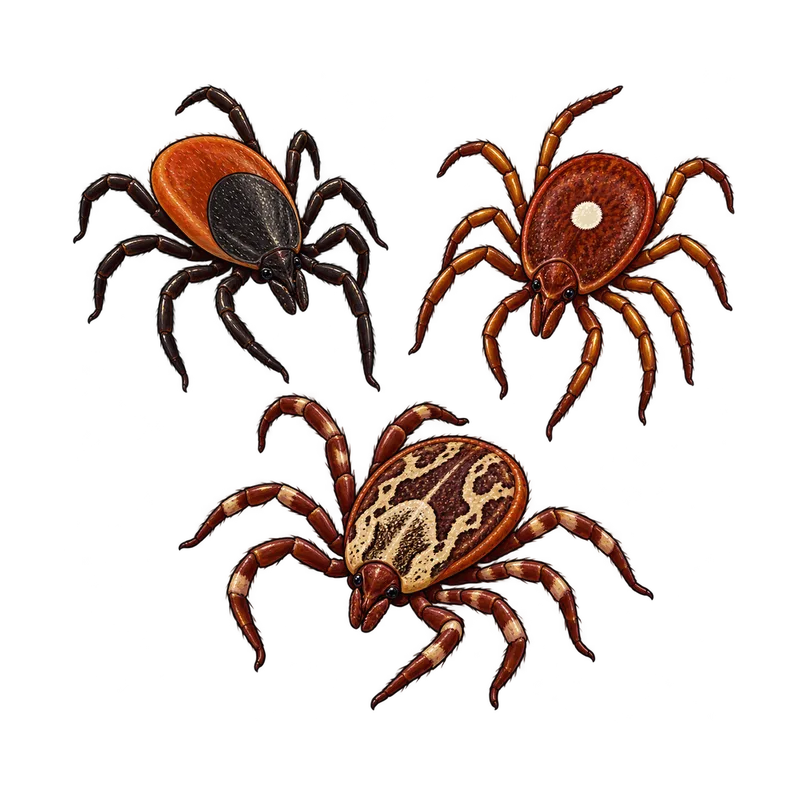
Ticks are most likely to be encountered in the narrow transition strip where a manicured lawn meets the woods, usually waiting within the first few feet of the brush. This boundary zone provides dense shade and damp leaf litter that traps moisture. Ticks concentrate there because open lawns cause them to dry out quickly.
What is actually going on
You are standing at the edge of the backyard on a warm Saturday afternoon, tossing a stick for the dog while he crashes through the ferny boundary where the manicured grass meets the woods. It looks like a harmless natural border, but that narrow transition strip is practically a toll booth for ticks. They are not wandering aimlessly across the middle of your sunny lawn, and they certainly are not dropping out of oak trees onto your head. Instead, they are waiting right where the shade begins, packed into the first few feet of the woodline because that is where they can survive without drying out.
Hard ticks have a major weakness, which is their extreme vulnerability to losing body water. An open, freshly mowed lawn baked in direct afternoon sunlight is essentially a desert to them, causing rapid desiccation that kills them quickly. But the moment you step two or three meters into the brush, the microclimate changes entirely. Overhanging leaves provide dense shade, while layers of damp leaf litter and rotting wood trap moisture and keep the ground-level relative humidity well above the threshold ticks need to stay alive. That boundary strip gives them the exact combination of shade, humidity, and constant traffic from mice, chipmunks, and deer that they need to thrive.
You might wonder why they bother waiting along that edge at all if animals are running all through the woods. The truth is that small rodents and large mammals use those brushy perimeters as travel highways. Mice and voles forage in the leaf litter, dropping tiny tick larvae and nymphs, while deer cruise the woodline, leaving behind adult females that shed thousands of eggs into the soil. Ticks do not jump or fly, so they crawl up onto low blades of grass or twigs, usually staying under twenty inches from the ground, and hold their front legs out in a waiting posture called questing. When a dog brushes past the ferns or you step off the grass to retrieve a stray ball, they simply transfer onto a passing host.
How to tell for sure
Figuring out whether you are dealing with a tick or something entirely different usually comes down to checking leg counts and body shapes, though field identification has its limits. Unfed tick larvae have six legs, while nymphs and adults usually have eight. If you spot a tiny pest on your sock that looks like a poppy seed or a sesame seed, you are usually looking at a small nymph measuring roughly one and a half to two and a half millimeters. Unfed adult ticks are about the size of an apple seed, but an engorged adult female that has been feeding for several days can swell up to the size of a small marble or a grain of cooked rice.
A common point of confusion happens when people spot tiny biting bugs inside the house or wake up with sudden itchy bumps after doing yard work under the shade trees. Bed bugs and bat bugs are oval and flat with six legs, but they live inside furniture cracks or near attic roosts and feed quickly without anchoring permanently to the skin. Kissing bugs are much larger with cone-shaped heads and can fly toward porch lights. On the other hand, if you develop itchy red bumps on your neck and shoulders in late summer, you might be dealing with microscopic mites raining down from pin oak trees on the wind, not ticks crawling up from the grass. Ticks move slowly, crawl upward from low ground vegetation, and usually anchor their mouthparts firmly into the skin for days.
If you need a definitive species identification for public health tracking or personal peace of mind, visual inspection with a basic magnifying lens usually only gets you to the family level. Differentiating between local species or exotic arrivals typically requires specialist microscopic examination of mouthparts and other anatomical features by an extension entomology service or health agency.
What usually comes next
Once you understand that ticks concentrate heavily in that perimeter transition zone, the most practical decision you can make is to alter the landscape to cut off their access. You do not need to bulldoze your trees or pave the yard, but creating a physical buffer zone changes the ground-level climate and discourages ticks from crossing into the areas where your family and pets spend time.
Laying down a dry moat of coarse wood chips, gravel, or crushed stone along the edge where your lawn meets the woods creates a harsh, sun-exposed barrier that crawling ticks are reluctant to cross. Pair that barrier with simple maintenance habits, such as keeping your turfgrass mowed short, raking away fallen leaves from the yard perimeter, and pruning low tree branches to let more sunlight hit the ground and bake out the ambient moisture.
You should also relocate wooden firewood stacks, children's play sets, and patio seating well away from the woodline, placing them on sunny turf or patio pads further into the yard. If you use chemical perimeter treatments applied to that boundary strip, coordinate the timing with peak activity seasons, making sure to follow the product label instructions or hire a licensed professional applicator for the job.
When to get help
There are moments when managing yard pests transitions from a weekend landscaping project to a situation requiring professional intervention or medical oversight. If your property is heavily infested with deer or rodent hosts that continually reintroduce ticks despite your clearing efforts, consult a licensed wildlife control specialist to discuss exclusion fencing or habitat management. For broad chemical applications or specialized barrier sprays, a certified commercial pesticide operator ensures the work complies with safety regulations and local environmental protections.
On the medical side, prompt removal of an attached tick using fine-tipped tweezers to pull straight up without twisting is your first line of defense. However, if you develop an expanding circular rash, unexplained fevers, severe fatigue, joint pain, or neurological symptoms within thirty days of a bite, seek evaluation from a clinician immediately. Similar caution applies if delayed allergic reactions such as hives or respiratory distress appear hours after eating red meat or dairy, which can signal tick-induced health conditions.