
What does a deer tick nymph look like?
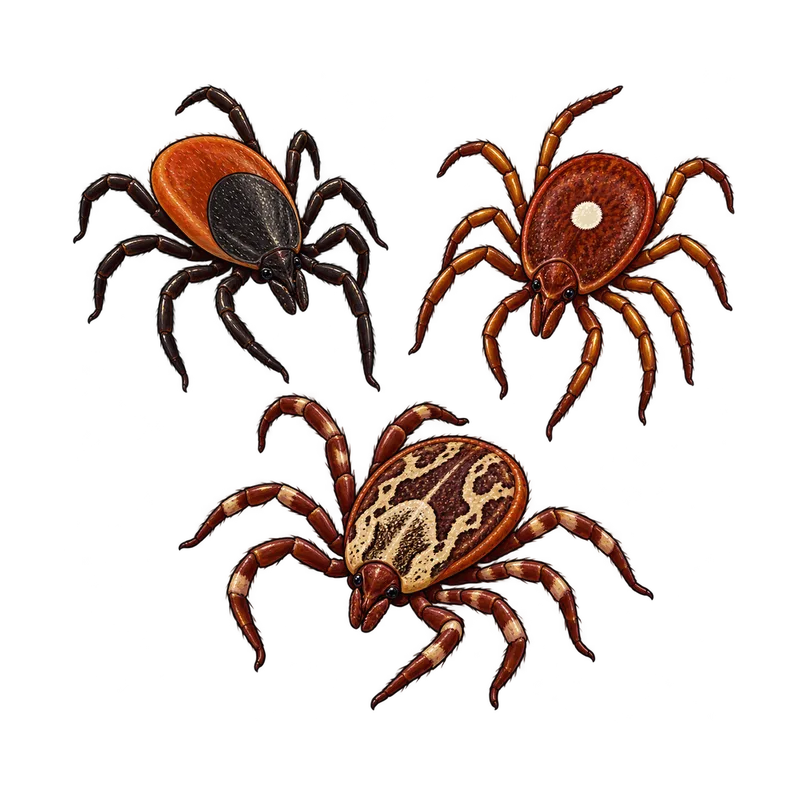
An unfed deer tick nymph looks like a stray grain of black pepper or a poppy seed, measuring between 1 and 2 mm long. It features a dark brownish black shield on the front of its back and a pale translucent tan or light brown abdomen. When engorged after feeding, it turns a globular dark greyish red or blue and swells up to 3 to 5 mm.
What is actually going on
You are standing in the hallway after a walk through the tall grass at the edge of the park, pulling off your sneakers and running a hand through your hair. You feel a tiny, completely flat bump just above your collar that you know was not there this morning. You bring it over to the bathroom mirror under the bright overhead lights, squinting at a speck so small it looks like a stray grain of black pepper or a poppy seed spilled from a bagel.
What you are looking at is almost certainly a deer tick nymph, the juvenile stage of the blacklegged tick. In its unfed state, this creature measures between 1 and 2 mm long, which places it squarely in the realm of things your eyes tend to dismiss as a fleck of dirt or dark lint. Despite being minuscule, it possesses eight legs and a dark brownish-black dorsal shield, known as a scutum, covering just the front portion of its back. The rest of its body is a pale translucent tan or light brown, waiting for a blood meal to expand its flexible abdomen.
Most people picture ticks as large, swollen, grape-sized bugs dropping out of oak trees in the autumn. That image belongs to the adult female. Nymphs are out in full force during the late spring and midsummer months, lurking low on grass blades and fern tips where they stretch out their front legs in a posture called questing. Because they are the size of a pinhead and their bite is painless, they slip past casual notice entirely, which explains why they are responsible for the vast majority of human Lyme disease cases.
How to tell for sure
If you want to confirm what you are dealing with, you usually need a magnifying glass and good lighting because these things do not announce themselves with bright warning colors. Count the legs first. A deer tick nymph has four pairs for a total of eight legs, distinguishing it from younger tick larvae that only sport six legs, or various mites and tiny insects that often confuse people.
Look closely at the back. The dark shield right behind the head is solid dark brown or black, while the rest of the abdomen is lighter and flat. This structure is what allows the tick to stretch out massively over several days of feeding. If the creature is already engorged after feeding for a few days, it usually turns a globular, dark greyish-red or blue, swelling up to 3 or 5 mm and losing that neat, poppy-seed shape.
You should also keep in mind what a deer tick nymph is not. People often mistake tiny bed bug nymphs, carpet beetle larvae, or microscopic mites for ticks. But those pests behave differently, bite differently, and lack that distinctive hard shield behind the mouthparts. If you find a tiny speck with eight legs clinging firmly to your skin, treat it as a tick rather than second-guessing its exact lineage.
What usually comes next
Once you spot an attached nymph, your main job is getting it off cleanly before it stays too long. Forget what you may have heard about painting it with nail polish, smothering it in petroleum jelly, or touching it with a hot match head. None of those tricks work safely, and they often cause the tick to regurgitate stomach contents right into the bite wound.
Grab a pair of fine-tipped tweezers. Lean in close to the mirror, press the tips down against your skin, and clamp onto the tick as close to your skin surface as you possibly can. Pull straight upward with a steady, even motion, making sure not to twist or jerk the body, which can tear the mouthparts loose. Clean the bite area thoroughly with rubbing alcohol or soap and water afterwards, and wash your hands. If a tiny microscopic piece of mouthpart happens to stay behind in the skin, leave it alone to heal on its own rather than digging aggressively at your flesh with a needle.
When to get help
You can handle the removal at home, but you need to watch the calendar over the next month. If you develop an expanding circular rash that grows larger than four inches across, or if you start running a fever, feeling severe fatigue, or dealing with stiff joints and pounding headaches within thirty days of the bite, call a clinician promptly. In high-risk regions, a single dose of antibiotics may sometimes be prescribed if a deer tick nymph was attached for thirty-six hours or more, so keeping track of when you likely picked it up matters.
If you live in parts of the United States, the United Kingdom, Canada, or other regions with specific tick-borne concerns, local public health agencies or surveillance schemes often track populations through mailed specimens, though they do not test individual ticks to guide your personal medical care. When neurological symptoms, facial drooping, severe muscle weakness, or rapidly spreading illness show up, skip the home remedies and head straight to professional medical care.