
Why should tick species and geographic range be checked together?
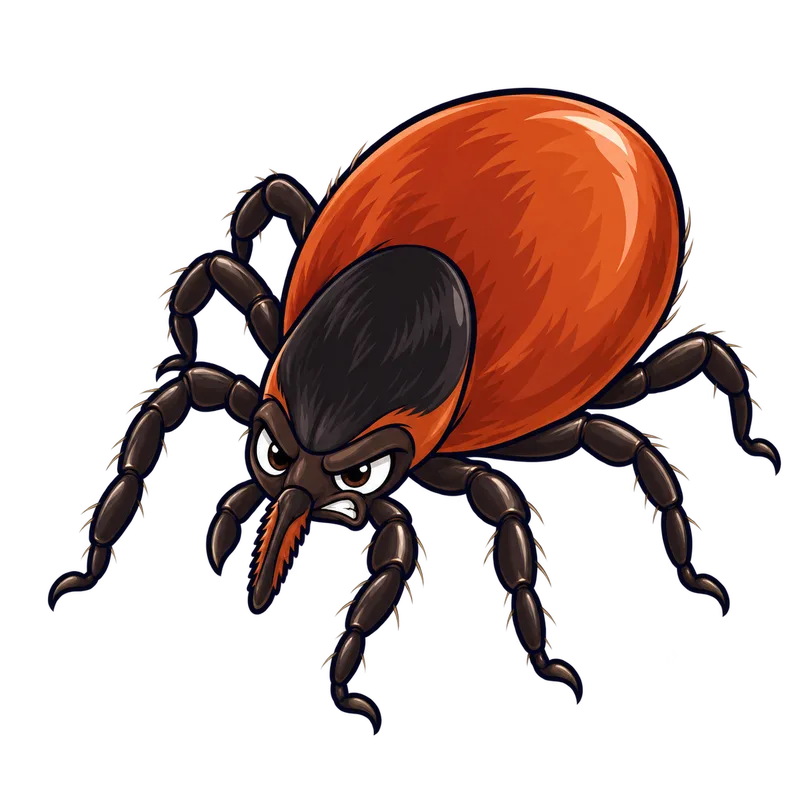
Evaluating tick species and geographic location together matters because disease risk depends on whether that specific tick can actually transmit a germ in that exact region. Over 900 tick species exist globally, but only a handful act as competent vectors capable of infecting humans. Furthermore, identical tick species can behave differently depending on the region.
What is actually going on
Picture walking back inside after an hour of clearing overgrown brush near the edge of the woods. You drop your gardening gloves on the porch, head inside to wash up, and notice a tiny dark speck on your ankle that was not there before. Naturally, the immediate instinct is to look up the bug, figure out where it came from, and worry about what it might be carrying. But when people try to figure out their actual risk from a tick bite, they usually make the mistake of looking at just one piece of the puzzle. They either panic because they found a certain tick species in their yard, or they assume they are safe just because a specific disease is rare in their state or country.
Evaluating tick species and geographic location together matters because the risk of catching an illness depends entirely on whether that specific tick can actually transmit that specific germ in that exact region. Finding a tick in your yard does not mean it is carrying anything dangerous. Over 900 tick species exist across the globe, yet only a handful are capable of acquiring, sustaining, and successfully transmitting a specific pathogen to a host. Just because a tick is present and happens to test positive for a pathogen in a laboratory does not mean it is a competent vector capable of infecting humans.
Geographic range dictates where disease reservoirs and vector populations overlap. Even within a single tick species, geographic location drastically alters human disease risk. Consider the blacklegged tick, which ranges across vast regions of North America. In the northeastern and upper midwestern United States, these ticks frequently feed on small rodent reservoirs infected with Lyme disease bacteria, routinely bite humans, and serve as primary vectors. Conversely, in the southern United States, populations of the exact same tick species rarely bite humans, and their immature stages feed predominantly on lizards, which are non-competent reservoirs. Consequently, Lyme disease transmission risk in the American South remains extremely low despite the presence of the physical tick species.
Geographic evaluation also reveals hyper-focal distribution patterns where a pathogen is restricted to precise micro-environments even though its primary vector is widespread. In the United Kingdom, the castor bean tick is abundant across woodlands, moorlands, and urban parks nationwide. However, Tick-borne encephalitis virus is absent across most of the UK and is confined to highly localized enzootic foci, such as specific forests in England and Scotland. Combining species identification with geographic origin also establishes critical timeframes for clinical intervention, since transmission speeds vary radically depending on the specific tick and pathogen system involved.
How to tell for sure
Telling a tick apart from other hitchhiking insects is usually straightforward once you count the legs, but identifying the exact species usually requires much more than a quick glance. Nymphs and adults have eight legs, unlike insects which have six, but visible macroscopic features and phone photos are usually insufficient to closely distinguish related species. Observing a tick at home gives only preliminary genus-level clues, much like looking at a car from across a parking lot and knowing it is a sedan. Telling individual species apart usually requires a jeweler glass or microscope to examine tiny structural margins and mouthpart proportions.
Hard ticks possess a rigid shield on their backs, while soft ticks lack this shield and have leathery bodies. Mouthpart length also varies significantly across genera, with some species possessing elongated mouthparts that penetrate deeply into host dermal layers, while others have shorter structures that anchor superficially. Hard ticks secrete an adhesive cement plug within minutes of attachment to secure their mouthparts. This cement acts much like industrial construction anchor adhesive, which explains why pulling a tick out roughly leaves parts behind. The cement glues the mouthparts deeply into the skin, requiring steady, straight-up pressure with fine-tipped tweezers rather than twisting or squeezing.
Common beliefs about tick identification often cause unnecessary confusion. Many people assume that a cell phone photo or the appearance of a bite mark is enough to identify the pest species. In reality, visible bite lesions or rashes can never be used to identify a tick species. Furthermore, detecting pathogen DNA in a tick sample through commercial testing kits does not establish that the tick was capable of transmitting live organisms to a human host. Public health authorities explicitly advise against relying on post-removal commercial tick testing kits for clinical decision-making, as a positive test on a tick does not prove transmission occurred, and a negative test can provide false assurance.
What usually comes next
When you finally get that tick off your skin, the smartest next step is simply watching the bite area and thinking about where you picked the bug up, instead of scrambling to mail the tick off for testing. If you were walking through a known hotspot for Lyme disease and found an adult blacklegged tick that had been feeding for quite a while, calling your doctor quickly gives you a chance to talk about whether a preventive dose of antibiotics makes sense. For other parts of the country or with different tick species, your main job is just keeping a close eye on how you feel over the next few weeks.
To keep tabs on the bite, wash the spot well with soap and water, rubbing alcohol, or an antiseptic wipe, and clean your hands afterward. Drawing a faint circle around the bite with a pen can make it much easier to tell if the redness is spreading as the days go by. It helps to keep in mind that most tick bites do not make you sick, but knowing which tick species live in your area and whether they carry diseases locally lets you respond to the actual danger instead of just panicking.
When you know you are heading into areas where ticks hang out, smart prevention beats every other trick in the book. Light-colored clothes make it far easier to spot a dark tick crawling up your pants, and tucking your pant legs right into your socks stops them from climbing up your legs. Using insect repellents that health agencies recommend on your skin, along with treating your garments with permethrin, gives you a solid backup defense. Sticking to wide paths when walking through woods or tall grass and doing a careful check of your whole body as soon as you get back inside catches hitchhikers before they can bite down and pass along germs.
When to get help
Some situations involving ticks and the diseases they carry call for a doctor, a pest control professional, or your local health department without delay. If you start noticing serious health symptoms after a tick bite or spending time outdoors where ticks live, get medical help right away. Warning signs include a spreading red rash that grows past 4 inches across, classic expanding rashes, or a dark sore with a scab at the bite site that comes along with a fever or swollen glands.
Other medical danger signs involve a high fever, a terrible headache, a stiff neck, trouble looking at bright lights, confusion, or feeling mentally foggy, which can mean the infection has reached your nervous system. Weakness spreading through your muscles, trouble keeping your balance, or difficulty catching your breath can point to tick paralysis caused by specific toxin-producing ticks found in certain areas. Sudden swelling in your face or lips, or trouble breathing right after a bite, signals a dangerous allergic reaction that demands emergency treatment.
Dealing with ticks around homes and buildings also calls for expert help when infestations go beyond a stray bug picked up in the yard. If brown dog ticks manage to set up shop indoors, you will need a professional exterminator to treat kennels, baseboards, and wall cracks, since this particular tick is built to live out its entire life cycle inside human houses. Finding soft ticks in a rustic cabin or shed means you need professional help to keep mice and rats out and clear out nests hidden in wall spaces. Any pest control products used around a home must follow the product label instructions to the letter, and large outdoor chemical treatments should always be left in the hands of licensed professionals.