
Deer tick vs dog tick: how can you tell them apart?
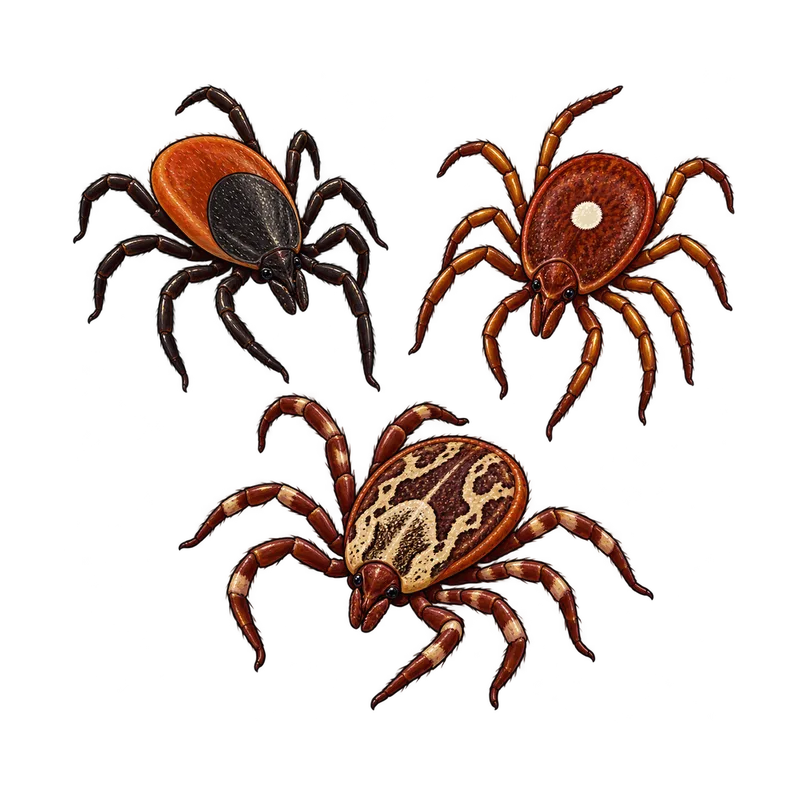
You can tell deer ticks and dog ticks apart by looking at their size, markings, and leg color. Unfed adult deer ticks are about the size of a sesame seed with solid black shields and entirely dark legs. Unfed adult dog ticks are closer to the size of a watermelon seed with pale cream markings on their shields.
What is actually going on
You are sitting on the back porch after a long walk through the tall grass at the edge of the woods, shaking out your socks, when you spot a tiny dark speck crawling near your ankle. Your heart skips a beat because you know that speck might just be a tick. You brush it off onto a paper towel to take a closer look, but now you are squinting at a pinprick of an insect, wondering if it is a deer tick that carries Lyme disease or just a harmless dog tick hitching a ride from your backyard.
Distinguishing between these two common ticks usually comes down to looking at a few distinct features on their backs and legs. Deer ticks, which are medically significant because they can transmit Lyme disease, are generally smaller and sport a uniform, solid black shield right behind their heads along with entirely dark legs. American dog ticks are noticeably larger, and if you look closely at their backs, they usually feature pale whitish or cream-colored markings that look almost like decorative scrollwork against a dark reddish-brown body. People often assume every tick they pull off themselves or their pets poses the exact same risk, but that is not how it works. Dog ticks do not carry the bacteria that cause Lyme disease, which immediately changes what a bite actually means for your health. Of course, telling them apart requires getting past the initial panic of finding a parasite on your skin and taking a moment to inspect its anatomy rather than just guessing based on where you found it.
To understand what is happening when a tick hitches a ride, you have to look at how these creatures operate in the brush. Ticks do not jump or drop out of trees like tiny paratroopers. They quest, which means they climb up grass blades or low shrubs, anchor themselves with their back legs, and wait for a passing host to brush against them. Once on your clothing or shoes, they crawl upward for up to two hours looking for a warm, hidden spot to latch on.
Deer ticks and dog ticks spend their lives in similar brushy environments, but their internal biology and the pathogens they carry are entirely different. When a deer tick feeds, it needs a considerable amount of time anchored to the host before it can transmit Lyme disease. The bacteria inside its gut need hours of warm blood flow to wake up, multiply, and migrate to the salivary glands. A dog tick operates under a different timeline and carries different risks, such as Rocky Mountain spotted fever, which is why figuring out which species you are holding matters so much.
How to tell for sure
To know for sure what kind of tick you are dealing with, you usually need a magnifying glass or a phone camera zoomed in close enough to pick up the fine details. Start by looking at the hard plate right behind the tick's head, which experts call the scutum. On an adult female deer tick, that plate is a plain, solid dark brown or black with no decoration at all. On an adult female dog tick, that same plate usually features distinct white or cream-colored patterns.
Next, check the legs and mouthparts. Deer ticks have uniformly dark brown or black legs and relatively long, narrow mouthparts that stick out forward like tiny needles. Dog ticks usually have brown legs that might show light banding, and their mouthparts are noticeably shorter and broader. Size gives you another clue, though it can easily trick you if the tick has already started feeding. Unfed adult deer ticks are typically about the size of a sesame seed, while unfed adult dog ticks are closer to the size of a small watermelon seed. Engorgement changes everything, and you should keep that in mind if the pest looks swollen. As a female tick feeds, her body expands dramatically to hold a blood meal, swelling up to one hundred times her original weight. When that happens, the soft body behind the shield stretches out and turns gray or blue, making the original color patterns on the abdomen disappear. Even on a fully engorged tick, however, the solid black shield of a deer tick or the patterned shield of a dog tick usually remains visible near the head.
What usually comes next
Once you have identified the tick or decided you cannot tell for sure in the moment, the single most practical choice you face is how to remove it safely without making things worse. You should reach for a pair of fine-tipped tweezers rather than wasting time with old folk remedies. Grasp the tick as close to your skin as possible, right where its mouthparts enter the skin, and pull straight up with a steady, even motion.
Do not twist, jerk, or squeeze the swollen body, and never listen to advice telling you to burn the tick with a match or smother it in petroleum jelly, nail polish, or rubbing alcohol. Irritating the tick with chemicals or heat causes it to regurgitate its stomach contents directly into your skin, which actually increases the risk of pathogen transmission. If a tiny piece of the mouthpart breaks off and stays in the skin, you can try to remove it gently, but otherwise leave it alone to let the skin heal naturally because the disease-causing parts are housed in the main body of the tick, not the detached tip. Clean the bite site afterward with rubbing alcohol or soap and water.
When to get help
You need to consult a medical professional or visit an urgent care clinic promptly if you develop certain symptoms in the weeks following a tick bite. Watch for an expanding red rash, especially one that grows larger than a few inches across or develops a distinct bull's-eye pattern, or if you experience sudden flu-like symptoms such as fever, chills, severe fatigue, or aching joints. Neurological warning signs like severe headaches, neck stiffness, or confusion also require immediate medical evaluation because they can indicate serious tick-borne illnesses.
If you find a tick attached to a household pet and the animal shows signs of lethargy, fever, or lameness, take them to a licensed veterinarian for a proper checkup. Remember that while certain treatments work well for managing ticks on canine companions, those same products can be violently and fatally toxic to cats. Never apply any chemical treatment to a pet without veterinary guidance, and leave clinical decisions about testing or preventive antibiotics to a qualified healthcare provider rather than relying on commercial tick-testing services.