
Lone star tick vs deer tick: what is different?
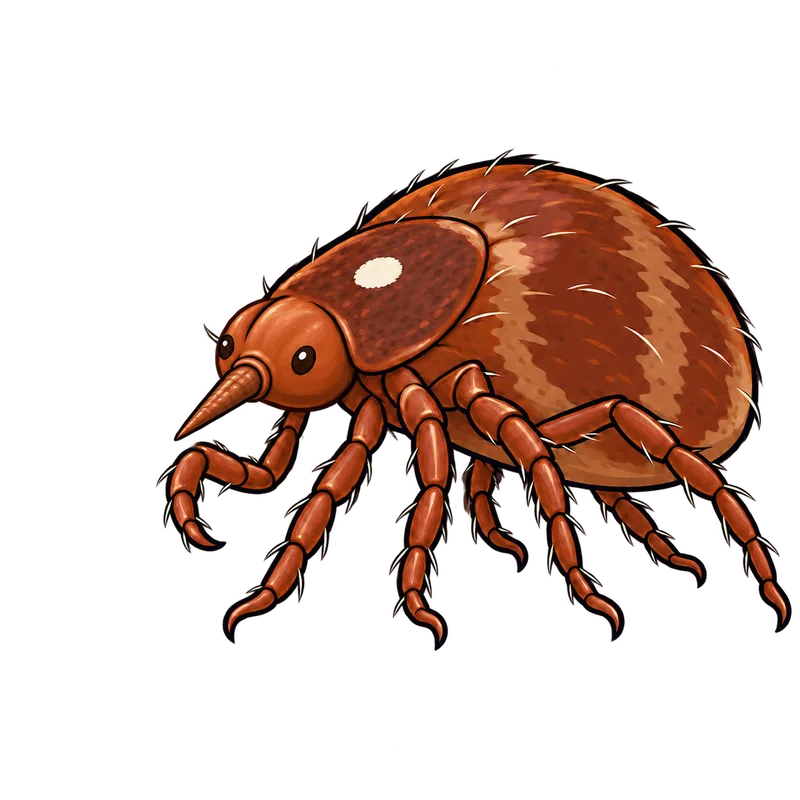
Female lone star ticks feature a single white dot in the middle of their dark backs, whereas female deer ticks have a solid black shield behind their head and a reddish orange body. They also differ in geography and the diseases they carry, as deer ticks transmit Lyme disease while lone star ticks never do.
What is actually going on
You come back inside from mowing the overgrown edge of the yard, drop your gardening gloves on the porch, and spot something tiny crawling up your sock. Naturally, you freeze. Is it the one that carries Lyme disease, or is it that other one people keep talking about on the news? When you flick it off onto the kitchen counter for a closer look, figuring out what you are actually dealing with usually comes down to a couple of distinct visual markers that separate the lone star tick from the deer tick.
The short answer is that they belong to different groups of hard ticks, look quite different when you inspect them closely, and carry entirely separate menus of diseases. A female lone star tick features a prominent, single white dot right in the middle of her dark back, whereas a female deer tick has a solid black shield behind her head contrasted against a reddish-orange body and noticeably dark legs.
Geographically, their home ranges overlap in parts of the country, which only adds to the confusion. Lone star ticks are heavily concentrated across the American South and Southeast, though they have been expanding northward and westward over the years. Deer ticks, which are also widely known as blacklegged ticks, dominate the Northeastern and Upper Midwest states, while their close cousins take over the Pacific coast.
Beyond their physical appearance, the medical risks they pose run down completely different tracks. Lone star ticks transmit an illness resembling a bad flu, along with a rash-forming condition and a strange carbohydrate allergy that makes people sensitive to red meat. Deer ticks, on the other hand, are the vectors for Lyme disease and a few other less common infections. Lone star ticks never transmit Lyme disease, no matter how many internet forums claim otherwise.
How to tell for sure
Trying to identify a tick can feel like splitting hairs, but if you have a magnifying glass and a steady hand, a few straightforward visual cues usually make the distinction clear. Look at the back of an adult female tick. If you see a single bright white or silvery dot right in the center of an otherwise dark, oval body, you are usually looking at a lone star tick. If that dot is completely absent and the shield right behind the head is a solid, glossy black contrasting with a rust-colored abdomen, you usually have a deer tick.
Male ticks of both species tend to throw people off because they lack the prominent markings of the females. Male lone star ticks have a scattered, lace-like white pattern along the edge of their dark backs rather than a single central dot, while male deer ticks are uniformly dark brown or black and generally smaller.
Things get tricky once a tick starts feeding. As a female tick gorges on blood over several days, her body swells up like a tiny balloon, stretching out the skin and completely distorting her original color patterns and markings. At that point, naked-eye identification usually becomes unreliable.
Immature ticks present an even bigger challenge. Nymphs are about the size of a poppy seed, and larvae are microscopic with six legs instead of eight. A nymphal lone star tick does not even sport the famous white spot yet. If you are holding a microscopic specimen or a heavily engorged tick, field identification rarely cuts it, and confirming the exact species usually requires an entomologist or a microscope.
What usually comes next
When you discover an attached tick on your skin, the most critical decision you face is how to remove it cleanly and quickly without panicking. Forget every home remedy you have ever heard about burning a tick with a match, painting it with nail polish, or smothering it in petroleum jelly. Those tricks only stress the tick out, causing it to regurgitate its stomach contents and any potential pathogens straight into your bloodstream.
Instead, reach for a pair of fine-tipped tweezers. Grab the tick as close to your skin surface as you possibly can, making sure you catch the mouthparts rather than just pinching the swollen belly. Pull straight upward with a steady, even motion, and try not to twist or jerk the tool, which can snap the mouthparts off and leave them embedded in the skin.
Once the tick is out, drop it into rubbing alcohol or flush it down the toilet, wash the bite area thoroughly with soap and water, and clean your hands. Saving the tick in a plastic bag or trying to test it for diseases usually does not change your immediate medical care, so your energy is much better spent simply monitoring how you feel over the next few weeks and noting the exact date of the bite.
When to get help
Most tick bites leave behind a small, itchy red bump similar to a mosquito bite, but certain symptoms mean you need to skip the wait-and-see approach and call a healthcare professional right away. If you develop a fever, severe fatigue, body aches, swollen lymph nodes, or joint pain within a month of a tick bite, get evaluated by a clinician promptly.
Pay close attention to your skin in the days and weeks following the removal. An expanding red rash, especially one that grows larger than 4 inches across or forms a classic ring pattern around the bite site, requires medical attention because it can indicate an active infection like Lyme disease.
If you live in a region where deer ticks are common and a tick was attached to your skin for a prolonged period, a doctor may consider preventative antibiotic treatment. Keep in mind that certain viruses carried by deer ticks can transmit rapidly, so viral symptoms require immediate medical care regardless of how long the tick lingered.
Seek emergency medical care immediately if a bite victim experiences trouble breathing, throat tightness, dizziness, or widespread hives. People with known severe tick allergies or meat sensitivities must use an emergency device and head to the nearest emergency room when severe allergic reactions strike after consuming mammalian products. For large-scale yard management, homeowners dealing with heavy tick populations or dense wildlife traffic can consult a licensed pest management professional to discuss perimeter treatments.