
Are apparent “tick eggs” on a dog really tick eggs?
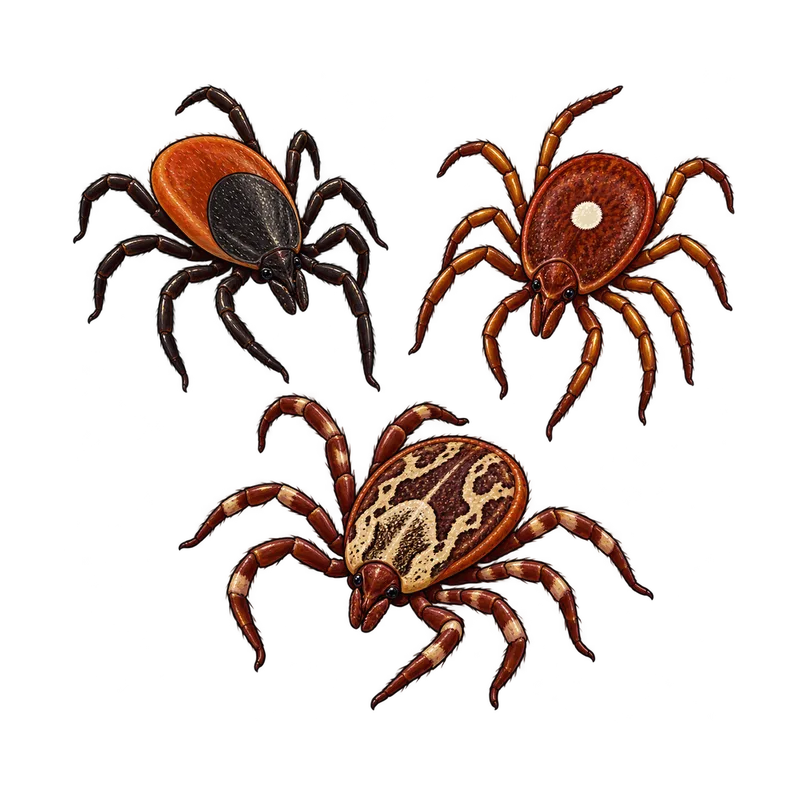
Apparent tick eggs on a dog are almost never tick eggs because mated female hard ticks drop off the host into leaf litter or soil before laying hundreds of eggs. Instead, those amber or brownish specks are usually newly hatched six-legged seed ticks, loose flea eggs, dried tapeworm segments, or microscopic mites.
What is actually going on
You are running your fingers through your dog's thick winter coat while watching television, and you suddenly feel a patch of tiny, rough bumps clustered near the base of their ear. Bringing the dog closer to the floor lamp, you peer at the skin and find a tight patch of dozens of small, oval, amber or brownish specks. It looks remarkably like someone sprinkled poppy seeds directly onto the skin, or perhaps laid a massive batch of insect eggs. Naturally, your mind jumps to the worst conclusion, assuming you have stumbled upon a nest of tick eggs right there on the animal.
Here is the straightforward answer: those apparent tick eggs are almost never tick eggs. Mated female hard ticks do not deposit their eggs on a dog. In fact, they do the exact opposite. Once a female hard tick finishes its multi-day blood meal, it drops off the host entirely, tumbling down into the moist leaf litter, soil, or garden mulch. That is where she lays a massive batch of hundreds or thousands of eggs before dying off-host. Ticks simply lack any biological mechanism to cement egg masses to a dog's fur or skin.
So what are you actually looking at when you find a suspicious cluster of tiny round specks? Usually, you are dealing with one of a few common look-alikes. Newly hatched larval ticks, often called seed ticks, frequently quest in dense groups and attach themselves to a host all at once. Because these babies possess only six legs and measure about the size of a poppy seed, they swell into round, brownish spheres as they feed, creating the visual illusion of an egg cluster.
Other times, those little objects have nothing to do with ticks at all. You might be looking at flea eggs that tumbled out of the coat, dried tapeworm segments that look suspiciously like grains of rice around the hindquarters, or microscopic mites that cause skin crusting. Plant debris and burrs can also entangle themselves in an undercoat to mimic a clutch of eggs. Understanding the biology helps clear up the panic, but you still need a reliable way to figure out what is actually sitting on your pet.
Telling these imposters apart usually comes down to counting legs, checking mobility, and seeing how the objects relate to the skin. Grab a good light source and a magnifying glass if you have one, because relying on a casual glance across the living room will not cut it.
If the specks are true tick larvae, you will usually count six legs on each tiny specimen, assuming they are large enough to see without a microscope. Nymphs and adult ticks have eight legs, but those young seed ticks appear as a dense, firmly attached crust of tiny dots along the ears, belly, or between the toes. They stay put because their mouthparts are anchored into the skin.
If the objects are loose, pearl-white, and oval-shaped, you are usually looking at flea eggs. Cat fleas drop their eggs directly onto the hair coat, but because those eggs lack any sticky coating, they generally roll off the fur and land in pet bedding, carpets, or upholstery within moments. If you shake the dog over a white piece of paper and little white pearls tumble out, you have found flea eggs rather than tick eggs.
If the objects resemble dry sesame seeds or flattened grains of rice clinging to the fur around the tail or hind legs, you are usually seeing dried tapeworm segments. These are shed portions of internal parasites that have exited via the anus, often vectoring in from a previous flea infestation. They tend to feel dry and papery rather than plump.
If the dog is intensely scratching a red, irritated patch of skin during the late summer or autumn, microscopic mites could be the culprit. Mites like walking dandruff or oak leaf itch mites crawl freely or cause localized crusting rather than forming neat egg clusters. They are usually too small to inspect clearly with the naked eye, meaning you will usually need a veterinary skin scraping to confirm them.
How to tell for sure
Once you figure out you are dealing with attached seed ticks instead of some imaginary egg cluster, your main choice comes down to safe mechanical removal. You want those things off the dog without leaving mouthparts behind or squeezing the body in a way that forces unwanted fluids into your pet.
Forget the old internet folklore about touching a hot match head to the bug, dabbing it with nail polish, or smothering it in petroleum jelly. Those tricks only agitate the parasite and increase the chances of pathogen transmission. Instead, reach for a pair of fine-tipped tweezers or a specialized tick removal tool.
Grasp the tick mouthparts as close to the dog's skin as possible. Pull straight upward with a slow, steady, even pressure. Do not twist or jerk the tool, since that can snap the mouthparts off in the skin. If a tiny fragment does break off and stay behind in the skin, clean the area and leave it alone, because the dog's body will usually shed it naturally like a splinter.
After you finish removing the specimens, wash your hands and disinfect the bite site thoroughly with rubbing alcohol or soap and water. Always read and follow pesticide product label directions exactly, treating the label as a strict legal document that dictates the correct application site and safety precautions. Direct the owner to consult a licensed veterinarian for preventative spot-on treatments, oral chewables, or tick collars applied to pets.
What usually comes next
Some situations demand immediate professional intervention rather than a do-it-yourself approach at home. You should seek veterinary attention right away if your dog exhibits neurological warning signs after a tick encounter, such as an unsteady gait, hind-leg weakness, wobbliness, voice changes, or ascending paralysis. These symptoms can indicate tick paralysis, which is a true medical emergency requiring rapid clinical care.
You should also consult a veterinarian if your dog develops systemic illness in the weeks following a tick encounter. Watch for high fever, severe lethargy, loss of appetite, joint lameness, pale gums, vomiting, or dark urine, since these can point toward tick-borne diseases.
If you suspect an indoor infestation of brown dog ticks that are completing their life cycle inside your baseboards, carpets, or kennel walls rather than outdoors, bring in a licensed pest management professional to treat the structure.
When to get help
For humans, if you or a family member develop an expanding bullseye rash or flu-like symptoms after removing ticks or handling an exposed pet, consult a physician promptly. Do not attempt to self-diagnose or prescribe human antibiotics. Finally, if you want to contribute to local public health tracking, you can preserve an intact specimen in a sealed container and submit it to an official agricultural extension office or state diagnostic lab for formal identification.