
Do seed ticks carry disease?
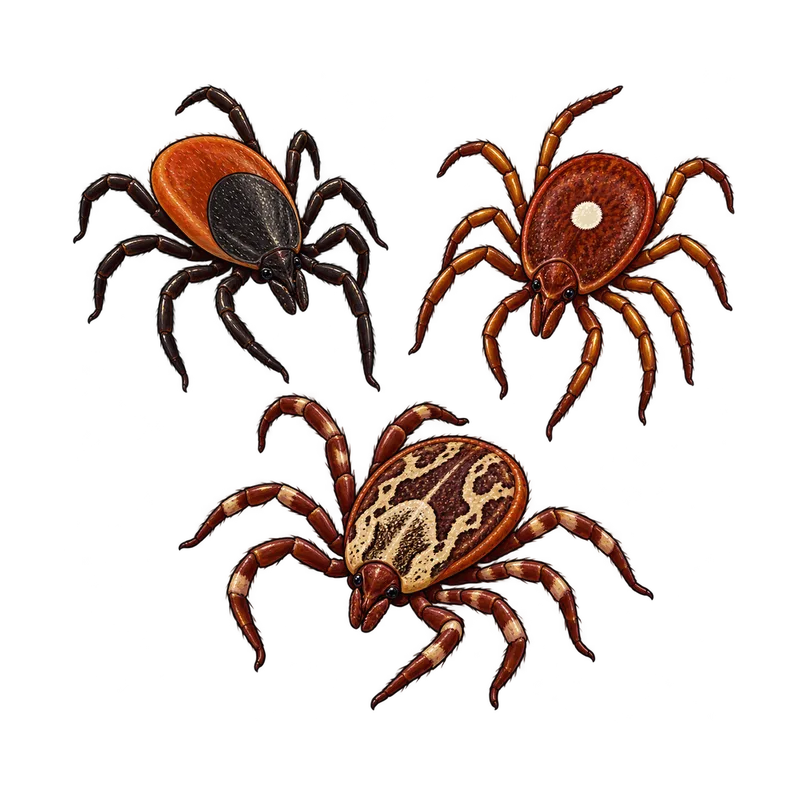
Yes, seed ticks can carry diseases, but whether they do depends on the specific species and the regional pathogens they carry from birth. Newly hatched seed ticks are free of Lyme disease spirochetes, yet certain mother ticks pass other dangerous pathogens straight into their eggs.
What is actually going on
You are sitting on the back porch after a pleasant evening walk through the tall grass at the edge of the yard, and you happen to look down at your ankles. Instead of a single stray bug, you notice dozens of tiny, dark specks the size of poppy seeds swarming in unison up your socks. Those microscopic specks are seed ticks, which are simply the newly hatched, six-legged larval stage of hard or soft ticks. They emerge by the hundreds when a female tick egg clutch hatches all at once in the late summer grass, waiting for a passing host to brush against their blade of grass.
To answer the most urgent question directly, seed ticks generally do not carry Lyme disease spirochetes upon hatching. That particular bacterium does not pass from a mother tick to her eggs, meaning an unfed larva starts its life cycle free of the pathogen that causes Lyme disease. It has to take a blood meal from an infected small rodent or bird first to pick up that specific bacterium, which it then transmits later in life after molting into a nymph or adult.
However, assuming those tiny larvae are completely harmless is a mistake that can catch you off guard. While Lyme disease requires that intermediate host hop, other pathogens skip the waiting period entirely through a process called transovarial transmission. This means the mother tick passes certain diseases directly through her ovaries into her eggs, making the newly hatched seed ticks infectious on their very first bite.
Depending on where you live and the species involved, those tiny larvae can carry and transmit Borrelia miyamotoi which causes a relapsing fever, spotted fever rickettsiae, Tick-Borne Encephalitis Virus, or Powassan virus. In parts of the United States, larvae of the lone star tick can also trigger Alpha-Gal Syndrome, a severe allergy to mammalian meat and dairy initiated by the tick saliva. They are tiny enough to go completely unnoticed until they start feeding, and their disease potential depends heavily on the species and the regional pathogens they carry from birth.
How to tell for sure
Telling what is actually biting you is usually tricky because seed ticks are roughly the size of a single poppy seed on a muffin. If you look at them under a magnifying glass, seed ticks usually show just three pairs of legs, giving them six legs total. Nymphs and adult ticks have four pairs, or eight legs, which makes the leg count a reliable way to confirm you are dealing with larvae rather than an older stage.
People frequently mistake seed ticks for other microscopic biters that appear in the yard during the warmer months. Chiggers, which are larval mites, tend to bite under tight clothing lines and leave intensely itchy red welts, but they are not ticks and do not carry tick-borne diseases. Oak leaf itch mites are another frequent culprit, dropping from pin oak trees in autumn and biting the upper body with the subtle stealth of falling dust.
Skin lesions and bite photographs can never reliably identify a pest species because human immune responses vary wildly. Up to thirty percent of people show zero visible reaction to bug bites, while others develop massive generalized swelling from a minor irritant. If you want to know for sure what you brushed against, you usually need to trap a specimen on clear tape or place it in a small vial for examination under proper magnification by someone who knows insect anatomy.
Geography also plays a huge role in what those tiny ticks can do to you. A seed tick cluster found in the wooded landscapes of the northeastern United States carries a different set of risks compared to a larval cluster in the Scottish moorlands or the coastal bushland of eastern Australia. In parts of Australia, the native paralysis tick larva is known for causing severe allergic reactions and localized systemic symptoms rather than standard tick-borne fevers.
What usually comes next
When you discover a cluster of seed ticks crawling on your skin or clothing, your immediate practical decision involves how to get them off safely without making things worse. If they have already attached and started feeding, you need to grab a pair of fine-tipped tweezers rather than reaching for old wives' tales. Grasp the tick mouthparts as close to your skin surface as possible and pull straight upward with steady, even pressure, making sure not to twist or jerk the body.
Resist the strong urge to apply nail polish, petroleum jelly, rubbing alcohol, or a hot match head to an attached tick to make it back out. Those suffocating and irritating methods cause the tick to regurgitate its stomach contents directly into your bloodstream, which drastically increases your risk of contracting any pathogens it happens to be carrying.
If you happen to live in eastern Australia and are dealing with the local paralysis tick, the removal protocol changes completely. Australian health authorities recommend killing those specific ticks in situ with an approved freezing spray or permethrin cream before trying to pull them out, because disturbing a live paralysis tick can cause it to inject a massive dose of neurotoxins or allergens into your skin.
After removing any attached ticks, wash the bite site and your hands thoroughly with rubbing alcohol, an antiseptic wipe, or soap and water. Throw your outdoor clothing straight into the dryer on high heat for twenty minutes to kill any crawling larvae that managed to hitch a ride indoors on your socks or cuffs.
When to get help
Turt-free tick bites heal without incident once the insect is removed, but certain symptoms require prompt medical attention from a clinician. Do not attempt self-treatment or wait for things to improve if you develop an expanding circular red rash that exceeds two inches across, which can signal an emerging infection.
You should also seek urgent care if you experience a sudden high fever, severe chills, drenching night sweats, a severe headache, a stiff neck, confusion, or extreme sensitivity to light. Dark scab-like ulcers surrounded by swollen, painful lymph nodes also warrant an immediate professional evaluation.
If you experience acute signs of a severe allergic reaction or an anaphylactic response, such as difficulty breathing, hives, swelling of your lips or tongue, or tightness in your throat, treat it as a medical emergency. Decisions regarding antibiotic post-exposure prophylaxis, such as a single dose of doxycycline after a high-risk bite in an endemic area, belong exclusively to a licensed medical doctor rather than self-diagnosis.
When you find unfamiliar ticks in regions where rare or newly established diseases are tracked, local public health agencies often welcome specimens for surveillance. You can place the tick in a sealed plastic vial and contact your local health department or a national surveillance scheme to help researchers monitor vector populations in your area.