
What are seed ticks?
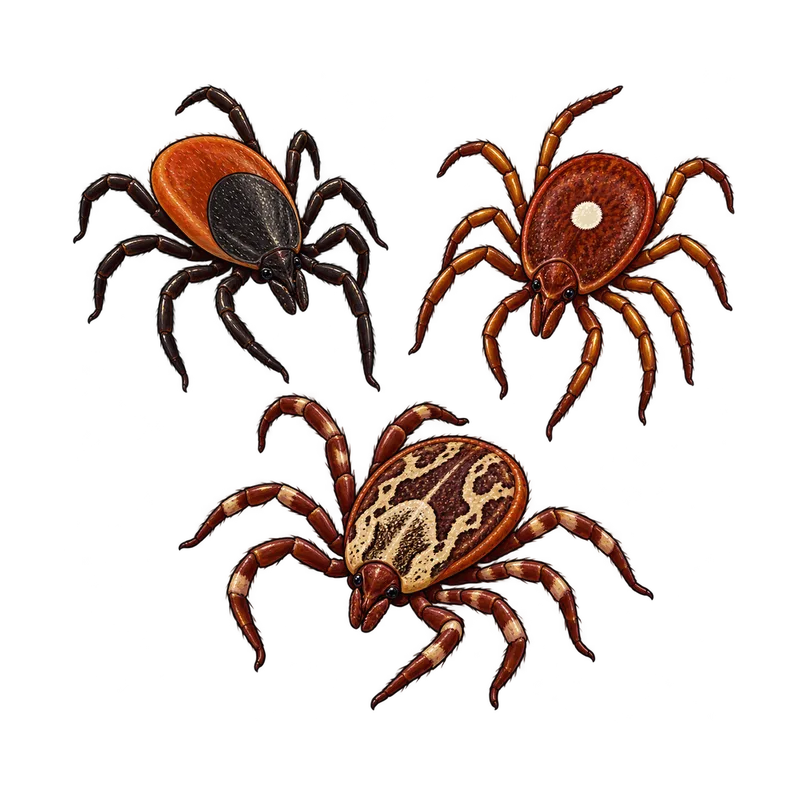
Seed ticks are the newly hatched, six-legged larval stage of hard ticks. Measuring only about half a millimeter to a full millimeter across, they look like coarse black pepper or tiny freckles. They hatch in massive clusters from a single egg mass, which is why people usually find dozens or hundreds of them at once.
What is actually going on
You are sitting on the back porch after a walk through the tall grass at the edge of the woods, untying your sneakers, when you notice something odd. There is a faint dusting of what looks like coarse black pepper or tiny freckles moving across your white athletic socks. You lean in closer, squinting against the late afternoon sun, and realize those tiny specks are actually crawling. You have just walked right into a hatch of seed ticks, and your first instinct is probably to wonder what kind of microscopic bugs you just brought home.
Seed ticks are not a separate species of insect or arachnid at all. They are simply the newly hatched, six-legged larval stage of hard ticks. When an adult female hard tick finishes her final blood meal, she drops off her host into the shelter of damp leaf litter or loose soil and lays a massive clutch of eggs, sometimes numbering in the thousands. When those eggs finally hatch, hundreds of tiny larvae emerge in the exact same spot and immediately begin climbing the nearest blades of grass or twigs to wait for a passing host.
That is why you rarely find just one seed tick wandering around by itself. They tend to arrive in overwhelming numbers because they all hatched together from a single egg mass hidden in the underbrush. If your pant leg brushes against that exact spot, you end up picking up dozens, or even hundreds, of them in a single second. Because they measure only about half a millimeter to a full millimeter across, they are roughly the size of a poppy seed or the head of a pin, which makes them terribly easy to miss until they start moving or bunching up together.
How to tell for sure
Trying to figure out what just bit you or is crawling on your skin can drive you crazy, but a few simple checks usually clear things up. First, remember that ticks are arachnids, which means they are related to spiders rather than bugs. Insects have six legs throughout their entire lives, but ticks add a pair of legs as they mature. If you manage to get a magnifying glass and count the legs on that tiny crawling speck, a seed tick will have exactly six legs, while older nymph and adult ticks will usually have eight.
People often confuse seed ticks with chiggers or tiny mites because both show up in the summer and autumn and leave behind intensely itchy red bumps. But chiggers are microscopic mites that do not feed on blood the way ticks do, and they certainly do not turn into eight-legged ticks later on. You also cannot tell what kind of tick you are dealing with by looking at a skin bite or a photograph of a rash. Bite marks are usually just non-specific immune responses, and plenty of different pests can leave identical red welts.
If you want a positive identification, you usually need to look at the physical specimen under magnification using a proper field guide or key. Another common point of confusion revolves around disease transmission. It is easy to assume that because these tiny larvae have never fed on an animal yet, they must be completely harmless. While it is true that seed ticks generally do not carry Lyme disease bacteria because those pathogens are not passed from mother ticks to their eggs, that is not a blanket guarantee. Some other dangerous pathogens, including certain rickettsial diseases and viruses, can pass directly from the female tick into her eggs, meaning a seed tick can occasionally be infectious right out of the shell.
What usually comes next
When you realize you have walked through a hatching hotspot and picked up a swarm of seed ticks, your main practical choice is how to clear them off your skin safely before they start digging in to feed. If you are dealing with a cluster of tiny larvae that are still just wandering around your ankles, avoid old folk remedies like dabbing them with petroleum jelly, touching them with a hot match head, or splashing nail polish remover on your skin. Those tricks only stress the tick out, which can cause it to regurgitate fluids and pathogens straight into your system.
Instead, act quickly to remove unattached larvae by taking a hot, soapy shower right away, scrubbing your skin gently, and washing your clothes on high heat. If you find a seed tick that has already managed to anchor its mouthparts into your skin, skip the temptation to squeeze it with your fingers or wide kitchen tweezers. Grab a pair of fine-tipped tweezers, get as close to your skin as you possibly can, and pull straight up with a steady, even motion.
If you happen to be in Australia and are dealing with the local paralysis tick in its larval stage, the removal rule changes entirely. Australian health authorities advise killing those specific ticks in place using a specialized spray or ether-containing freezing product rather than pulling them off raw, because forcing them off can trigger severe allergic reactions or release dangerous neurotoxins. For everyone else, clean the bite site thoroughly with rubbing alcohol or soap and water once the tick is out, and put your outdoor clothes straight into the dryer on high heat for twenty to thirty minutes to finish off any stragglers hiding in the seams.
When to get help
Most tick encounters end with a bit of itching and a lesson learned about tucking your pant legs into your socks, but certain symptoms mean you need to step away from home remedies and talk to a healthcare professional immediately. If you notice an expanding circular red rash that looks like a bullseye, or if you develop sudden flu-like misery including high fevers, chills, severe headaches, and deep muscle aches within a few weeks of a tick exposure, you should see a doctor or visit an urgent care center without delay.
Neurological warning signs require even faster attention. Should you experience a stiff neck, sensitivity to light, facial drooping, confusion, or sudden weakness in your limbs, get medical help right away. These are signs of serious tick-borne illnesses that need prompt clinical evaluation and proper medical treatment.
When you are finding heavy tick populations right around your patio, playground, or residential yard, managing the property yourself stops being practical. That is the moment to call a licensed pest control applicator. A professional can look at your landscaping, recommend targeted barrier treatments or wildlife exclusion measures, and help keep your immediate surroundings from turning into a recurring tick nursery.