
How do dogs get ticks?
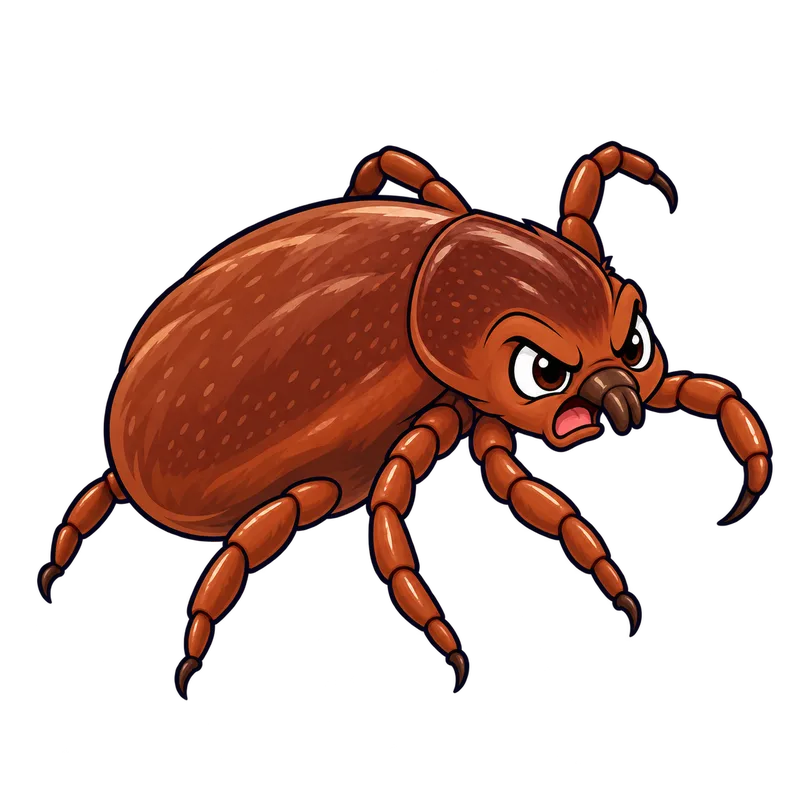
Dogs pick up hard ticks passively when they brush past low vegetation where ticks wait on stems and wave their front legs. Dogs can also pick up brown dog ticks indoors if they visit infested kennels or homes with established populations.
What is actually going on
You are walking your dog through a patch of tall grass at the edge of a park, enjoying a quiet morning, and half an hour later on the living room rug, you spot a tiny, dark speck crawling near their collar. It is easy to wonder how it got there so fast, especially if you never saw your dog step off the path. The truth is that dogs do not catch ticks the way they catch fleas, and ticks certainly do not fly, jump out of trees, or drop from high branches. Instead, your dog picks them up passively through a quiet, waiting game that happens down near the ground.
Most ticks spend their lives in low vegetation, brush, leaf litter, or shaded woodland perimeters where the humidity stays high. When an unfed hard tick is ready for a meal, it climbs up a blade of grass or a low stem, usually staying under fifty centimeters off the dirt, and anchors its hind legs while waving its front legs in the air. This behavior is called questing. Ticks have specialized sensory organs on their front legs that detect exhaled carbon dioxide, radiant body heat, physical vibrations, and even scents. When your dog brushes past that stem of grass, the tick simply transfers instantly from the plant to the fur, acting much like a microscopic piece of velcro.
Once on the animal, the tick does not bite immediately. It crawls upward through the coat for up to two hours, searching for thin skin where blood vessels run close to the surface, such as around the ears, neck, groin, or between the toes. You might picture a tick falling onto your dog from above, but the journey is almost always an upward climb starting from the paws, ankles, and chest.
There is also a notable exception to this outdoor rule. The brown dog tick behaves entirely differently by living its entire life cycle indoors. If you board your dog, visit certain indoor kennels, or have an established infestation inside your home, these ticks hide in baseboards, wall crevices, and pet bedding. Dogs in these environments pick up ticks continuously without ever stepping foot into a grassy field or a wooded trail.
Ticks survive and find hosts through specific biological traits that govern their entire existence. They lack the physical structures required for jumping or flight, meaning they cannot ambush a passing dog from a tree branch or leap across a yard. Instead, they rely on passive transfer. Their reliance on high humidity confines them to the lower strata of vegetation and leaf litter, which explains why dogs with access to overgrown lawns or brush encounter them at such high rates.
The sensory equipment of a hard tick is remarkably sophisticated. Haller's organs on their forelegs act as precision detectors for temperature shifts and chemical signatures like carbon dioxide. When a dog approaches, these receptors alert the tick to position itself. Transmission of pathogens from the tick to the dog usually requires sustained attachment, lasting anywhere from hours to more than a day depending on the specific organism involved, such as the spirochetes responsible for Lyme disease or the bacteria linked to anaplasmosis.
How to tell for sure
Before you start worrying about removal or treatments, you need to know what you are actually looking at, because not every bug on a dog is a tick. Hard ticks usually start as flat, oval parasites roughly the size of an apple seed when unfed, but they can swell up to the size of a small grape or a cooked bean once they have fed for several days. They have eight legs as adults, no wings, and mouthparts that lock tightly into the skin.
You might occasionally confuse a tick with other household hitchhikers, but the differences are usually clear if you look closely. Bed bugs and bat bugs are flat, wingless insects with six legs, and they do not anchor themselves into the skin for days to feed. Kissing bugs are much larger, measuring up to an inch or more, and they only visit a sleeping dog briefly at night to feed for a few minutes before retreating to dark cracks. None of these insects quest on grass or use a cement-like plug to stay attached the way ticks do.
When you part your dog's fur during a routine check, a tick usually looks like a dark, immovable freckle or a small growth that has suddenly appeared on the skin. If you touch it and it has legs that wiggle, or if it is firmly anchored by its head while the body stands out at an angle, you are almost certainly dealing with a tick.
What usually comes next
Once you confirm there is a tick on your dog, the single most practical decision you need to make is how to remove it safely without panicking and reaching for old folk remedies. You should grab a pair of fine-tipped tweezers or a specialized rigid tick removal hook, rather than trying to pull it out with your bare fingers or smother it with petroleum jelly, nail polish, or a hot match.
Grasp the tick's mouthparts as close to your dog's skin as you possibly can, pull the surrounding skin taut, and pull straight up with a steady, even motion. Do not twist or jerk the tick, because that can snap the mouthparts off inside the skin and cause unnecessary irritation. Resist the urge to burn or suffocate the tick while it is still attached, as extreme stress causes the parasite to regurgitate its stomach contents directly into the bite wound, which dramatically increases the risk of passing along any pathogens it might carry. Once the tick is out, drop it into a sealed container of alcohol or flush it down the toilet, and clean the bite site thoroughly with soap and water.
When to get help
There are times when pulling a tick out at the kitchen table is not enough, and you need to hand the problem over to someone with professional training. If your dog begins showing systemic warning signs over the next few days or weeks, such as a high fever, sudden lethargy, swollen joints, shifting lameness, reluctance to eat, or dark urine, you need to contact a licensed veterinarian immediately. Neurological red flags like a wobbly gait, hind-leg weakness, or difficulty breathing require urgent medical evaluation because certain ticks secrete potent neurotoxins that can lead to rapid paralysis.
You also need outside help when dealing with an indoor infestation of brown dog ticks, which will not go away simply by treating the dog. That situation calls for a licensed pest management professional to inspect structural cracks, baseboards, and kennel areas to clear the property properly. If you find unusual ticks or suspect a regional vector of concern, local public health agencies or agricultural extension offices are the right places to report the find and support local disease surveillance efforts.